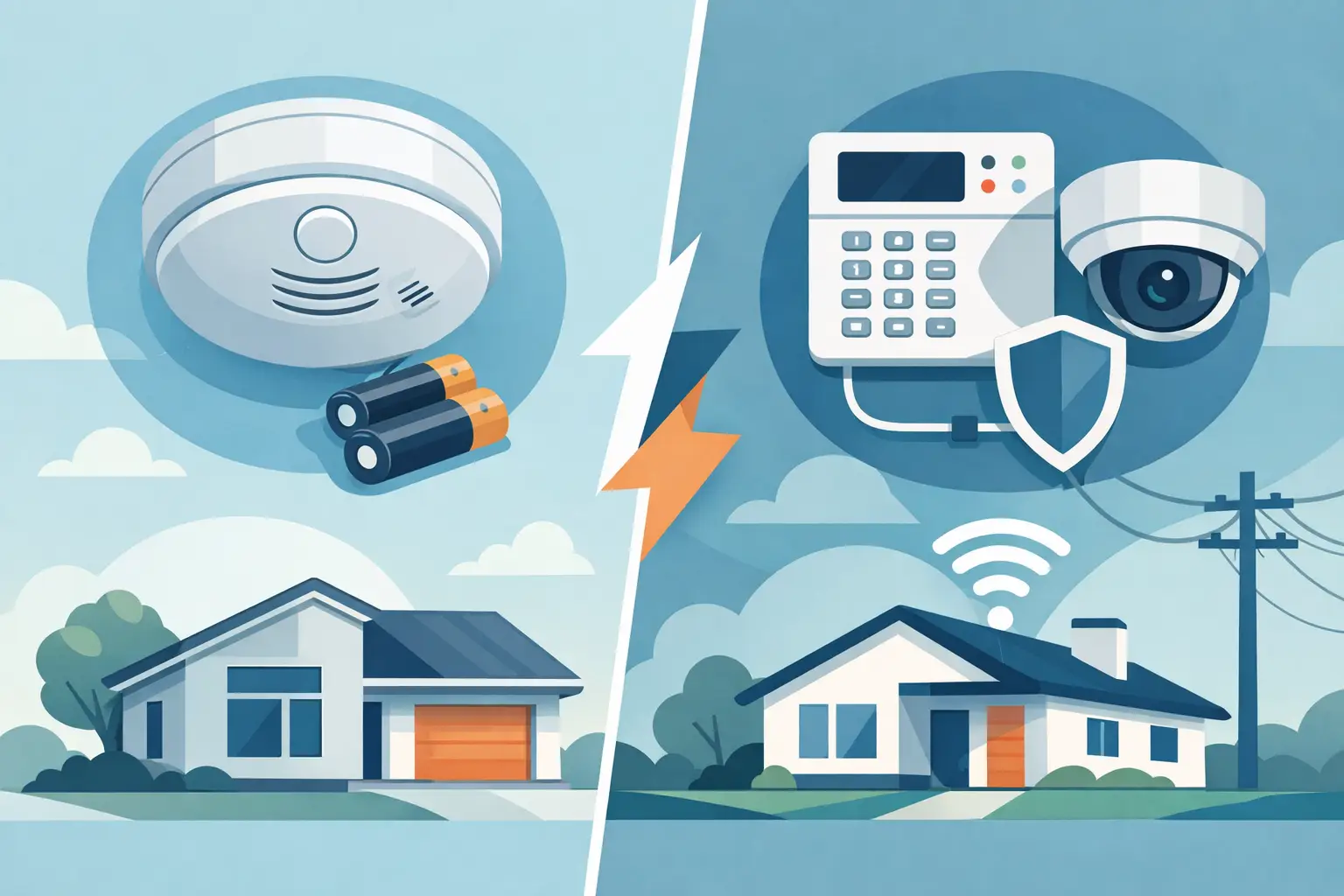
A smoke alarm that looks fine on the ceiling can still leave your household exposed. In Queensland, the choice between battery alarms vs hardwired systems is not simply about what costs less today. It affects whether your home meets the rules, whether every person hears the alarm at night, and whether your protection will still work when it matters most.
For Brisbane homeowners, landlords and anyone selling or buying a property, the right answer depends on the home’s age, wiring access and legal obligations. What does not change is the standard: smoke alarms must be photoelectric, interconnected and correctly located. A cheap standalone battery alarm from the hardware aisle is not a compliance solution for most Queensland homes.
The Queensland smoke alarm standard comes first
Queensland’s smoke alarm laws were strengthened because early warning saves lives. Smoke alarms in homes being sold, leased or with a lease renewed must be photoelectric, interconnected and installed in the required locations. They must also be less than 10 years old.
Interconnection is the part many property owners miss. When one alarm detects smoke, every interconnected alarm in the home sounds. That means a fire starting in the laundry, garage-adjacent hallway or living area can wake someone sleeping behind a closed bedroom door.
For new homes and substantial renovations, hardwired smoke alarms with a secondary battery backup are generally required. In existing homes where running new cabling is difficult or would mean major ceiling work, compliant 10-year lithium battery alarms can be the practical answer. Both systems can meet the required standard when selected and installed properly.
The question is not whether batteries are ‘good enough’. The question is whether the alarm system is approved for the property, interconnected, correctly positioned and likely to remain dependable in South East Queensland conditions.
Battery alarms vs hardwired systems: the real difference
Hardwired alarms are connected to the home’s 240-volt electrical supply. They also contain a battery backup, so they keep operating during a power outage. This is a permanent electrical installation and must be installed or altered by a licensed electrician.
Battery-powered alarms rely on an internal, sealed long-life lithium battery. The compliant versions used for Queensland upgrades are designed to last up to 10 years, with no annual battery swaps. They communicate wirelessly with other compatible alarms to create the required interconnected system.
Neither option should be confused with an old-style detector that runs on a replaceable 9-volt battery. Those alarms are often ignored after they start chirping, have batteries removed, or are not interconnected at all. That is exactly the kind of weak link a proper compliance upgrade is designed to remove.
Hardwired alarms: the permanent option
A hardwired system is often the strongest fit for a new build, a major renovation or a home where accessible roof space makes wiring straightforward. The alarms receive continuous mains power, and a backup battery provides protection if the power fails.
For many homeowners, hardwired alarms offer real peace of mind because they are integrated into the property’s electrical system. There is no dependence on radio signal range between units, although modern wireless systems are highly effective when designed correctly. They can also be a sensible long-term choice if electrical work is already being carried out.
There are trade-offs. Retrofitting wiring into an established home can involve more labour, access issues and, in some cases, repair work to ceilings. It is not always the fastest or most cost-effective way to make an older Queenslander, low-set brick home or investment property compliant.
Hardwired does not mean maintenance-free, either. The backup battery, alarm age, contamination and testing still matter. Any alarm approaching 10 years old needs replacement, even if it still beeps when you press the test button.
10-year battery alarms: practical without cutting corners
A quality 10-year lithium battery alarm is not a second-rate option. For many existing Brisbane homes, it is the most practical way to achieve a compliant interconnected photoelectric system without unnecessary rewiring.
Because the battery is sealed inside the unit, there is no loose battery to forget, remove or replace. The alarms can be wirelessly interconnected, so one activation triggers the full system. Installation is typically faster and less disruptive than running new hardwired connections through an existing ceiling.
This makes battery alarms particularly useful for rental properties, homes with difficult roof access, apartments where wiring changes are complicated, and owners who need a fast compliance upgrade before settlement or a new tenancy.
The catch is product quality and installation standard. Not every battery smoke alarm sold in a shop is suitable. The alarms must be photoelectric, meet the relevant Australian Standard, be compatible for interconnection and be installed in the required locations. Mixing random brands or placing alarms wherever there is a convenient ceiling spot is a gamble, not a safety plan.
Which system is right for your property?
Start with the building, not the price tag. A new home or substantial renovation generally calls for hardwired alarms with battery backup. This is the point where wiring can be incorporated properly, and Queensland requirements are clear.
For an existing home, a professionally installed 10-year wireless interconnected system may deliver the same critical outcome: early detection throughout the property, without invasive electrical work. It can be the smarter option where the cost and disruption of hardwiring are out of proportion to the job.
A landlord with a lease renewal needs a compliant system now, not a patchwork of ageing alarms that may fail an inspection. A seller needs confidence that buyers will not find outdated, non-interconnected units during the transaction. A family with children needs alarms that wake the whole house, not just the person closest to the fire.
There is no prize for choosing the system with the lowest upfront figure if it creates another replacement job in a year or two. Look at the complete result: compliant alarm type, correct placement, reliable interconnection, professional installation and a warranty that backs the work.
Humidity, false alarms and Brisbane conditions
Brisbane humidity is hard on poor-quality alarms. Cheap units can become unreliable, nuisance alarm frequently, or suffer from contamination over time. When an alarm cries wolf often enough, people silence it, disconnect it or stop taking it seriously. That is a dangerous outcome.
Photoelectric alarms are the required choice in Queensland because they are effective at detecting the slow, smouldering fires common in homes. They are also generally less prone to nuisance alarms from cooking than older ionisation-style units, although no smoke alarm should be installed too close to a cooking appliance unless the location meets the relevant requirements.
Placement matters as much as the alarm itself. Required locations can include every storey, hallways connecting bedrooms to the rest of the dwelling and bedrooms in certain layouts. Open-plan homes, long corridors, multiple levels and enclosed sleeping areas all need careful assessment. One alarm near the front door rarely protects the whole household.
A licensed specialist assesses the layout, identifies what is already installed, checks the age and type of existing units, then designs the right interconnected solution. That avoids the common mistake of adding one new alarm to several incompatible old ones and assuming the property is covered.
Do not rely on a test button alone
Pressing the test button checks that the alarm can sound. It does not prove the detector chamber is clean, the alarm is within its service life, the system meets Queensland placement rules or every unit activates together.
Check the manufacture date printed on each alarm. If it is 10 years old, replace it. If the alarms are ionisation type, standalone where interconnection is required, have removable batteries, or have been painted over, treat that as a warning sign. If you are unsure, have the system assessed before a sale, lease renewal or renovation creates a rushed problem.
For hardwired systems, only a licensed electrician should carry out installation, replacement or electrical alterations. For battery systems, professional fitting still gives you the benefit of correct placement, compatible products and clear evidence that the upgrade has been handled properly.
Get the compliance decision right once
The best smoke alarm system is the one that is legally compliant for your property and gives your household the earliest possible warning. Sometimes that will mean hardwired alarms with battery backup. Often, in an established home, it will mean premium 10-year lithium battery alarms wirelessly interconnected across the dwelling.
The Smoke Alarm Sparky helps Brisbane and South East Queensland property owners make that call without guesswork. A proper assessment replaces outdated alarms with a system built for your home, your legal obligations and the local climate - not a quick fix that leaves gaps overhead.
If your alarms are ageing, chirping, disconnected, mismatched or approaching a sale or tenancy date, act before it becomes a compliance scramble. The right alarm system should be the last thing your family notices - until it is the thing that gets everyone safely outside.