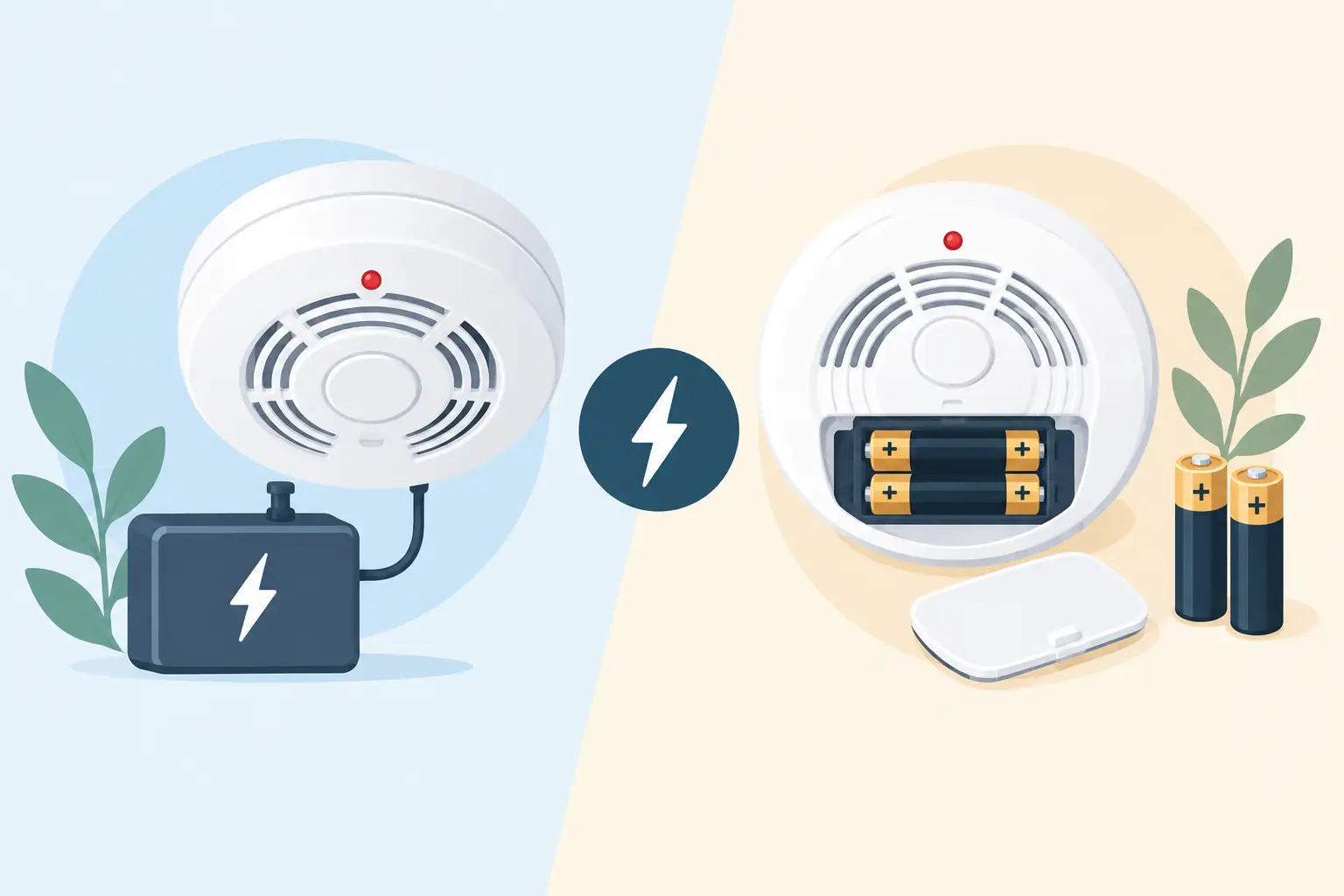
A smoke alarm is no use if it stops working during the one event it was installed for. That is the real issue behind battery backup vs replaceable battery alarms. One option is connected to your home’s mains power but keeps working through a blackout. The other runs entirely on a long-life sealed battery. Both can be compliant in Queensland, but they are not interchangeable in every home.
For Brisbane homeowners, landlords and anyone preparing for a sale or lease renewal, the right choice comes down to your property, the required installation locations and whether a licensed electrician is needed. Get it wrong and you may have alarms that are unreliable, poorly positioned or not compliant with Queensland smoke alarm laws.
Battery Backup vs Replaceable Battery Alarms: The Main Difference
A hardwired smoke alarm with battery backup is connected to your home’s 240V electrical supply. It draws normal operating power from the mains, while an inbuilt battery takes over if the power goes out. In a correctly installed interconnected system, when one alarm detects smoke, every alarm sounds.
A replaceable battery alarm, more accurately called a 10-year sealed lithium battery smoke alarm, is not wired into the mains. It is powered by a non-removable lithium battery designed to last the usable life of the alarm. It can also be wirelessly interconnected with other compatible alarms where required.
The word “replaceable” can cause confusion. Modern Queensland-compliant 10-year alarms generally do not have a battery you replace every year. The battery is sealed inside the unit. At the end of the alarm’s 10-year service life, the whole alarm is replaced.
Neither system is automatically better in every situation. Hardwired alarms are often the strongest choice for homes that already have wiring in place or are undergoing electrical work. Sealed 10-year lithium alarms are often the practical solution where running new cable would mean cutting into ceilings, walls or roof spaces.
What Queensland Homes Must Have
Queensland requirements are clear on the performance standard, not just the power source. Smoke alarms must be photoelectric, comply with Australian Standard AS 3786-2014, and be installed in the required locations. They must also be interconnected, so every alarm activates together.
For existing homes, this usually means alarms in each bedroom, in hallways that connect bedrooms to the rest of the home and on every storey. Exact placement matters. An alarm in the wrong spot, too close to a kitchen or bathroom, or missing from a required area can leave your property non-compliant even if the unit itself is a quality product.
For homes being sold, leased or having a lease renewed, the current requirements apply. Landlords cannot rely on old standalone alarms with removable 9V batteries and assume the job is done. Those older setups commonly fail on both reliability and interconnection.
New builds and substantial renovations have additional requirements that often favour hardwired smoke alarms. A licensed electrician can assess the wiring, alarm locations and whether your system needs hardwired interconnection, wireless interconnection or a combination of both.
When Hardwired Alarms With Battery Backup Make Sense
Hardwired alarms with battery backup are a dependable option for many Queensland homes. They have a continuous mains supply and retain protection when storms, faults or outages cut the power. That backup matters. A hardwired alarm without effective battery backup is not enough when the house is dark and vulnerable.
They are particularly suited to homes with existing compliant hardwired alarm points. Replacing old hardwired units with quality photoelectric interconnected alarms can be straightforward when the cabling and locations are suitable. They are also a sensible choice during renovations, when access is available and wiring can be installed properly before ceilings are closed.
The trade-off is installation. You should not attempt to connect smoke alarms to 240V wiring yourself. Hardwired work must be completed by a licensed electrician, and the installation needs to be tested as a complete system, not simply switched on at the wall.
Hardwired systems can also be easier to expand in larger properties. If a house has multiple levels, long hallways or detached living areas, careful system design is critical. You want every required alarm to communicate reliably, without dead spots or mismatched products.
The blackout question
Some people assume mains-powered means protected all the time. It does not, unless the alarm has a functioning backup battery. Queensland storms can knock out power at exactly the wrong time. A quality hardwired alarm with a long-life battery backup protects the home whether the power is on or off.
When a 10-Year Lithium Battery Alarm Is the Better Fit
A sealed 10-year lithium battery alarm is often the cleanest compliance solution for existing homes without hardwired smoke alarm cabling. It avoids unnecessary electrical alteration while still delivering photoelectric detection and interconnection when installed as part of a compatible system.
This can make it ideal for established Brisbane homes, units, townhouses and properties where gaining access to roof cavities is difficult. It can also reduce disruption. There is no need to chase walls, patch large ceiling sections or undertake electrical cabling simply to bring an older property up to standard.
The major benefit is low maintenance. There is no annual battery to forget, remove or install backwards. That matters because removable batteries have a long history of being taken out after nuisance beeping, then never put back. A sealed battery removes that weak point.
But “10-year” does not mean “fit and forget”. The alarm still needs regular testing, cleaning and visual checks. Dust, insects, paint, moisture and age can affect performance. In Brisbane’s humidity, cheap alarms can become unreliable well before you expect. Use quality alarms rated for local conditions, and replace the unit at the manufacturer’s stated end-of-life date.
Wireless interconnection must be compatible
Battery-powered does not mean standalone. Modern 10-year alarms can communicate wirelessly, allowing the bedroom alarm, hallway alarm and upper-floor alarm to all sound together. However, the units must be compatible and set up correctly.
Mixing brands or installing a single new alarm beside old, non-interconnected alarms is not a compliance upgrade. It is a patch job. A proper assessment looks at the entire property and makes sure the full system works as one.
The Cost Question: Cheap Now or Reliable for 10 Years?
The cheapest alarm on the shelf is rarely the cheapest outcome. Low-cost units may have poor sensor performance, short battery life, limited interconnection capability or a warranty that leaves you paying again when the unit fails. That is particularly frustrating when an urgent sale, tenancy or inspection is involved.
A quality smoke alarm system costs more because it is more than a plastic box on the ceiling. You are paying for photoelectric technology, compliant placement, reliable interconnection, professional installation where required and confidence that your family will be alerted early.
For many properties, the best value comes from choosing the right technology at the start. Installing a battery alarm where hardwiring is needed can create another job later. Paying to hardwire every location when a compliant 10-year wireless system suits the property can also be unnecessary. The answer is based on the home, not a one-size-fits-all package.
How to Choose the Right Alarm System
Start with the age and layout of the property. If you already have hardwired alarms, have a licensed electrician check whether the existing points, cabling and alarm locations can support a compliant upgrade. If there is no practical wiring access, sealed 10-year lithium alarms with wireless interconnection may be the smarter route.
Then check the whole system, not just the alarm making the occasional chirp. Are the alarms photoelectric? Are they interconnected? Are they installed in every required location? Are they within their service life? A smoke alarm more than 10 years old should be replaced, even if its test button still makes noise.
Finally, consider who relies on the property. A sleeping child behind a closed bedroom door, an elderly parent, a tenant on an upper floor or a family during a summer storm all need the same thing: every alarm sounding early enough to act.
The Smoke Alarm Sparky assesses Brisbane and South East Queensland homes for the system that fits the property and the law, then installs it properly. Whether that means hardwired alarms with battery backup or 10-year sealed lithium alarms, do not settle for a quick replacement that leaves the bigger compliance problem untouched.
A working smoke alarm system is not a maintenance detail to put off until next month. Check the dates, test the alarms and have the setup assessed before a sale, lease renewal or emergency makes the decision for you.