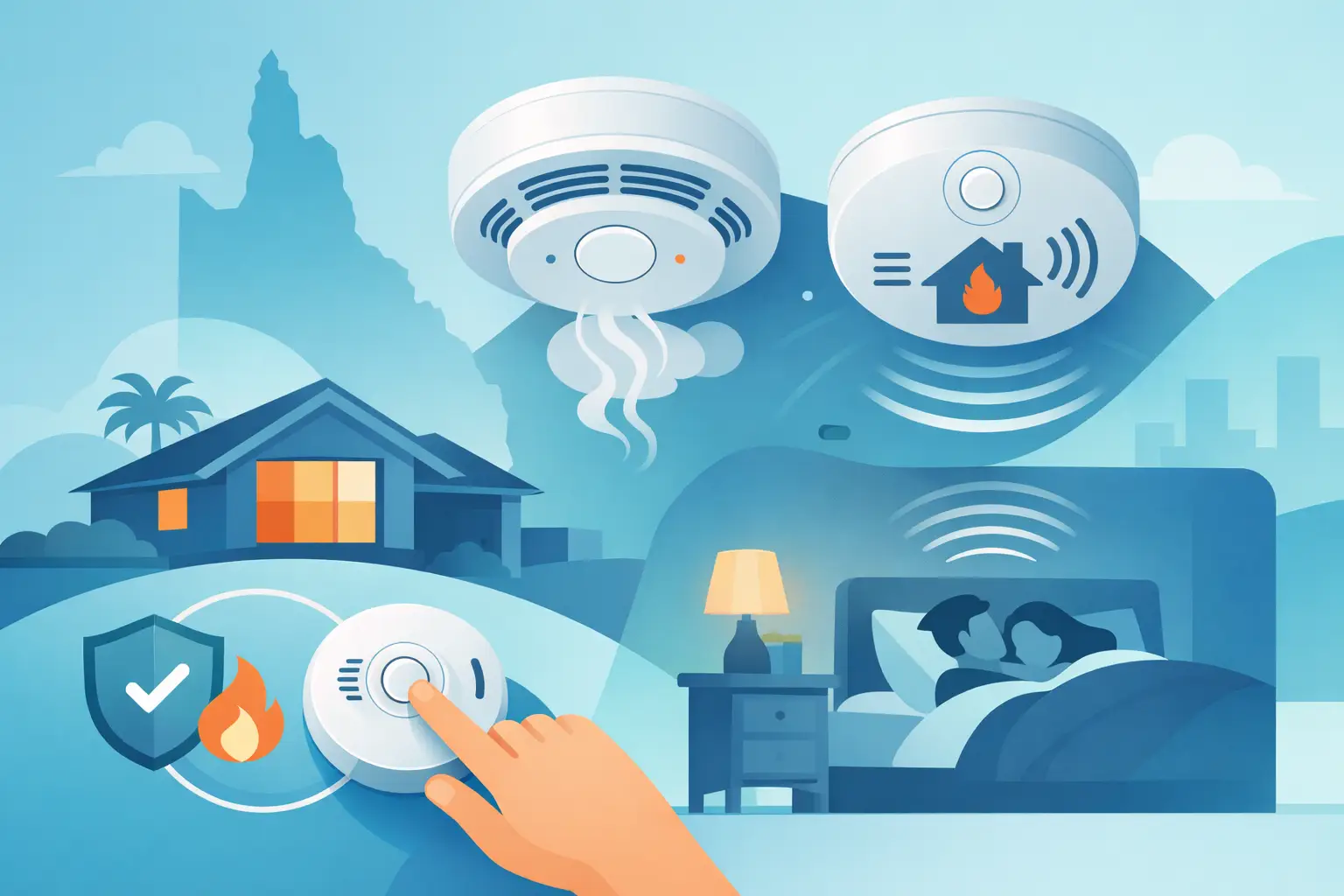
A smoke alarm that chirps when the humidity rises, goes flat after a few years or fails to wake the family is not a bargain. The best alarms Queensland homes can rely on are photoelectric, correctly located, interconnected and installed to meet the standard that applies to your property.
For Brisbane and South East Queensland homes, this is not a job to leave until settlement week, a new tenancy or after a near miss. Queensland’s smoke alarm requirements are specific, and cheap off-the-shelf options often create more cost and stress when they do not suit the home, the law or our humid climate.
What makes an alarm the right choice in Queensland?
The right alarm is not simply the loudest unit on the hardware-store shelf. It is a complete system designed to detect the most common type of household fire early, alert every person in the house and keep working when conditions are tough.
Queensland’s newer smoke alarm standard centres on photoelectric alarms. These are designed to respond effectively to slow, smouldering fires, such as a couch, mattress or electrical fault burning before open flames appear. That early warning matters most at night, when seconds can decide whether your family gets out safely.
A compliant system also needs the right power source and connection between alarms. In practical terms, when one alarm detects smoke, the others should sound too. If a fire begins in the garage, laundry or downstairs living area, an interconnected system helps ensure someone asleep behind a closed bedroom door hears the warning.
The best option for many homes is a hardwired, interconnected photoelectric system with battery backup, installed by a licensed electrician. It is dependable, professionally fitted and avoids relying solely on a removable battery. Where hardwiring is not reasonably practical, approved alarms with sealed 10-year lithium batteries may be suitable. The correct choice depends on the building, access to wiring, existing alarms and the work required to bring the property up to standard.
The Queensland smoke alarm rules are not optional
Queensland has phased in stronger smoke alarm requirements over several years. Since 1 January 2022, homes being sold, leased or having a lease renewed must meet the current smoke alarm standard. Owners of existing homes have until 1 January 2027 to meet the full standard, but waiting is rarely the smart move.
For properties caught by the current requirements, alarms must generally be photoelectric, comply with AS 3786:2014, be interconnected, and be hardwired or powered by a non-removable 10-year battery. Placement is just as important. Alarms are required in every bedroom, in hallways connecting bedrooms to the rest of the dwelling and on every level of the home.
That means one alarm in the hallway is not enough for most Queensland homes. A two-storey house, a home with bedrooms at both ends, or a converted garage can need several interconnected alarms. The layout determines the number and position - not a guess, and not the cheapest package advertised online.
For landlords, sellers and property managers, poor compliance can delay a transaction, create tenant risk and leave you scrambling for a last-minute electrician. For homeowners, the 2027 deadline does not reduce the danger of an old ionisation alarm or a dead battery tonight.
Photoelectric alarms beat the false economy of cheap replacements
Many older homes still have ionisation alarms. They were common for years, but they are not the preferred technology under Queensland’s current standard for properties being sold or rented. Replacing one old alarm with another basic unit may stop a chirp temporarily, but it will not necessarily make the property compliant.
There is also a difference between a low-cost alarm and a reliable long-term alarm. South East Queensland heat and humidity are hard on electrical products. Inferior alarms may nuisance-alarm, corrode, lose reliability or need replacing long before the advertised savings are worth it. A nuisance alarm is not just annoying. People often remove batteries, disconnect units or ignore alerts after too many false alarms. That is exactly the habit a safety system must never encourage.
Look for quality photoelectric alarms suited to Australian conditions, with a clear manufacturing standard, dependable interconnection and a proven service life. Then make sure they are installed where they can do their job. An excellent alarm in the wrong spot is still a weak safety plan.
Why hardwired alarms are often the strongest option
Hardwired alarms draw power from the home’s electrical supply and include battery backup for outages. They reduce the chance of an alarm being disabled because a battery has gone missing, and they are well suited to permanent, whole-home protection.
Installation must be completed by a licensed electrician. Wiring, circuit safety, interconnection and correct mounting all matter. This is not a DIY shortcut, particularly where you are upgrading a property for sale or tenancy.
A hardwired system can cost more upfront than buying a few battery alarms. But it is usually the better value where wiring access is practical, because it delivers a more durable compliant setup and reduces the risk of paying twice for replacements or rectification work.
When 10-year battery alarms make sense
Sealed 10-year lithium battery alarms can be a practical option in existing dwellings where hardwiring is not feasible without disproportionate work. They are not ordinary battery alarms. The battery is non-removable and intended to last for the alarm’s rated life.
That does not mean every battery model is acceptable. The alarm still needs to be photoelectric, appropriately certified, correctly located and interconnected where required. It also needs to be installed in line with the manufacturer’s instructions and Queensland requirements. A pack of unrelated alarms fitted room by room is not automatically a compliant system.
How many alarms does your home actually need?
The answer depends on your floor plan. Bedrooms, connecting hallways and each storey are the starting point, but the final layout should account for the actual paths people use to escape. A large single-level home may need more alarms than a compact two-bedroom unit. A split-level house, granny flat or renovated garage can also change the requirements.
This is where a proper assessment saves money. Rather than paying for unnecessary units or finding out later that key areas were missed, a licensed specialist can map the property and recommend the most sensible system. You should receive clear advice on the alarms being installed, their power source, interconnection method and what is required to maintain them.
Avoid placing smoke alarms too close to bathrooms, cooking appliances, ceiling fans or air-conditioning outlets without professional guidance. Steam, cooking vapour and moving air can cause nuisance alarms or affect performance. The goal is not to hide alarms from everyday household activity. It is to position them so they detect smoke quickly without becoming an alarm everyone learns to ignore.
Don’t confuse installation with ongoing safety
Even premium alarms need basic attention. Test them regularly using the test button, keep them free from dust and insect build-up, and act on fault warnings rather than silencing them for weeks. If an alarm reaches the end of its stated service life, replace the entire unit. Changing a battery does not renew an ageing sensor.
For rental properties, ongoing testing and record keeping are especially important. For owner-occupiers, regular checks are simply part of protecting the people under your roof. Tell children what the alarm sounds like, agree on an outside meeting place and do not re-enter a burning home for valuables or pets.
Choose a system you will not have to fix twice
The best smoke alarms are the ones that meet Queensland requirements, suit your home’s layout and keep working when you need them most. Price matters, but a cheap installation that is non-compliant, poorly positioned or built with low-grade products is not a saving.
The Smoke Alarm Sparky installs Queensland-compliant photoelectric alarm systems for Brisbane and surrounding South East Queensland homes, with licensed electrical work and a 10-year full replacement warranty. If you are selling, leasing, renewing a tenancy or simply tired of wondering whether your old alarms are safe, get the system assessed before it becomes an urgent problem.
Your home does not need more gadgets. It needs a smoke alarm system that gives your family a real warning and gives you confidence that the job has been done properly.