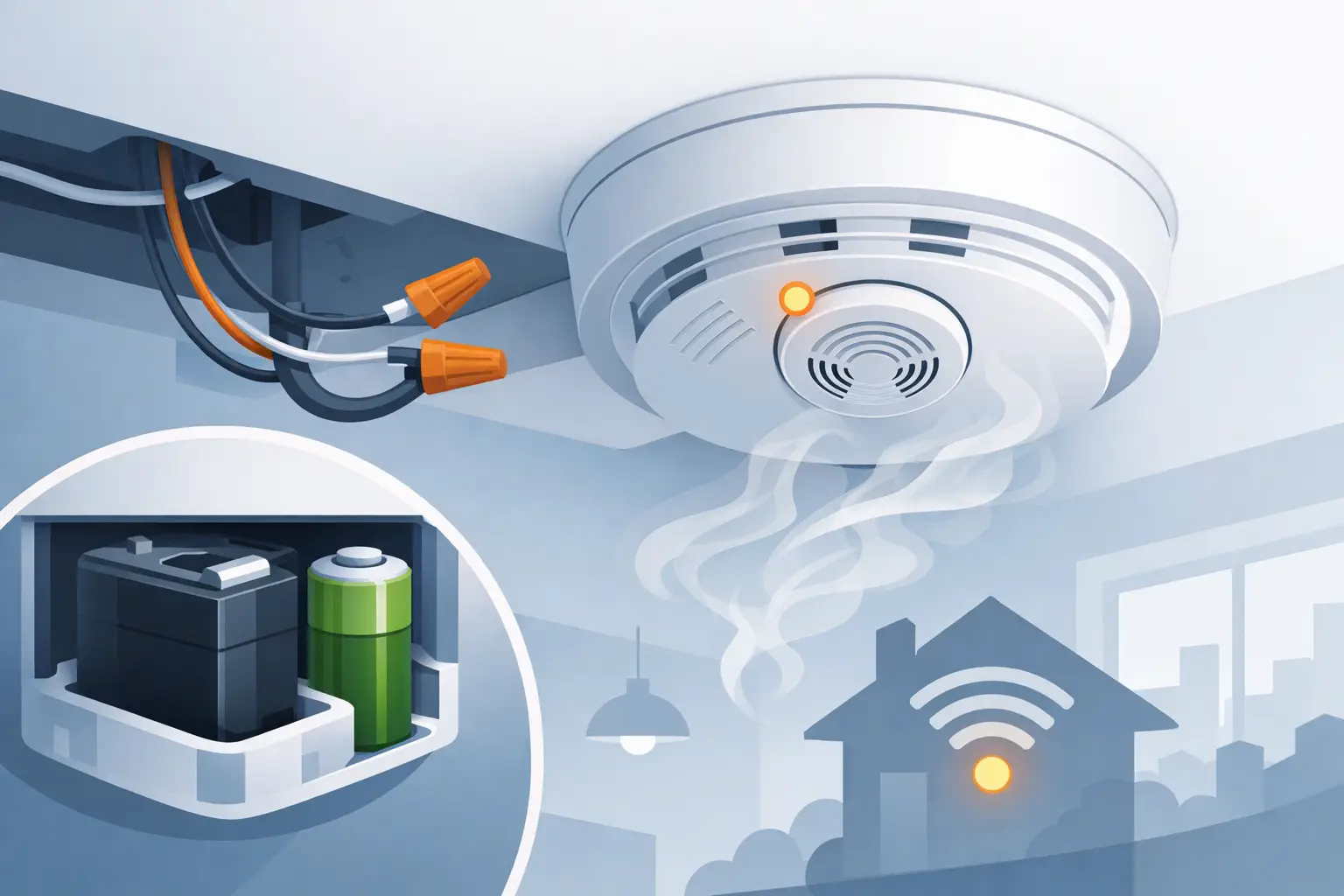
When a smoke alarm fails at 2 am, nobody cares that it was cheap. They care that it worked. That is exactly why hardwired smoke alarms with battery backup are the standard serious homeowners and landlords should be looking at, especially in Brisbane and South East Queensland where heat, humidity and outdated alarm setups cause problems far too often.
This is not just about ticking a box for a sale, lease renewal or insurance file. It is about having an alarm system that still works if the power goes out, can be interconnected properly, and is installed to meet current requirements rather than old habits. If your home still relies on ageing battery-only alarms or mismatched devices from the hardware store, you are taking a risk that is hard to justify.
Why hardwired smoke alarms with battery backup matter
A hardwired alarm is connected to your home’s electrical system. The battery backup is there so the alarm keeps working during a blackout. That matters more than many people realise. Storms, electrical faults and tripped circuits do not pause the fire risk inside a home.
In practical terms, hardwired systems are more dependable than cheap standalone units. They are designed for permanent installation, and when installed properly by a licensed electrician, they remove a lot of the weak points that show up with DIY alarm setups. Loose batteries, disconnected units and random alarm brands cobbled together room by room are common in older homes. They are also exactly the sort of problems that come back to bite owners during inspections, settlements and emergencies.
There is also the issue of interconnection. In many Queensland homes, smoke alarms need to all sound together. If one alarm detects smoke, the others must activate too. That gives sleeping occupants a much better chance of hearing the warning early, whether the fire starts in a bedroom, hallway or living area.
Queensland compliance is not optional
Queensland smoke alarm laws have tightened for a reason. Too many homes were relying on outdated ionisation alarms, poor placement and alarms that were never likely to perform properly when needed.
For many properties, compliant alarms must be photoelectric, interconnected, installed in the required locations and either hardwired or powered by a non-removable 10-year battery. If you are selling, buying, leasing, renewing a lease or simply trying to bring an older home up to standard, the details matter. Close enough is not compliant.
This is where people get caught out. They assume any alarm with a battery and a test button will do the job. It will not. The wrong alarm type, wrong placement or non-interconnected setup can leave you with an unsafe property and a nasty surprise when it is time to sell or rent.
Hardwired smoke alarms with battery backup are often the preferred option because they suit full compliance upgrades well, especially in owner-occupied homes and properties where long-term reliability matters more than the lowest upfront price.
Hardwired vs battery-only alarms
There is a place for 10-year lithium battery alarms in some situations, but they are not always the best answer. The right choice depends on the property, access to wiring, ceiling layout, budget and what stage the property is at.
Hardwired alarms have a stronger long-term feel because they are powered by the home, backed up by battery and generally installed as part of a proper electrical job. They suit homeowners who want a lasting solution and landlords who do not want ongoing callouts over battery issues or dubious replacements.
Battery-powered alarms can be useful where wiring is difficult or where a compliant upgrade needs a practical pathway. But cheap replaceable-battery alarms are where many problems begin. They get removed, ignored, chirp endlessly, or fail early in humid conditions. Saving money at purchase can mean paying again for replacements, faults and non-compliance.
The real trade-off is simple. If you want the neatest, most durable system and your home is suitable, hardwired is usually the stronger option. If wiring is difficult or the property calls for a different compliant solution, a high-quality 10-year battery model may be appropriate. What does not make sense is guessing.
Why Brisbane homes need quality alarms
Brisbane and surrounding suburbs are tough on low-grade smoke alarms. Humidity, ceiling heat and day-to-day temperature swings can shorten the life of poor-quality units. That is why bargain alarms often become expensive. They false alarm, deteriorate early or simply do not inspire confidence.
This local factor gets ignored far too often. A box on a shelf may claim to be suitable, but real homes in Redland, Logan, Wynnum, Capalaba and nearby areas are not showroom conditions. If you are installing alarms in a family home, investment property or place being prepared for sale, you want products that can handle the environment, not just survive long enough to get through a quick inspection.
That is one reason specialist installation matters. A licensed electrician who works with smoke alarm compliance every week understands how product quality, wiring method, placement and local conditions all affect performance.
What a proper upgrade should include
A proper smoke alarm upgrade is not just swapping a few discs on the ceiling. It starts with identifying what is already there, what is non-compliant, and what needs to change to meet current requirements.
In many homes, that means removing old ionisation alarms, checking bedroom and hallway coverage, adding alarms where they are missing, and making sure the whole system is interconnected correctly. With hardwired alarms, it also means safe electrical installation by someone licensed to do the work.
This is where DIY falls apart. People buy alarm kits online, mix brands, install in the wrong spots or assume existing wiring can be reused without proper assessment. Then they wonder why the system faults, does not interconnect properly, or fails compliance checks.
A proper installer should be able to tell you clearly what your property needs, what it will cost, and whether hardwired alarms are the best fit or whether another compliant option makes more sense. No fluff. No vague promises.
When hardwired smoke alarms with battery backup are the best choice
They make strong sense for homeowners planning to stay put, families wanting dependable protection, and anyone renovating or updating an older property. They are also a smart option for sellers who want a clean, professional compliance upgrade before going to market.
If you have had repeated issues with battery alarms, nuisance chirping, poor installation or old alarms of unknown age, hardwired units are often the reset button. They give you a proper system instead of another patch-up.
They are also well suited to properties where presentation matters. A tidy, professionally installed, interconnected alarm setup sends the right message to buyers, tenants and inspectors. It shows the property has been looked after properly.
That said, every home is different. Double-storey homes, concrete ceilings, renovations, access limitations and existing circuits can all affect the installation approach. That is why a one-size-fits-all quote without inspection can be misleading.
The mistake people make when chasing the cheapest quote
The cheapest quote often strips out the very things that make the system worth having. Lower-grade alarms. Short warranties. Rushed installs. Little care about local humidity. No clear compliance explanation. No confidence if something goes wrong later.
That might look fine on paper until an alarm fails early or a property manager, buyer or inspector starts asking questions. Then the cheap option is not cheap anymore.
A proper smoke alarm installation should give you confidence for the long haul. That means compliant products, licensed installation, reliable interconnection and a warranty that actually means something. The Smoke Alarm Sparky has built its service around exactly that because too many households have already paid twice for jobs that should have been done properly the first time.
What to do next
If your alarms are more than ten years old, if they are not interconnected, if they are battery-only and inconsistent throughout the house, or if you are unsure whether they meet Queensland rules, treat that as a prompt to act now. Not later.
Hardwired smoke alarms with battery backup are not a fancy upgrade. They are a practical safety system for homes where reliability matters. For many Brisbane households, they are the clearest path to stronger protection and fewer compliance headaches.
A good smoke alarm system should let you stop worrying about it. That is the point. Get the right advice, get the right alarms, and get them installed properly before the weak link in your home is the one thing meant to warn you first.