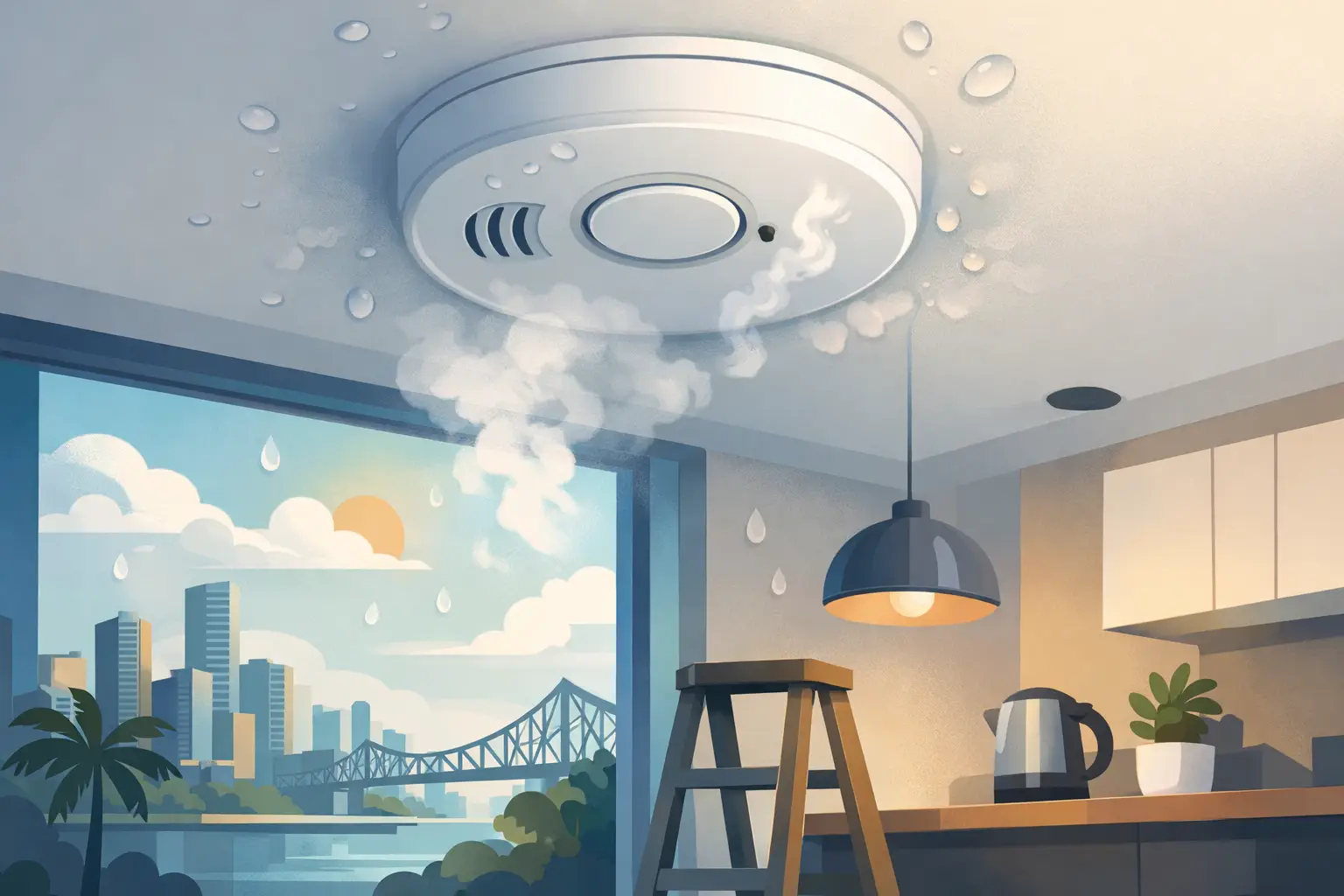
A smoke alarm that shrieks every time someone takes a hot shower quickly becomes a smoke alarm people silence, remove or ignore. That is exactly the wrong outcome in a Brisbane home, where humidity is part of everyday life for much of the year. This humidity proof smoke alarm review cuts through the marketing and explains what actually matters: fewer nuisance alarms, reliable detection, Queensland compliance and an installation that stays dependable long after the first summer storm.
First, a blunt truth. No smoke alarm should be chosen simply because the box says it is “humidity proof”. Smoke alarms are life-safety devices, not bathroom accessories. The right result comes from combining a quality photoelectric alarm, suitable environmental tolerance, correct placement and licensed installation.
What “humidity proof” should mean in a smoke alarm review
In real homes, humidity causes trouble in two ways. Moisture and steam can create nuisance alarms, particularly near bathrooms, laundries and kitchens. Over time, prolonged damp conditions can also affect low-quality units, batteries and internal components, leading to faults, chirping or complete failure.
A worthwhile humidity-resistant alarm is built to operate within a broad temperature and humidity range, but that is only half the job. It must also be a photoelectric model suitable for Queensland homes and installed away from direct steam, cooking fumes, air-conditioning vents and other sources of contamination.
If an installer promises an alarm can be fitted anywhere because it is “humidity proof”, be cautious. There is no product feature that makes poor placement safe or compliant.
The clear winner: photoelectric alarms installed properly
For Brisbane properties, photoelectric smoke alarms are the sensible choice. They are designed to detect visible smoke from slow, smouldering fires - the type that can develop in bedrooms, lounges and living areas while a household is asleep. They are also generally less prone to nuisance alarms from cooking than older ionisation alarms.
Queensland smoke alarm laws require photoelectric alarms that comply with AS 3786:2014. Depending on the property and the work being performed, alarms may need to be hardwired with a secondary power source and interconnected so that when one alarm detects smoke, every alarm sounds.
That interconnection matters. A fire starting in a garage or living area should not rely on someone in a closed bedroom hearing one distant alarm through doors, fans and air-conditioning. An interconnected system gives the household a better chance of waking early and getting out.
For existing homes where hardwiring is not reasonably practicable, long-life battery alarms may be appropriate. But cheap battery alarms are not a shortcut to compliance. The model, location, age and installation requirements still need to be checked properly.
What separates a reliable alarm from a cheap one
The lowest-priced hardware-store alarm may look like a saving at checkout. In humid South East Queensland conditions, it can become a repeat expense when it starts false alarming, develops a fault or needs replacing well before it should.
A quality alarm system should deliver more than a loud siren. Look for a recognised photoelectric unit with the required Australian Standard compliance, a sealed long-life battery where applicable, clear end-of-life warnings and a housing designed for stable operation in changing conditions. For hardwired alarms, battery backup is critical. A power outage during a storm is not the time for a smoke alarm system to go offline.
The practical test is simple: will this alarm still be working correctly after years of hot, wet summers, ceiling-cavity dust and normal household use? That is where premium products and professional installation earn their keep.
There is a trade-off. Better alarms and a compliant interconnected installation cost more than a single bargain unit. But the cheaper option can leave you with nuisance alarms, replacement costs, failed sale or lease compliance checks, and no confidence that your family is protected.
Placement matters more than marketing claims
Many humidity-related alarm issues begin with the alarm location, not the alarm itself. Smoke alarms should not be installed inside bathrooms or positioned where shower steam can flow directly onto them. The same goes for immediately outside a steamy bathroom door, next to a laundry dryer outlet or too close to a kitchen.
That does not mean you can leave nearby sleeping areas unprotected. It means the layout needs to be assessed properly. A licensed electrician can identify the compliant position that provides early warning while reducing exposure to steam and fumes.
Ceiling fans, split-system air-conditioning outlets and open windows can also interfere with smoke movement. If airflow pushes smoke away from an alarm, detection may be delayed. A good installer considers the room, ceiling shape, doorways, airflow and required coverage - not just the closest spot to run a cable.
Humidity proof smoke alarm review: hardwired vs 10-year battery
Both options can be effective when they are suitable for the property and installed to the required standard.
Hardwired interconnected alarms with battery backup are often the strongest long-term option for homes where cabling can be installed. They receive mains power, retain backup power during outages and can alert the whole household at once. They are particularly well suited to larger homes, multi-storey properties and major upgrades where access is available.
Ten-year lithium battery alarms can be a practical solution in existing homes where hardwiring is not reasonably practicable. They avoid routine battery changes and can provide reliable operation when a compliant, quality model is selected. However, they still have a defined service life and must be replaced at the end of that period.
The correct choice depends on the home, not on a one-size-fits-all sales pitch. A Queenslander with tricky ceiling access, a modern two-storey home and an investment unit all present different installation considerations.
Warning signs your current alarms are not up to the job
Do not wait for a real fire to find out your alarms are unreliable. A chirping unit, frequent false alarms, yellowed casing, missing alarm, expired date marking or an alarm that does not sound during testing all need attention.
Be especially wary if your property still has ionisation alarms, separate alarms that do not interconnect, or units older than their stated service life. Smoke alarms are not fit-and-forget devices. Dust, insects, humidity and age all take their toll.
For landlords, sellers and property managers, this is also a compliance issue. Queensland requirements apply at key points including property sales, new leases and lease renewals. Leaving an outdated system until the last minute can create avoidable stress when a tenant is due to move in or a settlement date is approaching.
Why DIY is a risky way to solve a smoke alarm problem
Replacing a battery may be straightforward. Designing or altering a hardwired, interconnected smoke alarm system is electrical work and should be handled by a licensed electrician. More importantly, DIY installation can result in the wrong alarm type, incorrect location, missing interconnection or no proper verification that the system performs as intended.
A professional assessment also prevents the common mistake of moving an alarm because it is annoying, then creating a dangerous gap in coverage. The answer to a nuisance alarm is not to disable protection. It is to identify whether steam, cooking, placement, contamination or a failing unit is causing the problem.
The Smoke Alarm Sparky assesses the whole setup, installs Queensland-compliant photoelectric alarms and provides a 10-year full replacement warranty on eligible work. That gives Brisbane homeowners and property stakeholders a clear path to compliance without gambling on short-lived products or rushed workmanship.
The verdict for humid Brisbane homes
The best “humidity proof” smoke alarm is not a magic product that ignores steam and moisture. It is a quality, compliant photoelectric alarm system selected for the home, placed correctly and installed by a licensed specialist. Hardwired interconnected alarms with battery backup are often the preferred long-term solution, while compliant 10-year battery alarms can suit homes where hardwiring is impractical.
If your alarms false alarm after showers, chirp in humid weather, are nearing expiry or do not meet current Queensland requirements, treat it as a safety issue, not a minor annoyance. Arrange a proper assessment before the next storm season, tenancy deadline or family night when an alarm needs to do the one job that matters: give everyone enough warning to get out safely.