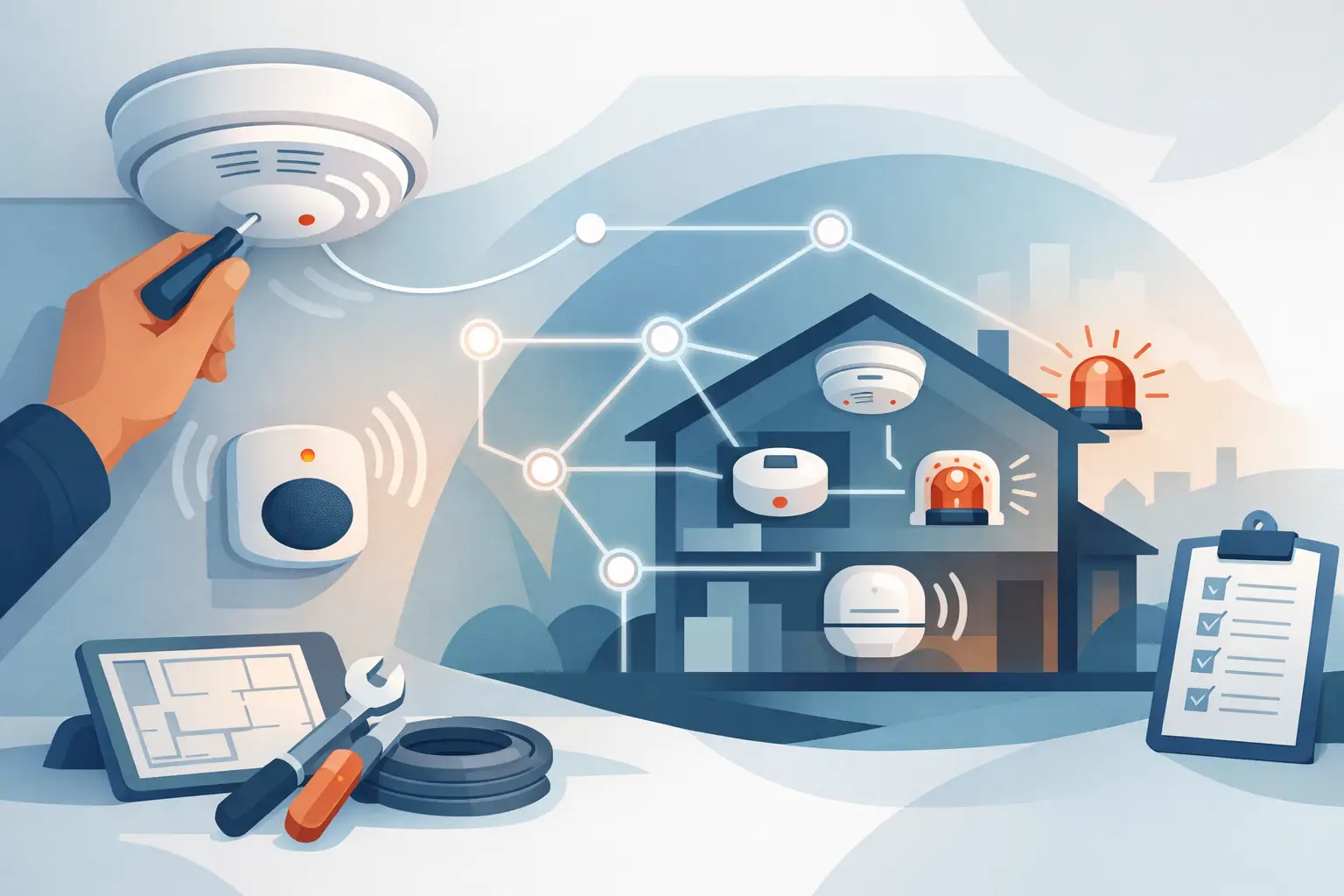
One alarm going off in the hallway is easy to miss if your bedroom door is shut and the air con is running. That is exactly why an interconnected alarm installation guide matters. In a real house fire, seconds count, and a single isolated alarm does not give your family the same warning as a properly interconnected system that sounds throughout the home.
For Brisbane and South East Queensland homes, this is not just about better safety. It is also about compliance. Queensland smoke alarm laws are strict, and they should be. If you are selling, leasing, renewing a lease, or upgrading an older property, the wrong setup can leave you exposed to failed compliance, extra costs, and a home that is still not properly protected.
What an interconnected alarm installation guide should actually cover
A proper interconnected alarm installation guide is not just a wiring diagram and a shopping list from the hardware store. It needs to cover alarm type, placement, power source, interconnection method, compliance rules, and the conditions inside local homes that shorten product life.
That last point gets overlooked all the time. Brisbane humidity is hard on cheap alarms. You can buy a bargain unit, clip it to the ceiling, and feel productive for an afternoon. That does not mean it will stay reliable. False alarms, sensor failure, battery issues and early replacement are common when low-grade products are used in the wrong environment.
A proper installation starts with choosing photoelectric smoke alarms that are designed for residential use and meet Queensland requirements. From there, each alarm needs to be positioned where it can detect smoke early and warn occupants across the whole home, not just one section of it.
Where interconnected smoke alarms need to go
In most homes, the placement matters just as much as the alarm itself. You can have quality products and still end up with poor coverage if the layout is wrong.
Queensland compliance generally requires smoke alarms in each bedroom, in hallways that connect bedrooms, and on every storey. If there is no hallway, alarms need to be installed in the part of the storey that connects the bedrooms and the rest of the dwelling. In many homes, additional alarms are also needed in living areas and paths of travel to improve early warning.
This is where DIY installs often go wrong. People assume one upstairs and one downstairs is enough. It usually is not. Others put alarms too close to kitchens, bathrooms, fans, or air conditioning vents, which can lead to nuisance alarms or poor smoke detection. There is a balance between legal minimums and practical protection, and it takes experience to get that right.
Bedrooms, hallways and storeys
If someone is asleep behind a closed door, smoke in another part of the home may not trigger the nearest alarm soon enough for them to react. Interconnection solves part of that problem by making all alarms sound together, but only if each unit is installed in the correct location.
That means coverage inside sleeping areas, outside sleeping areas, and across each level of the home. Larger homes, split-level properties, renovated Queenslanders and dual-living setups can be more complicated again. A one-size-fits-all approach is risky.
Avoiding bad placement
Alarms should not be installed where steam, cooking residue, or airflow will interfere with sensing. They also need correct spacing from walls, corners and fixtures. A licensed electrician who specialises in smoke alarms will know the manufacturer specifications as well as the state requirements. That matters, because compliant products can still become non-compliant installations if they are mounted badly.
Hardwired or wireless - which is better?
This is one of the most common questions, and the honest answer is that it depends on the property.
Hardwired interconnected alarms with battery backup are a strong option for many homes. They provide stable power, support reliable interconnection, and are often preferred in full upgrades or major renovations. If access is straightforward, hardwiring can give a very clean, durable result.
Wireless interconnected alarms can also be an excellent solution, especially in finished homes where running new cabling would mean unnecessary ceiling damage, higher labour costs, or disruption. A good wireless system installed properly can still meet compliance requirements and provide whole-home alarm activation.
The wrong answer is choosing based on sticker price alone. Cheap alarms and cheap installs often look attractive until they start chirping, dropping connection, or failing early in humid conditions. Then the homeowner ends up paying twice.
Why licensed installation matters
Smoke alarms are safety devices. In many properties, they are also compliance devices. That is not a job for guesswork.
A licensed electrician does more than screw alarms to a ceiling. They assess the home layout, check what is already installed, identify non-compliant locations, confirm the correct power method, and install the system to current legal and manufacturer standards. They also test interconnection across every alarm, verify operation, and make sure the system is fit for purpose.
For homeowners, landlords, sellers and buyers, this is where peace of mind comes from. Not from a packet off the shelf. Not from a handyman saying, “That should do it.” Proper installation reduces the chance of false alarms, dead units, failed inspections and unsafe gaps in coverage.
Common mistakes this interconnected alarm installation guide can help you avoid
The biggest mistake is assuming any smoke alarm is better than none. That sounds reasonable until you look at how often older ionisation alarms, expired alarms, isolated alarms or badly placed alarms fail to give early warning.
Another common problem is mixing old and new units that do not communicate properly. If one alarm sounds and the others stay silent, the system is not doing its job. Likewise, replacing a failed unit with a random model can break interconnection or create compliance issues.
Then there is product lifespan. Many homeowners do not realise smoke alarms have expiry dates. If your alarms are older, yellowed, inconsistent, or prone to nuisance chirping, replacement is often the smarter option than patching the system.
Humidity is another local issue. In South East Queensland, lower-grade products can struggle sooner than expected. A compliant alarm on paper is not enough if it cannot handle the environment inside the home.
What the installation process usually looks like
In a straightforward house, the process begins with a property assessment. The installer checks bedroom locations, storeys, hallways, existing wiring, alarm age and whether the current setup meets Queensland law. From there, they recommend the right number of alarms, the best interconnection method, and any upgrades needed.
Installation itself may be quick or more involved depending on the layout. A newer single-storey home can be simple. An older home with poor access, previous DIY work, or outdated wiring can take more planning. Either way, the end result should be the same - every required area covered, every alarm interconnected, and the system tested properly.
For many customers, speed matters as much as quality. If you are preparing for a sale, lease renewal or settlement, delays are a headache you do not need. That is why specialist providers such as The Smoke Alarm Sparky focus on getting compliance done properly the first time, without turning it into a drawn-out project.
Interconnected alarm installation guide for property compliance
If you own an investment property or you are selling your home, this is where the stakes go up. Smoke alarm compliance is not optional paperwork. It affects legal obligations, tenant safety, and transaction confidence.
Buyers are more alert to compliance issues than they used to be. Tenants and property managers are too. If the alarms are outdated, poorly located, or not interconnected where required, it can create delays, disputes, or urgent replacement costs right when you least want them.
The safest approach is to upgrade before it becomes a problem. That gives you time to install the right products, avoid rushed decisions, and know the property is properly protected.
The real question is not whether you can install alarms
The real question is whether you want to trust your family, your property and your legal obligations to the cheapest option available. Smoke alarm compliance in Queensland is too important for shortcuts. The right interconnected system gives earlier warning, stronger protection and fewer headaches later.
If your current setup is old, isolated, or questionable, now is the time to sort it out before you need it to work.