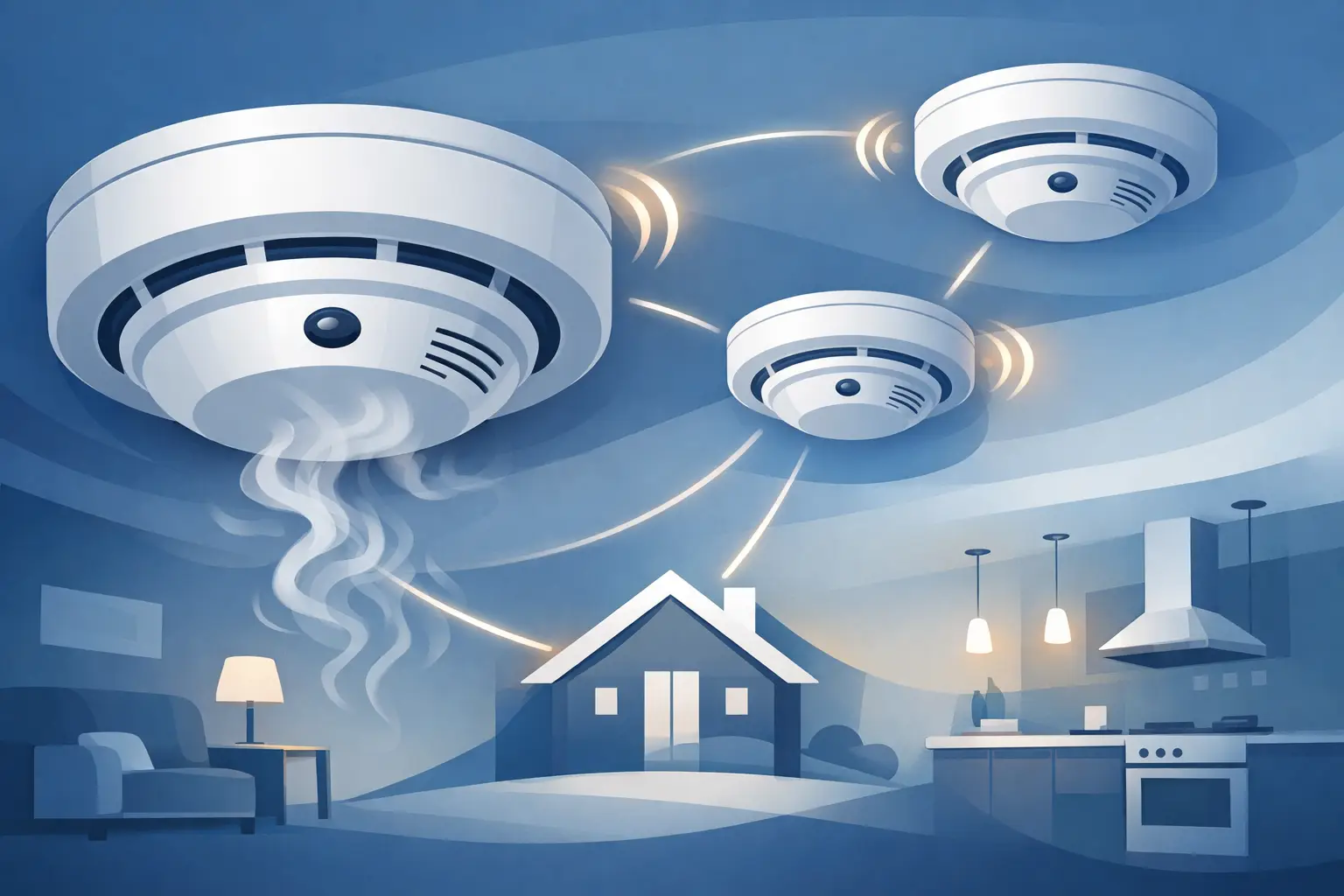
A fire can start in the laundry, garage or kitchen while your family is asleep at the other end of the house. If only the nearest alarm sounds, that warning may not reach the bedrooms quickly enough. Interconnected photoelectric smoke alarms solve that problem by making every alarm activate together.
For Brisbane homes, this is not simply a sensible upgrade. Queensland smoke alarm laws require interconnected, photoelectric alarms in homes being sold, rented or leased, and all owner-occupied homes must meet the standard by 1 January 2027. Getting the right system installed now protects your household and removes a major compliance headache later.
What interconnected alarms actually do
An interconnected system links the smoke alarms throughout your property. When one alarm detects smoke, it sends a signal to every other connected alarm. The result is a whole-home warning, not a single beep isolated to the room where the fire began.
That matters most at night. Closed bedroom doors, air-conditioning, television noise and the size of modern homes can all delay the moment someone hears a local alarm. A linked alarm in or near each sleeping area gives everyone a better chance of waking early and getting out.
Interconnection can be achieved through hardwired cabling or approved wireless radio-frequency technology. The right choice depends on the home. A new build or major renovation may suit a fully hardwired system, while a quality wireless interconnected system can be a practical solution for an established Queensland home where running new cable would mean unnecessary disruption.
Wireless does not mean cheap or improvised. It needs to be a compatible, compliant system installed and tested correctly. Mixing random alarms from different brands, or assuming every wireless model will communicate with another, is how homeowners end up with an installation that looks right but fails when it counts.
Why photoelectric detection is the Queensland standard
Photoelectric alarms are designed to respond effectively to the slow, smouldering fires that can fill a home with dangerous smoke before visible flames appear. These fires may begin in furniture, bedding, electrical equipment or faulty appliances.
Ionisation alarms, which were common in older homes, can react differently and are more prone to nuisance alarms from cooking. They do not meet Queensland's current requirement for smoke alarms in residential properties. If your home still has old ionisation units, expired alarms or a mixture of alarm types, do not assume you are compliant.
Queensland requirements call for photoelectric alarms that comply with AS 3786:2014. They must be interconnected, and they must be positioned correctly. Buying a compliant alarm is only part of the job. Placement, power supply, interconnection and installation all matter.
Humidity adds another consideration in Brisbane and across South East Queensland. Cheap alarms can struggle in hot, humid roof spaces and internal areas exposed to moisture changes. That can mean false alarms, corrosion, early failure or an alarm that has quietly stopped doing its job. A reliable system is not the place to chase the lowest upfront price.
Where Queensland homes need smoke alarms
Queensland's rules are specific because location affects how quickly occupants receive a warning. At a minimum, alarms are required on every storey, in every bedroom, and in hallways connecting bedrooms to the rest of the dwelling. Where there is no hallway, alarms need to be located between the bedrooms and the other areas of the home.
The layout of your house determines the final alarm plan. A single-storey three-bedroom brick home, a Queenslander with a converted lower level, and a two-storey townhouse do not have identical needs. Stairways, bedroom wings, open-plan living areas and detached sleepouts can all change where alarms should go.
Placement also needs care. An alarm too close to a bathroom, kitchen, ceiling fan, air-conditioning vent or poorly ventilated corner may be prone to nuisance activations or reduced performance. Moving it to a convenient spot after installation can create a compliance issue. A licensed electrician can assess the layout and install the alarms where they are required to work properly.
Hardwired or 10-year battery: which is right for your property?
Hardwired alarms are connected to the home's 240V electrical supply and include a secondary battery backup. They are the preferred option where hardwiring is reasonably practicable, particularly in new homes and substantial renovations. With professional installation, they provide dependable primary power and can be linked across the property.
For many existing homes, installing new wiring between every required alarm location is not always practical without opening ceilings and walls. In these cases, compliant 10-year lithium battery alarms with wireless interconnection can be suitable. The battery must be sealed and non-removable, not a standard replaceable battery that can be taken out and forgotten.
There is no one-size-fits-all answer. A property with accessible roof space may be straightforward to hardwire. A concrete apartment, heritage home or finished two-storey residence may be better served by a premium wireless interconnected system. What is not acceptable is leaving old standalone alarms in place because an upgrade feels inconvenient.
Interconnected photoelectric smoke alarms for landlords and sellers
If you are selling a home, leasing it to a tenant or renewing a tenancy, the Queensland rules already apply. Your smoke alarms must be photoelectric, interconnected and installed in the required locations. Waiting until the contract date or property manager inspection can turn a simple upgrade into an urgent, expensive scramble.
Landlords also have ongoing obligations. Smoke alarms must be tested and cleaned within 30 days before the start of a new tenancy, and they must be tested at least once every 12 months during a tenancy. Tenants have responsibilities too, including testing alarms every 12 months and replacing batteries where applicable. A sealed 10-year battery system reduces the usual battery-change problem, but it does not remove the need for testing and maintenance.
For sellers, compliance is more than paperwork. Buyers are alert to electrical and safety defects, and an outdated alarm setup can raise questions during the sale process. A properly installed system gives you a clear, practical safety upgrade before settlement.
Common mistakes that leave homes exposed
The most common issue is assuming that a smoke alarm is a smoke alarm. It is not. A standalone photoelectric alarm may still be non-compliant if it is not interconnected. An alarm with a replaceable 9V battery may still be non-compliant if hardwiring is practicable or the battery is not a sealed 10-year type.
Another mistake is retaining alarms beyond their service life. Smoke alarms generally have a 10-year lifespan from the date of manufacture. Check the label on the back, not the day you moved in. Yellowed plastic, intermittent chirping and an alarm that fails a test are obvious warning signs, but age alone is enough reason to replace it.
DIY installation creates avoidable risks as well. Hardwired work must be completed by a licensed electrician. Even battery or wireless installations need a proper compliance assessment, correct positioning and full interconnection testing. A system that has not been tested as one system cannot be trusted to alert the whole home.
What a proper installation should include
A professional smoke alarm upgrade starts with the property layout, not a box of alarms. The installer should identify every required location, check existing units and power arrangements, and recommend a system suited to the building and budget.
The work should then include compliant installation, interconnection testing and confirmation that triggering one unit activates the others. You should know what has been installed, how to test it, when it needs replacement and what warranty applies. If the quote is vague about the alarm type, connection method or warranty, ask more questions before agreeing to the work.
The Smoke Alarm Sparky installs Queensland-compliant systems for Brisbane and surrounding South East Queensland homes, using licensed electricians and premium alarms selected for local conditions. A 10-year full replacement warranty gives homeowners a stronger answer than a cheap alarm and a short promise.
Do not wait for a property sale, lease renewal or a midnight chirp to find out your alarms are outdated. Check the manufacture date, press the test button, and make sure every required alarm sounds together. If they do not, your home needs attention now.