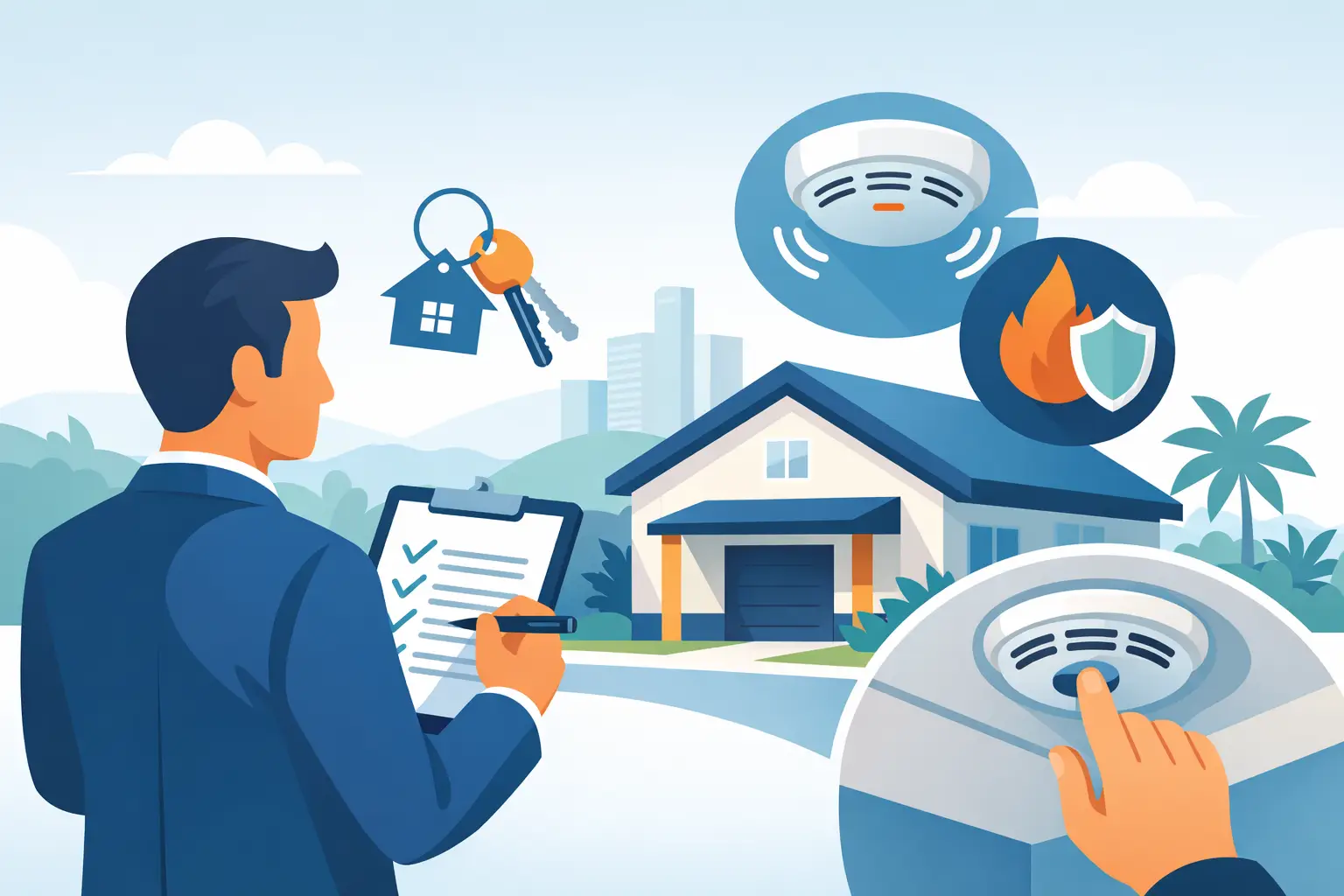
A landlord compliance example is not a box-ticking exercise. It is the difference between a rental home that gives every occupant an early warning and one that may fail when smoke starts moving through the property. In Queensland, landlords need the right alarms, in the right locations, connected correctly and maintained before a tenant moves in.
Here is what that looks like in a realistic Brisbane rental property.
Landlord Compliance Example: A Three-Bedroom Home
Imagine a single-storey, three-bedroom brick home in Logan. The property has an open-plan kitchen and living area, a hallway leading to the bedrooms, and a small internal laundry. The landlord is preparing for a new tenancy after the previous tenant has moved out.
The home has three old battery-operated smoke alarms. One is in the hallway, one is near the living room, and one sits too close to the kitchen. None are interconnected. One chirps intermittently in humid weather. This is a common setup, and it is not good enough for a Queensland rental property.
The compliant outcome is straightforward. The landlord arranges for compliant photoelectric smoke alarms to be installed:
- inside each bedroom
- in the hallway connecting the bedrooms to the rest of the dwelling
- on every storey of the home where required by the layout
- away from locations likely to cause nuisance alarms, such as directly outside a steamy bathroom or too close to cooking appliances.
Every required alarm is interconnected. If smoke triggers the alarm in a bedroom, every alarm sounds throughout the house. That matters at night. A closed bedroom door can reduce the sound reaching someone asleep, so an alarm in the hallway alone is not a reliable answer.
Where hardwiring is practicable, alarms should be connected to the home’s mains power with battery backup. Where hardwiring is not practicable, approved 10-year lithium battery alarms may be used. The right solution depends on the building, its wiring access and the existing electrical setup. What does not change is the need for photoelectric alarms that meet Queensland requirements and operate as one system.
Why Old Alarms Can Leave a Landlord Exposed
Many landlords assume an alarm is compliant because it makes a noise when the test button is pressed. That is only one part of the picture. An alarm can work in isolation and still fail the placement, interconnection or power-source requirements for a rental property.
Ionisation alarms are another problem. They are more prone to nuisance alarms from cooking and may be removed or disabled by frustrated occupants. Queensland’s rules require photoelectric smoke alarms in prescribed locations because they provide earlier warning for smouldering fires, the type that can fill a home with toxic smoke while people are asleep.
Cheap alarms can also become an expensive false economy. Brisbane’s humidity, dust, insects and temperature changes are hard on low-grade units. A device that is unreliable after a few summers does not protect your tenant or your investment. Replacing the system properly once is usually better than paying for repeat call-outs, tenant complaints and rushed upgrades before every lease renewal.
What the Landlord Must Do Before a New Tenancy
For the Logan property, installation alone is not the finish line. Before the new tenant receives the keys, the landlord needs to make sure the smoke alarms are operating correctly.
Queensland landlords have obligations to test and clean smoke alarms within 30 days before the start of a new tenancy. Batteries must be replaced if they are flat or due for replacement, unless the alarm has a non-removable 10-year battery. Alarms that are expired, damaged, missing, painted over, contaminated or unreliable need replacement.
This is where records matter. Keep the invoice, alarm model details, installation date and testing information with the property file. A clear record helps when you are managing multiple properties, changing property managers or responding to a tenant question. It also proves that compliance was taken seriously before the tenancy began.
A sensible handover process includes showing the tenant where the alarms are, explaining that they must not be removed or tampered with, and confirming how to report a fault. Tenants have their own responsibilities during the lease, including testing and cleaning the alarms at least once every 12 months, but that does not remove the landlord’s duty to provide a compliant system at the start.
A simple compliance file for the property
For this example, the landlord’s file should show the property address, the locations of each alarm, whether each unit is hardwired or powered by a 10-year battery, and the date the system was tested. It should also include the electrician’s invoice and any warranty information.
This is not paperwork for paperwork’s sake. If an alarm develops a fault, you can identify the unit quickly. If the property is sold, the next owner has a useful history. If a tenant says an alarm was already chirping on move-in day, you have a dated record of what was checked.
The Installation Details That Get Missed
The word “interconnected” is often where landlords get caught out. Alarms do not merely need to be installed in several rooms. When one detects smoke, all alarms in the home need to sound. Depending on the property, that can be achieved through wired interconnection or approved wireless interconnection. A licensed electrician can assess which approach suits the home without compromising compliance.
Placement also needs more thought than most people expect. Smoke alarms must be positioned so occupants are warned early, but poorly placed devices can cause frequent false alarms. An alarm installed too near a kitchen may be set off by normal cooking. Put one in the wrong spot near an air-conditioning outlet or ceiling fan and smoke may not reach it as intended.
This is why a quick hardware-store purchase is not the same as a compliant installation. The device, location, interconnection and power arrangement all need to work together. If mains wiring is involved, the work must be carried out by a licensed electrician.
What This Costs Compared With Getting It Wrong
There is a trade-off between the lowest upfront price and long-term certainty. A landlord may find a cheaper alarm online, but that does not establish that it is suitable for the property, installed correctly or built to last in South East Queensland conditions.
The real cost of cutting corners can include another installation visit, emergency replacement before a new lease, a frustrated tenant, damage to your reputation with a property manager, or far worse, a system that does not provide enough warning in a fire. Smoke alarm compliance is a legal requirement, but the reason behind the law is more serious: people need time to wake up and get out.
For landlords who want the job handled properly, The Smoke Alarm Sparky provides Queensland-compliant smoke alarm upgrades by licensed electricians across Brisbane and surrounding South East Queensland suburbs. The focus should be on a system that is compliant on installation day and dependable for years, not a bargain that creates another problem next summer.
When This Example Changes
Every property is different. A Queenslander with multiple levels, a townhouse with a garage below, a large home with separated sleeping wings or a dwelling with difficult roof access may need a different alarm plan. Renovations can also change the layout and affect where alarms are required.
Do not copy a neighbour’s setup or rely on the number of alarms in an old property. Have the actual dwelling assessed. A specialist can identify sleeping areas, required alarm positions, power options and whether the existing alarms can be retained or need full replacement.
If your rental is about to be advertised, leased or renewed, deal with smoke alarm compliance before the pressure is on. A tested, interconnected photoelectric system gives your tenants a better chance when seconds matter, and gives you the confidence that your property is not relying on guesswork.