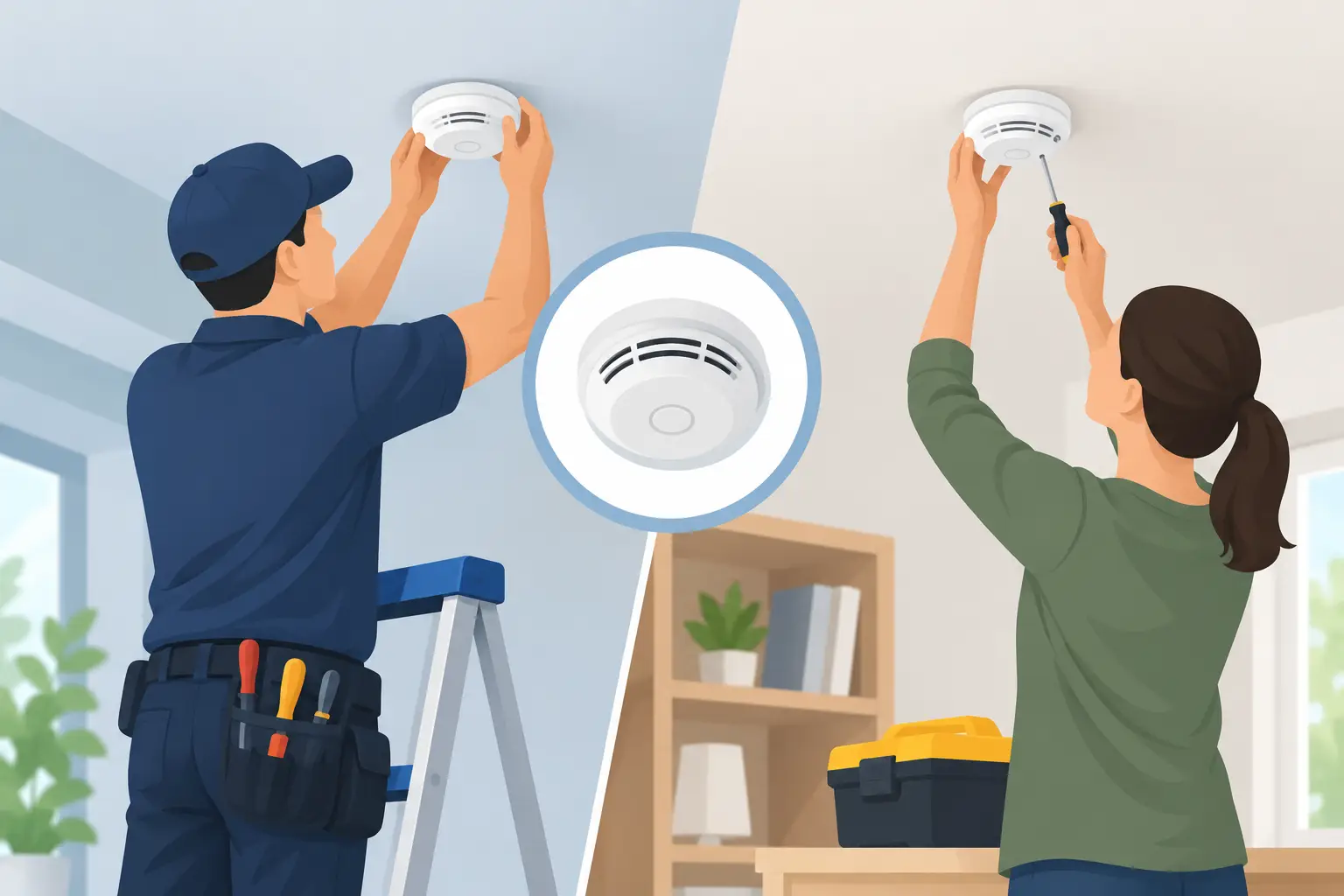
A smoke alarm bought off the shelf can look like a quick Saturday job. But licensed versus DIY installation is not simply a question of who can reach the ceiling with a drill. In Queensland, the right alarm type, placement, interconnection and electrical work can determine whether your home is compliant, your family gets an early warning, and your property is ready to sell or lease.
For Brisbane homes, cheap and cheerful can become expensive fast. Heat, humidity and poor-quality products can shorten an alarm's working life. Worse still, an alarm fitted in the wrong location or installed without the required interconnection may give you a false sense of security when it matters most.
Licensed Versus DIY Installation: What Is Actually Different?
DIY has a place for simple household maintenance. Replacing batteries, vacuuming dust from alarm vents and checking that an existing alarm sounds when tested are sensible jobs for homeowners. Replacing a like-for-like battery-operated alarm may also appear straightforward.
The line is crossed when electrical work is involved. Hardwiring a smoke alarm, altering wiring, connecting alarms to mains power or adding circuits must be done by a licensed electrician. This is not a preference or an upsell. It is electrical work, and it must be carried out safely and lawfully.
Even where no new wiring is needed, compliance is rarely as simple as sticking a battery alarm on the ceiling. Queensland smoke alarm rules apply differently depending on whether a property is owner-occupied, being sold, rented, or entering a new lease or renewal. The layout of the home matters too. Bedrooms, hallways connecting bedrooms to the rest of the dwelling, and every storey all need careful consideration.
A licensed smoke alarm specialist assesses the whole property, not just the spot where the old alarm used to be. That is the difference between replacing a device and putting a compliant protection system in place.
Why Placement and Interconnection Matter
A smoke alarm is only useful if it detects smoke early enough for people to react. An alarm placed too far from sleeping areas, too close to a cooking zone, or in a position affected by air-conditioning, ceiling fans or steam can be less reliable in a real emergency.
Interconnection is just as critical. When one alarm detects smoke, every connected alarm sounds. In a larger Queensland home, that extra warning can be the difference between someone waking quickly and someone sleeping through an alarm sounding at the other end of the house.
This is particularly important in split-level homes, properties with detached bedrooms, long hallways, or households with children, older family members or deep sleepers. One standalone alarm in a hallway may tick a basic box in someone’s mind, but it may not provide the coverage the household needs or meet the requirements for a sale or tenancy.
A licensed electrician can determine whether hardwired interconnected alarms, wireless interconnected alarms, or a combination of compliant solutions suits the building. They can also make sure hardwired alarms have battery backup, so protection is not lost during a power outage.
The DIY Risks Homeowners Often Miss
The obvious risk is unsafe electrical work. A loose connection, incorrect cable, damaged ceiling wiring or poorly fitted hardwired unit can create a hazard rather than reduce one. But many DIY failures are quieter and harder to spot.
A homeowner may buy an alarm that is not photoelectric, choose a product unsuitable for humid Queensland conditions, install alarms that do not interconnect, or put an alarm in a location that leads to nuisance alarms. Repeated false alarms often result in the worst possible response: people remove batteries, disable the unit, or ignore it.
There is also the issue of product life. A bargain alarm is not always a bargain if it fails early, yellows in the humidity, develops faults, or needs replacing again in a few years. Smoke alarms are life-safety equipment. Buying solely on the ticket price is a poor trade-off.
For landlords and sellers, there is another risk: discovering a non-compliant setup at the point of lease renewal, settlement or building inspection. Then the job becomes urgent, choices become limited, and a rushed fix can cost more than getting it assessed properly from the start.
When DIY May Be Reasonable
Not every smoke alarm issue requires a full electrical installation. If you have an existing compliant system and an alarm is giving an end-of-life warning, the right replacement may be relatively simple. Basic testing and cleaning should also be part of every household’s routine.
However, do not assume a replacement is like-for-like just because it fits the same ceiling position. Technology, expiry dates, power sources and interconnection requirements matter. If the property has changed use, had an extension, is being prepared for sale, or is becoming a rental, a quick DIY swap may leave compliance gaps behind.
If you are uncertain about the alarm type, location or legal requirements, that uncertainty is the reason to ask a licensed specialist. Smoke alarms are not the place to guess.
Why Licensed Installation Is Better Value Than It Looks
Licensed installation costs more upfront than grabbing the cheapest unit from a hardware aisle. That is true. But the comparison needs to include the full cost: correct product selection, compliant placement, safe electrical work, interconnection, testing, workmanship and the likelihood that the alarms will last in local conditions.
A professional installer should explain what is being fitted and why. You should know whether the alarms are photoelectric, how they interconnect, what backup power they use, and how long the product warranty lasts. Clear answers are a good sign. Vague promises of "compliance" without an inspection of the property are not.
The Smoke Alarm Sparky focuses on Queensland-compliant photoelectric alarms selected for Brisbane and South East Queensland conditions, installed by licensed electricians. That means homeowners are not left trying to interpret legislation, match incompatible alarms or work out whether a smoke alarm from a discount shelf will still perform after another humid summer.
Questions to Ask Before You Choose an Installer
Before booking anyone, ask whether they are licensed to carry out the electrical work, whether the proposed alarms are photoelectric, and whether the system will be interconnected where required. Ask what is included in the price, including testing, removal of old units and any documentation provided after the work.
It is also worth asking about the warranty. A short product warranty can be a warning that the installer expects replacements to be your problem later. A meaningful replacement warranty shows confidence in both the product and the installation standard.
Be cautious with quotes that sound too cheap to be real. They may exclude hardwiring, battery backup, interconnection, ceiling repairs, travel, testing or the number of alarms your property actually needs. The lowest quote is only the lowest price if it covers the complete compliant job.
A Safer Way to Get It Sorted
If your alarms are old, chirping, disconnected, non-photoelectric, or you are selling, leasing or renewing a tenancy, arrange an assessment before the deadline is sitting on your doorstep. A licensed electrician can identify what your home needs, install the right system and test it before leaving.
Your smoke alarms should not be a weekend gamble or a last-minute compliance scramble. They should be working quietly in the background, ready to give your household the warning it needs when every second counts.