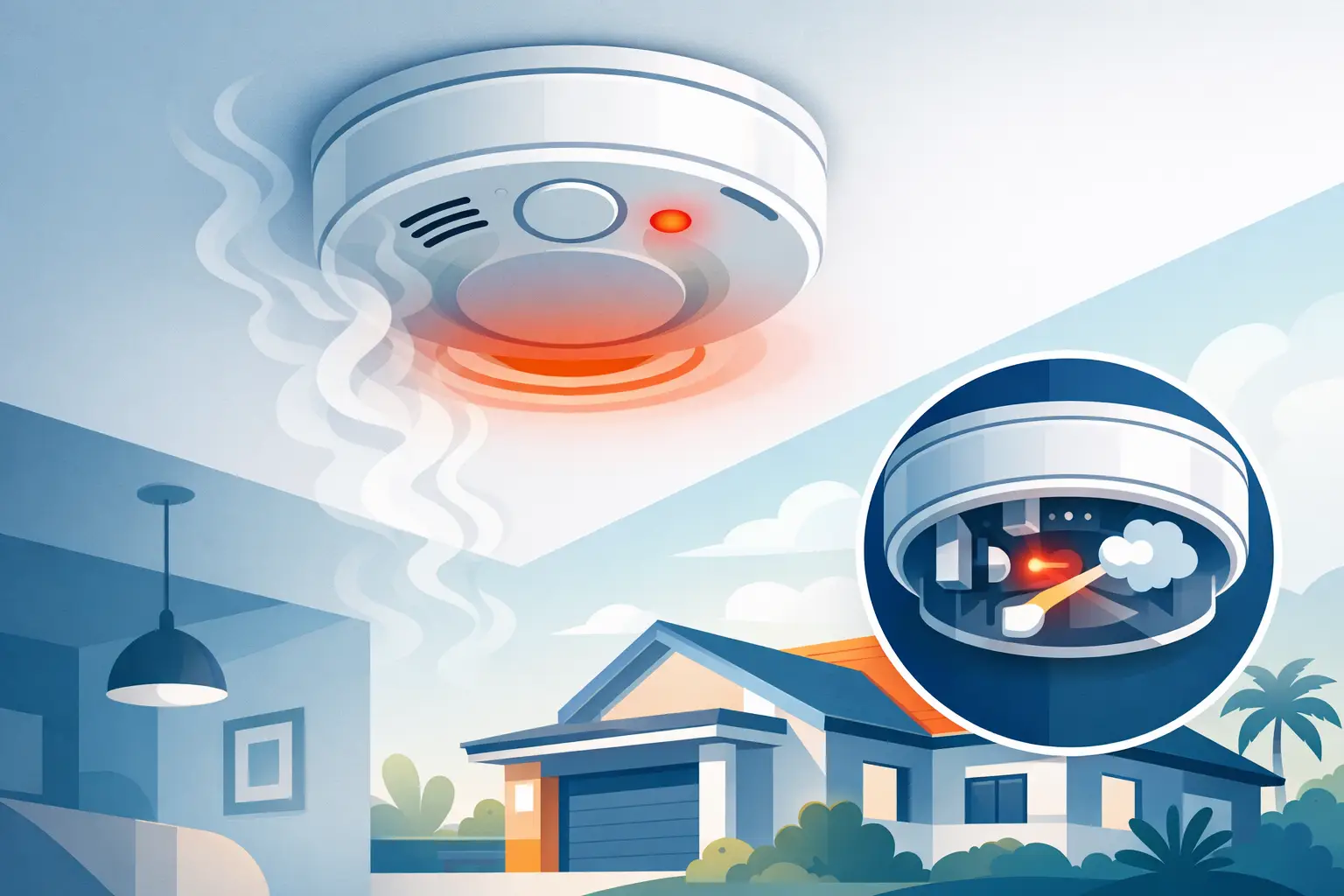
A smoke alarm that looks fine on the ceiling can still leave your Brisbane home non-compliant, unreliable in humidity, or slow to alert the people who need to wake up. This photoelectric smoke alarms review cuts through the packaging claims and cheap-install shortcuts. The right alarm is not simply the cheapest unit that beeps when you press test. It must meet Queensland rules, suit the way your home is wired and connected, and keep working when the weather turns hot and sticky.
For homeowners, landlords and anyone selling or buying property in South East Queensland, this is one job worth getting right the first time.
What a good photoelectric smoke alarm should do
Photoelectric alarms detect visible smoke particles. They are designed to respond effectively to slow, smouldering fires, such as a lounge fire caused by faulty electrical equipment, a cigarette, bedding or overheated furniture. Those fires can fill a home with dangerous smoke before flames are obvious.
That matters most at night. An alarm system needs to give your household an early, clear warning while there is still time to get out. A quality photoelectric alarm should sound loudly, activate every interconnected alarm in the house, and keep operating if mains power fails.
The difference between a proper system and a single cheap alarm is not minor. If a fire begins downstairs, an interconnected system can sound in the bedrooms straight away. Relying on one alarm near the fire means people at the other end of the house may hear it too late.
Queensland compliance comes before product price
Queensland smoke alarm laws set a clear baseline. Existing homes must have photoelectric alarms that comply with the relevant Australian Standard, are interconnected, and are installed in required locations. This includes every bedroom, hallways that connect bedrooms to the rest of the home, and at least one alarm on every storey.
For rental properties, sellers and landlords, compliance is not optional. Requirements apply when a property is leased, sold or a lease is renewed. Owner-occupied homes must also meet the statewide requirements. An old ionisation alarm, a disconnected alarm, or an alarm with a flat backup battery is not a safe workaround.
There are details that need a site check. Multi-level homes, open-plan layouts, older wiring, renovations and detached living areas can all affect the number of alarms required and the best way to interconnect them. A licensed electrician should assess the property rather than guess from a floor plan or install whatever is on special at the hardware store.
Photoelectric smoke alarms review: what separates good from cheap
The label “photoelectric” alone does not guarantee a good result. In Brisbane, Redland, Logan and surrounding suburbs, humidity and heat expose poor-quality alarms quickly. Cheap units can become prone to nuisance alarms, sensor faults, battery issues and premature failure. That is frustrating, but more importantly, it trains people to ignore an alarm or disable it.
When reviewing a smoke alarm system, look beyond the sticker price and assess these practical factors.
Reliable sensing in humid conditions
A smoke alarm sits on your ceiling year after year. It has to cope with summer humidity, dust, insects, cooking vapour and temperature changes. Premium alarms are selected for dependable long-term operation, not just for getting through a quick compliance inspection.
No alarm should be installed directly next to a steamy bathroom, kitchen cooktop, ceiling fan or air-conditioning outlet unless the location is appropriate under the installation requirements. Correct placement reduces false alarms without compromising protection.
Interconnection that actually works
Interconnection is the key safety feature many households overlook. When one alarm detects smoke, all alarms should sound together. That provides a whole-home warning, particularly in larger Queensland homes where bedrooms are separated from living areas.
Hardwired interconnection is often the strongest option where wiring is available or practical. Quality wireless interconnection can also be suitable in homes where running new cable would be disruptive. The right choice depends on the existing electrical setup, the property layout and compliance requirements. What does not work is mixing random units and hoping they communicate.
Mains power with battery backup
Hardwired photoelectric alarms with battery backup are a dependable choice for many homes. They run on mains power but continue operating during a blackout. That backup matters during storms, electrical faults and the exact moments a household may be tempted to assume everything is fine.
For some locations or retrofit situations, sealed 10-year lithium battery alarms may be appropriate. They can be a practical compliance solution where hardwiring is not required or reasonably achievable. But the word “10-year” should not be mistaken for “install and forget”. Every alarm still needs regular testing, cleaning and replacement at the end of its service life.
A real replacement warranty
A long warranty is only useful if the installer stands behind it. Some low-cost installations appear attractive until an alarm fails after a wet summer and the homeowner is left chasing a supplier, paying another call-out fee, or replacing the unit themselves.
The Smoke Alarm Sparky provides a 10-year full replacement warranty on qualifying installations because long-term reliability is part of the job, not an optional extra. Ask any installer exactly what their warranty covers: the alarm, labour, call-outs, batteries, and replacement if a unit fails. Vague promises are not protection.
Are ionisation alarms still worth keeping?
No, not as the answer to Queensland compliance. Older ionisation alarms may still be fitted in homes, but they do not meet the current photoelectric requirement for required smoke alarm locations. Keeping one on the ceiling because it has not started chirping is not a compliance strategy.
Ionisation alarms have historically been marketed for fast-flaming fires, while photoelectric technology is better suited to detecting smouldering smoke early. Queensland’s requirements are built around photoelectric alarms for a reason. Do not let an outdated alarm dictate your family’s safety standard.
The common mistakes that cost homeowners later
The biggest mistake is buying alarms one at a time and treating each ceiling point as separate. Queensland homes need a system, not a collection of unrelated devices. Alarms must be correctly located, interconnected and maintained.
Another common problem is replacing a hardwired alarm with a battery-only alarm without checking what is required. If the home has mains wiring at the alarm point, the replacement may need to remain hardwired. This is not a decision to make from a product box in the aisle.
Homeowners also get caught out by expired alarms. Smoke alarms generally have a service life of 10 years from manufacture or installation, depending on the product instructions and applicable requirements. Check the date on the back. If it is approaching the end of life, replacing the battery will not renew the sensor.
Finally, do not ignore nuisance alarms. Repeated false alarms can indicate poor placement, contamination, an ageing sensor or an unsuitable product. Silencing it permanently, removing the battery or leaving it disconnected creates a much bigger risk than the original annoyance.
What installation should include
A proper compliance upgrade is more than fitting devices and leaving. Your electrician should inspect the existing alarms, identify required locations, check whether hardwired or wireless interconnection is suitable, install compliant photoelectric units, test the full system and confirm every alarm activates together.
For rental, sale or lease-renewal work, make sure you receive the relevant compliance documentation promptly. It removes uncertainty when a property manager, buyer, solicitor or tenant asks whether the home meets Queensland requirements.
Testing is simple and should become routine. Press the test button monthly, keep alarms free of dust and cobwebs, and act quickly if an alarm chirps, faults or reaches its replacement date. A working alarm system is not a set-and-forget fixture. It is active protection for the people asleep under your roof.
The verdict for Brisbane homes
The best photoelectric smoke alarm is one that is compliant, correctly located, interconnected throughout the property and built to hold up in local conditions. Hardwired alarms with battery backup are often the preferred long-term option. Sealed 10-year battery units can be sensible in the right retrofit situation. Neither option is good enough if the layout, installation or interconnection is wrong.
Do not wait until a sale contract, lease renewal or failed alarm forces the issue. Have a licensed smoke alarm specialist check the system now, replace what is outdated, and leave your home with protection that works when your family needs it most.