A kitchen alarm that screams every time someone sears a steak is frustrating. But swapping it for a heat alarm without understanding the difference can leave a far bigger problem: a home that is slower to warn occupants of a real fire and may not meet Queensland smoke alarm rules.
When comparing photoelectric versus heat alarms, the right answer is not simply which one makes less noise. They detect different fire conditions, react at different speeds and serve different purposes. For Brisbane homeowners, landlords and sellers, that difference matters for family safety, insurance confidence and legal compliance.
Photoelectric versus heat alarms: the key difference
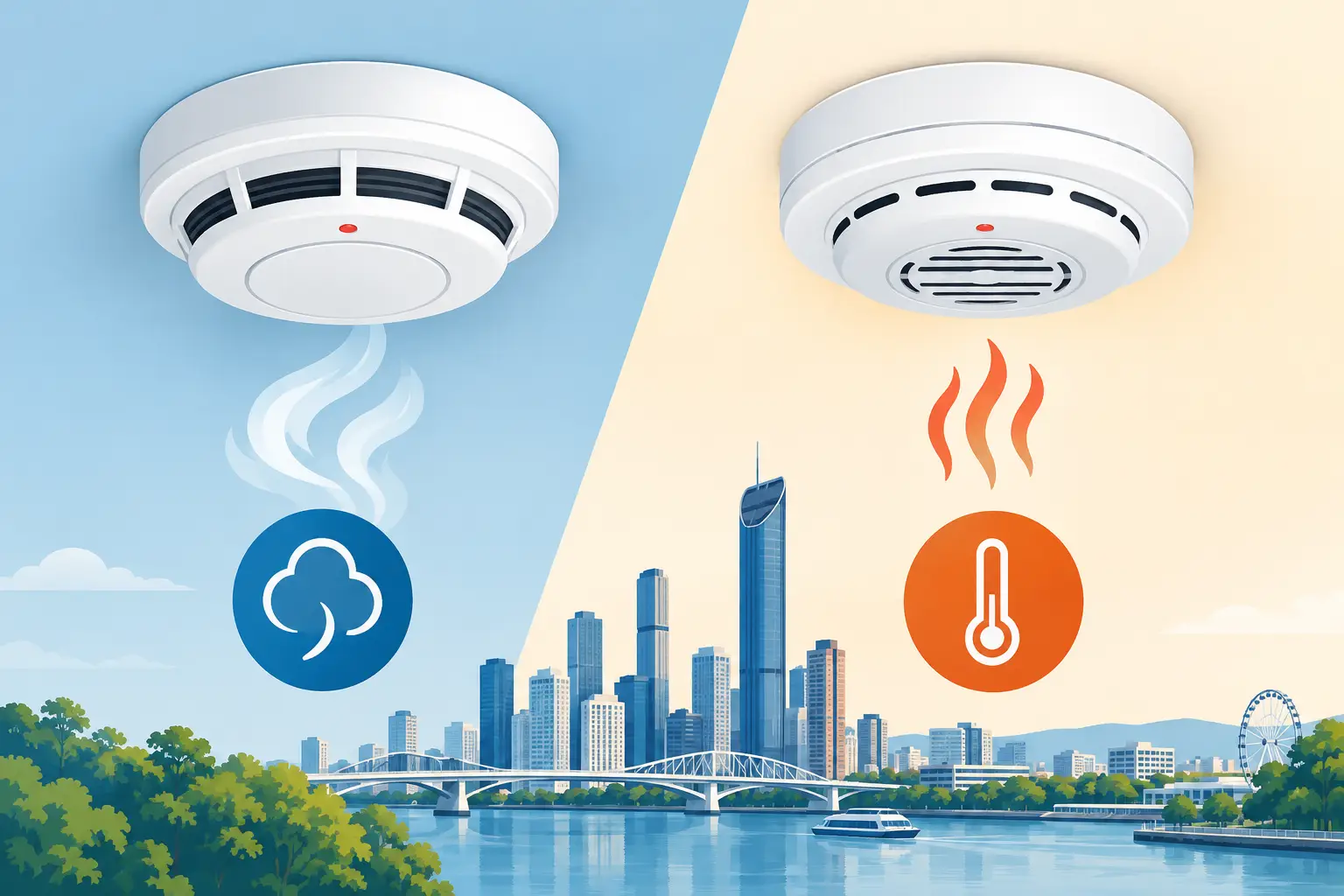
A photoelectric smoke alarm is designed to detect smoke particles in the air. Inside the unit, a light beam and sensor identify smoke entering the alarm chamber. When smoke scatters the light onto the sensor, the alarm sounds.
This makes photoelectric alarms particularly effective at detecting slow, smouldering fires. Think overloaded electrical equipment, a cigarette left burning, a faulty appliance or furniture and bedding that begin to smoulder before flames take hold. These fires can fill bedrooms, hallways and living spaces with dangerous smoke while occupants are asleep.
A heat alarm works differently. It responds when the surrounding temperature reaches a set point or rises unusually quickly. It does not detect smoke in the same way a photoelectric alarm does. By the time sufficient heat reaches a heat alarm, a fire may already be well established.
That does not make heat alarms useless. It means they are a specialist device, not a replacement for smoke alarms in the places Queensland law requires photoelectric protection.
Why Queensland homes need photoelectric smoke alarms
Queensland’s smoke alarm requirements are clear. Homes being sold or leased, and rental properties at lease renewal, must have compliant photoelectric smoke alarms that meet the relevant Australian Standard. Alarms must be interconnected, so when one activates, they all sound.
They are also required in every bedroom, in hallways that connect bedrooms to the rest of the dwelling, and on every storey. Depending on the property layout, further alarms may be needed to provide proper coverage.
For existing homes, compliant alarms must be hardwired with battery backup where possible, or use a sealed, non-removable 10-year battery where hardwiring is not suitable. A basic battery alarm from the hardware store is not automatically a compliant solution.
A heat alarm cannot take the place of a required photoelectric smoke alarm in a bedroom, bedroom hallway or mandatory level location. Installing one there because it is less likely to react to cooking smoke is the wrong fix. It can create a dangerous gap in early warning and may put your property on the wrong side of compliance.
Where heat alarms can make sense
Heat alarms can be useful as supplementary protection in areas where normal household activities create regular smoke, steam or airborne particles. Kitchens, garages, laundries and workshops are common examples. In these spaces, a smoke alarm may be prone to nuisance activation if it is positioned too close to cooking fumes, vehicle exhaust or dust.
The operative word is supplementary. A heat alarm may be considered for an area with a higher chance of nuisance alarms, but it should never be used as a shortcut around the required photoelectric alarm layout.
Correct placement is just as important as the alarm type. Put a photoelectric alarm too close to a kitchen, bathroom door, ceiling fan or air-conditioning outlet and it may be affected by steam, airflow or cooking aerosols. Put it too far from sleeping areas and you may lose valuable warning time. A licensed electrician assesses the layout rather than guessing from the packaging.
In many homes, the best outcome is a compliant interconnected photoelectric system in all required locations, with a properly selected heat alarm only where the property genuinely calls for it.
Early warning is the point
Smoke is often the first life-threatening sign of a house fire. It can reduce visibility, irritate airways and make escape difficult long before a room becomes hot enough to trigger a heat alarm.
That is why photoelectric technology is the standard Queensland homeowners should focus on. It is built to raise the alarm at the smoke stage, giving people more time to wake up, assess the danger and get outside. For a family asleep behind closed bedroom doors, those extra minutes are not a minor detail.
Interconnection adds another layer of protection. If smoke is detected near the living room at the other end of the house, alarms in the bedrooms activate too. Nobody should have to rely on hearing one alarm through closed doors, air-conditioning, rain on a tin roof or a noisy fan.
The nuisance-alarm trap
Nuisance alarms are one reason people start looking at heat alarms. The problem is understandable. Repeated false alarms can lead occupants to remove batteries, cover alarms or ignore the sound. All of those reactions are unsafe.
But replacing a photoelectric smoke alarm with a heat alarm in a required location is not the answer. The smarter approach is to identify why the alarm is activating. It may be poorly positioned, contaminated with dust or insects, past its replacement date, affected by humidity, or simply the wrong product for the installation environment.
Brisbane’s humidity is not kind to cheap alarms. Moisture, dust and insects can contribute to faults and false activations over time. Low-cost units may appear to save money upfront, then become a repeated maintenance headache or fail when they are needed most.
A quality alarm system chosen for local conditions, correctly installed and interconnected, is a better long-term decision than constantly replacing unreliable units. It also removes the temptation to tamper with an alarm because it is causing trouble.
Heat alarms are not a compliance workaround
If you are selling a home, buying a property, starting a tenancy or renewing a lease, do not assume that any alarm on the ceiling counts. Queensland compliance is specific about alarm type, placement, power source and interconnection.
Common problems found in older homes include ionisation alarms, standalone alarms that do not communicate with each other, removable batteries, missing bedroom alarms and devices that are more than 10 years old. A heat alarm installed in place of a required photoelectric alarm belongs on that list.
Smoke alarms have a service life. Even if an old unit still chirps or passes a test-button check, its sensing capability may no longer be reliable. Check the manufacture date on the alarm body. If it is 10 years old or older, replacement is due.
For landlords, compliance is not a set-and-forget exercise. Alarms need ongoing testing and maintenance, and tenants have responsibilities too. For homeowners, regular checks are just as important. Press the test button monthly, keep alarms clean and never paint over them or remove their battery.
What a proper alarm assessment looks like
A proper assessment starts with the house, not a one-size-fits-all alarm pack. The electrician checks how many levels the home has, where bedrooms sit, whether hallways connect sleeping areas, and where existing alarms are located. They also consider kitchens, garages, stairwells, ceiling types and power access.
From there, the system can be designed to meet Queensland requirements with photoelectric alarms in the required positions and reliable interconnection across the home. Where a heat alarm is appropriate as additional protection, it can be selected and located without compromising the mandatory smoke alarm coverage.
This approach is particularly valuable in renovated homes and older Queenslanders. Extensions, converted garages, enclosed verandahs and changed bedroom layouts can all affect alarm requirements. What was acceptable years ago may no longer protect the people living there or meet current obligations.
The Smoke Alarm Sparky installs Queensland-compliant photoelectric alarm systems with professional placement, interconnection and products selected for South East Queensland conditions. The aim is simple: get the job done properly once, rather than leave you chasing false alarms, failed inspections or avoidable replacement costs.
Choose protection before convenience
A heat alarm may have a place near a kitchen or in a garage. It does not provide the same early smoke detection as a photoelectric alarm, and it cannot be used to sidestep Queensland’s required smoke alarm locations.
If you are unsure what is on your ceiling now, do not wait for a sale contract, lease date or a 2 am chirp to force the issue. Check the alarm type, age, placement and whether every unit activates together. A compliant photoelectric system gives your household the warning it needs when there is no time to waste.