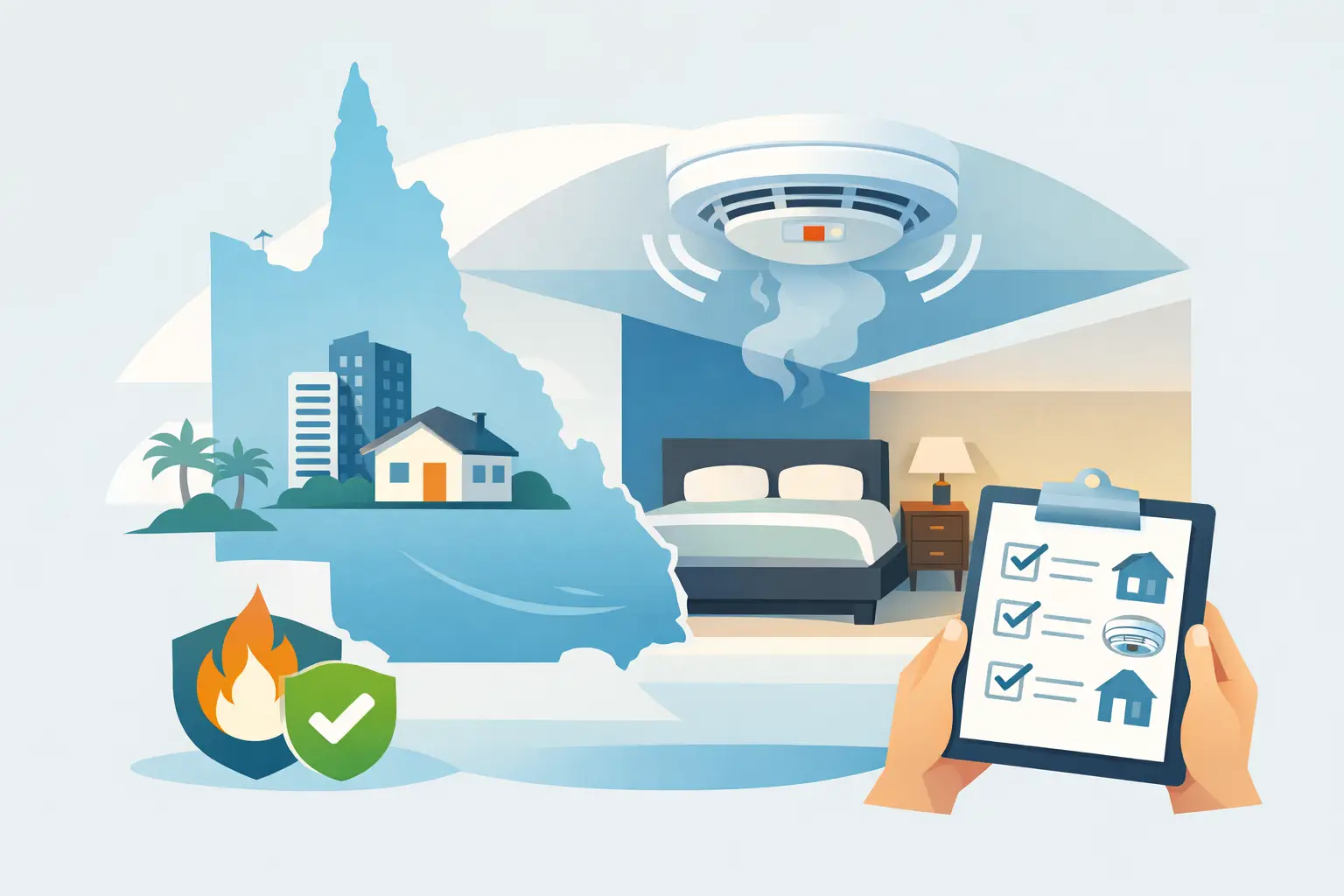
A smoke alarm that chirps, sits yellowed on the ceiling, or only covers one end of the home is not a minor maintenance job. In a Queensland rental, it can mean the property does not meet the required smoke alarm standard. These rental smoke alarm rules exist for one reason: people need enough warning to get out when a fire starts.
For landlords, property managers and tenants across Brisbane and South East Queensland, the rules are clear but the details matter. The wrong alarm type, a missing interconnection, an expired unit or a flat battery can create a compliance problem and put occupants at real risk.
Queensland rental smoke alarm rules at a glance
All rented dwellings in Queensland must have photoelectric smoke alarms that comply with Australian Standard AS 3786-2014. They must be interconnected, meaning when one alarm detects smoke, all alarms sound. This is particularly critical in larger homes, two-storey properties and rentals where bedrooms sit away from living areas.
Alarms must be installed in the required locations: on every storey, in every bedroom, and in hallways that connect bedrooms with the rest of the dwelling. Where there is no hallway, an alarm must be installed between the bedrooms and the remainder of that level. A properly placed system gives sleeping occupants the best chance of hearing the alert early.
The power supply matters too. Smoke alarms must be hardwired to the property’s mains power where practicable, with a battery backup. If hardwiring is not practicable, a 10-year non-removable lithium battery alarm may be used. This is not a licence to fit the cheapest battery alarm from the hardware aisle. The alarm still needs to meet the required standard, be correctly located and interconnect with the other alarms.
What landlords must do before a new tenancy
A landlord has specific responsibilities before a new tenancy begins. Within 30 days before the tenant moves in, the lessor must test every smoke alarm and make sure it operates properly. They must also clean each alarm, replace flat or nearly flat batteries, and replace any alarm that has passed its expiry date.
That last point catches plenty of property owners out. Smoke alarms are not lifetime devices. Most units have a service life of around 10 years, and the manufacture or expiry date is usually marked on the back of the alarm. A unit may still beep during a button test, but if it is beyond its stated life, it needs replacement.
Landlords also need to ensure the installed system meets the current Queensland requirements, not the rules that applied when the house was built. A property with old ionisation alarms, standalone alarms or alarms only in hallways may have been acceptable years ago. It is not necessarily compliant as a rental now.
A licensed electrician can assess the complete layout, identify non-compliant locations and install an interconnected photoelectric system that suits the home. This is the sensible approach when selling, buying, starting a new lease or renewing one. Guesswork costs more when the job has to be done twice.
Tenant responsibilities during the lease
Tenants are not expected to redesign the smoke alarm system or carry out electrical work. Their role is straightforward but still essential. A tenant must test and clean each smoke alarm at least once every 12 months and replace batteries in battery-operated alarms during the tenancy, where required.
If an alarm is faulty, damaged, expired, chirping repeatedly after a battery change, or has been removed, the tenant should notify the landlord or property manager as soon as possible. Do not ignore it because the noise is annoying. A chirp often signals a low battery, contamination, a fault or end of service life.
Tenants should never paint over an alarm, cover it, disconnect it or remove its battery to stop nuisance alerts. Cooking fumes can trigger a poorly located alarm, but disabling it is not the answer. The placement and type of alarm should be reviewed by a qualified professional if false alarms are happening regularly.
Why photoelectric and interconnected alarms are required
Queensland requires photoelectric alarms because they are designed to detect the slow, smouldering fires that can fill a home with toxic smoke while occupants are asleep. These fires may begin in upholstery, bedding, electrical equipment or other household materials and can produce dangerous smoke before visible flames appear.
Interconnection removes a major weakness of isolated alarms. If smoke is detected in a laundry, garage-adjacent area or downstairs living room, an alarm outside the bedroom is not enough if the people sleeping upstairs cannot hear it. With an interconnected system, every alarm activates together.
There is a trade-off between initial cost and long-term reliability. Cheap alarms may look like a saving, but poor-quality units can fail early in humid Queensland conditions, create recurring false alarms or leave a property needing another compliance upgrade sooner than expected. Quality alarms installed correctly are the better value when tenant safety, legal obligations and property transactions are on the line.
Common rental smoke alarm compliance failures
The most common problem is assuming that having any smoke alarm means the property is compliant. It does not. Compliance depends on alarm type, age, location, power source and interconnection.
Other frequent failures include alarms outside bedrooms but not inside them, alarms that are not connected to each other, older ionisation alarms left in place, expired units, and hardwired alarms with dead backup batteries. Homes that have been extended, renovated or converted may also have gaps because the old alarm layout no longer matches the current floor plan.
Humidity adds another layer of risk in Brisbane and surrounding suburbs. Alarms installed in the wrong spot near bathrooms, kitchens or poorly ventilated areas can become contaminated or trigger nuisance alarms. That does not mean an alarm should be moved without thought. Required locations still apply. A licensed electrician can select suitable products and assess the right compliant positioning for the dwelling.
When a licensed electrician is the right call
Changing a permitted battery is one thing. Installing hardwired alarms, adding interconnection, replacing an old system or correcting alarm locations is electrical work that should be handled properly. This is especially true where wiring is needed, the ceiling layout is complex, or several alarms need to operate as one system.
A proper inspection should confirm how many alarms the home needs, where they belong, whether hardwiring is practicable, and whether every unit is within its service life. It should also account for practical issues such as ceiling fans, air-conditioning vents, high ceilings and renovations.
For landlords, the goal is not simply to tick a box before keys are handed over. It is to know the property is protected by a system that will work when a family needs it most. The Smoke Alarm Sparky installs Queensland-compliant photoelectric, interconnected systems with licensed electrical work and products selected for local conditions.
If you are unsure whether a rental is compliant, do not wait for a new tenancy, a sale contract or a failed inspection to expose the problem. Check the dates on the alarms, test them today, and arrange a professional assessment if anything is missing, outdated or questionable.