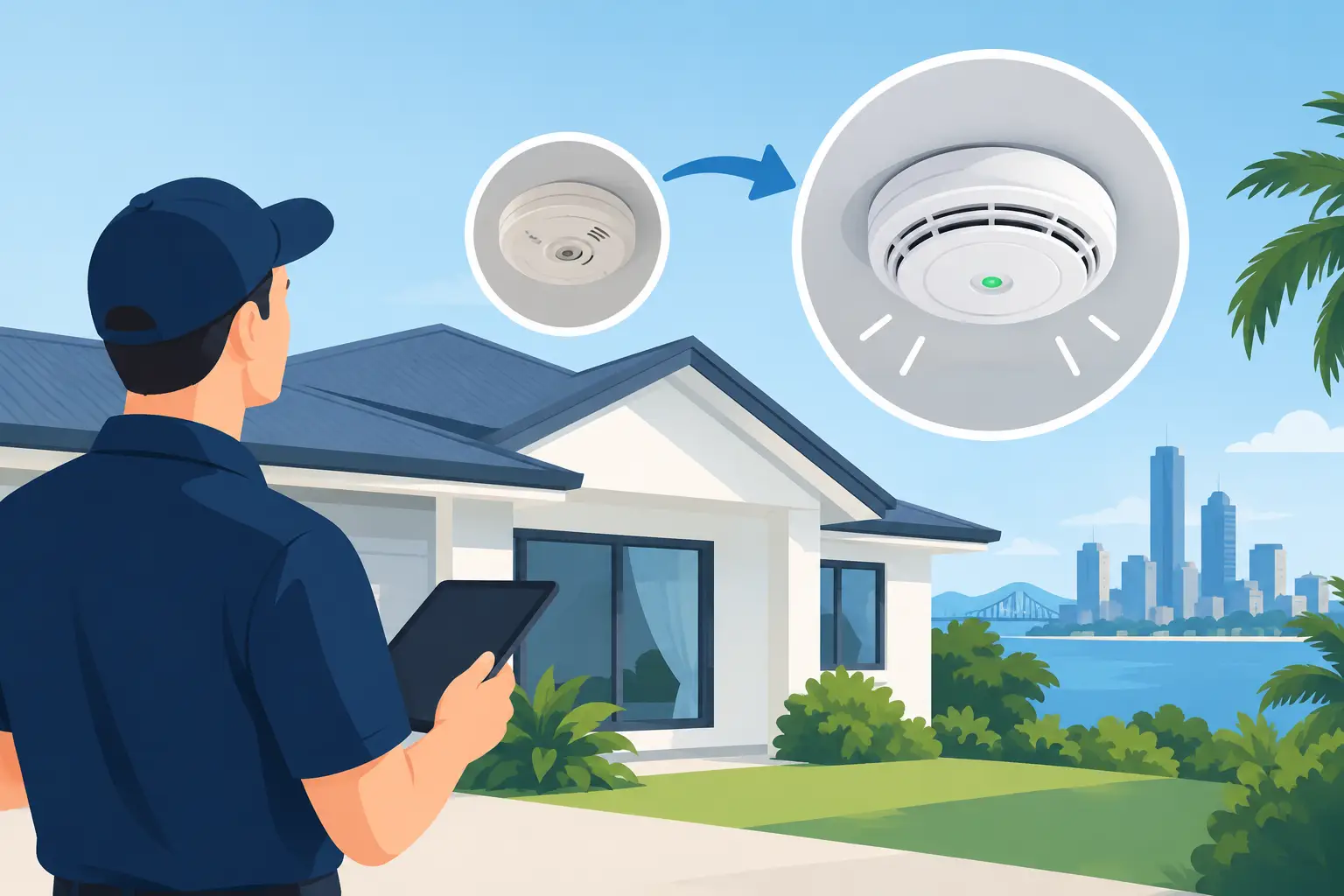
A rental inspection is a bad time to discover the smoke alarms are old, disconnected or fitted in the wrong locations. This rental inspection alarm upgrade example shows what a Brisbane property can look like before and after a proper compliance upgrade - and why replacing one noisy battery alarm is rarely enough.
For Queensland rental properties, smoke alarm compliance is not optional. Since 1 January 2022, homes being sold, leased or having a lease renewed must meet the current Queensland smoke alarm requirements. That means photoelectric alarms, interconnection, correct positioning and reliable power sources. If one alarm detects smoke, every interconnected alarm must sound.
The rental inspection alarm upgrade example
Consider a typical three-bedroom lowset brick home in Logan. The property has an older hardwired smoke alarm in the hallway, plus two battery-operated ionisation alarms - one near the bedrooms and one in the living area. The hallway alarm chirps intermittently. The bedroom alarm has been removed after false alarms, and the living-room alarm is more than a decade old.
At first glance, the owner might think the fix is simple: replace the chirping battery and fit a new alarm where the missing one used to be. That approach can leave the property non-compliant.
A proper inspection identifies four issues. First, the existing alarms are ionisation models, not photoelectric. Second, they do not all communicate with each other. Third, one required alarm location is unprotected because the unit has been removed. Finally, the old hardwired alarm cannot be assumed to be compliant or serviceable simply because it still makes a noise when tested.
The compliant upgrade in this example is a set of photoelectric, interconnected smoke alarms installed in the required areas: on each storey, in the hallway connecting bedrooms to the rest of the home, and in each bedroom where required under Queensland rules. Because the property already has hardwired cabling at one location, a licensed electrician assesses whether new hardwired interconnected units can be installed throughout. Where hardwiring is not reasonably practical, approved 10-year lithium battery alarms may be the right solution.
Once installed, each alarm is tested as a system. Triggering one alarm must activate the others. The owner receives confirmation of the completed work, and the property is ready for the tenancy inspection without guesswork.
What the inspection found - and why it matters
Smoke alarm compliance is not just about having white plastic discs on the ceiling. The type, age, location and connection between alarms all matter.
Old ionisation alarms
Ionisation alarms were common in older Queensland homes, but they are not the required option for a rental compliance upgrade. Photoelectric alarms are designed to detect smouldering fires sooner. That extra warning time can matter when a family is asleep behind closed bedroom doors.
Cheap replacement alarms can also create a false sense of security. An alarm bought from a hardware aisle may not suit the required installation method, may not interconnect with the existing system, or may be poorly matched to Brisbane humidity. The lowest upfront price often becomes the most expensive option when the alarms need replacing again before the next lease renewal.
Alarms that do not interconnect
A single alarm in a hallway might be audible nearby, but it may not wake someone at the other end of the house, upstairs, or behind a closed door. Interconnection fixes that gap. When smoke is detected in the kitchen-side hallway, alarms in the bedroom areas sound at the same time.
Wireless interconnection can be suitable in many established homes where running new cable would involve unnecessary cutting and repair work. Hardwired alarms with battery backup are often the preferred option where practical. The right choice depends on the building layout, existing wiring, access to the ceiling space and the condition of the property.
Missing or badly positioned alarms
Tenants sometimes remove alarms after nuisance activations. Owners may also find alarms fitted too close to bathrooms, fans, air-conditioning vents or cooking areas, where steam and airflow can cause problems. Moving an alarm without checking the legal placement requirements can create another compliance issue.
A licensed electrician checks the home properly before deciding on placement. The goal is not to cram an alarm into every room. It is to provide the required coverage with products positioned to work when they are needed.
What a compliant rental alarm upgrade should include
For a Queensland rental property, the finished job should provide more than an alarm that beeps when the test button is pressed. You need a system that meets the required standard for the property and can be relied on through the tenancy.
In practical terms, that normally means photoelectric alarms that are interconnected and correctly located. Alarms must be hardwired with a secondary power source where this is reasonably practical. If hardwiring is not reasonably practical, a non-removable 10-year battery alarm may be used where permitted.
Each property is different. A small unit, a Queenslander with difficult ceiling access, and a two-storey family home may all need different installation methods. That is why a phone quote based only on the number of bedrooms can be misleading. The layout, existing alarm locations and access all affect what is required.
The key point is simple: do not accept a partial upgrade because it is quicker. Mixing old ionisation units with new photoelectric alarms, or fitting standalone alarms where interconnection is required, can leave the property exposed at inspection time and, more seriously, during a fire.
Rental inspection timing: do not leave it to the last day
Queensland rental owners have ongoing smoke alarm obligations. Smoke alarms must be tested and cleaned within 30 days before the start of a new tenancy or renewal. Batteries must also be replaced within the required timeframe, unless the alarm has a sealed 10-year battery that does not need annual replacement.
Tenants also have responsibilities during a tenancy, including testing and cleaning alarms at least every 12 months and advising the owner or agent if an alarm is not working properly. But the owner cannot hand over a non-compliant system and expect the tenant to solve it.
The smart time to arrange an upgrade is before the property manager has booked the final inspection, advertised the home, or issued renewal paperwork. Last-minute compliance jobs can become stressful when access is limited, the tenant is moving out, or hidden issues are found with old wiring.
Why licensed installation protects the owner
Smoke alarm work involves more than drilling a hole and pressing a pairing button. A licensed electrician can assess the existing electrical setup, select a suitable compliant system, install it safely and test the complete interconnection.
That matters particularly in older Brisbane homes. Ceiling spaces can be tight. Existing cables may be unsuitable. Humidity, dust and heat can shorten the life of poor-quality alarms. A specialist installation uses products selected for local conditions rather than whatever happens to be on special.
The Smoke Alarm Sparky handles these upgrades with licensed electrical work, Queensland-compliant photoelectric alarms and a 10-year full replacement warranty. That is the kind of protection property owners should expect when the safety of tenants and the legal status of a rental are on the line.
A better result than a pass on paper
The best rental inspection alarm upgrade does not just get a property through a checklist. It gives the people sleeping there the earliest practical warning if a fire starts, while giving the owner confidence that the system was installed correctly.
If your rental has old ionisation alarms, mismatched units, removed alarms or no interconnection, arrange an assessment before the next inspection or lease renewal. Fixing it properly once is safer, clearer and far less costly than dealing with a failed inspection or a preventable emergency later.