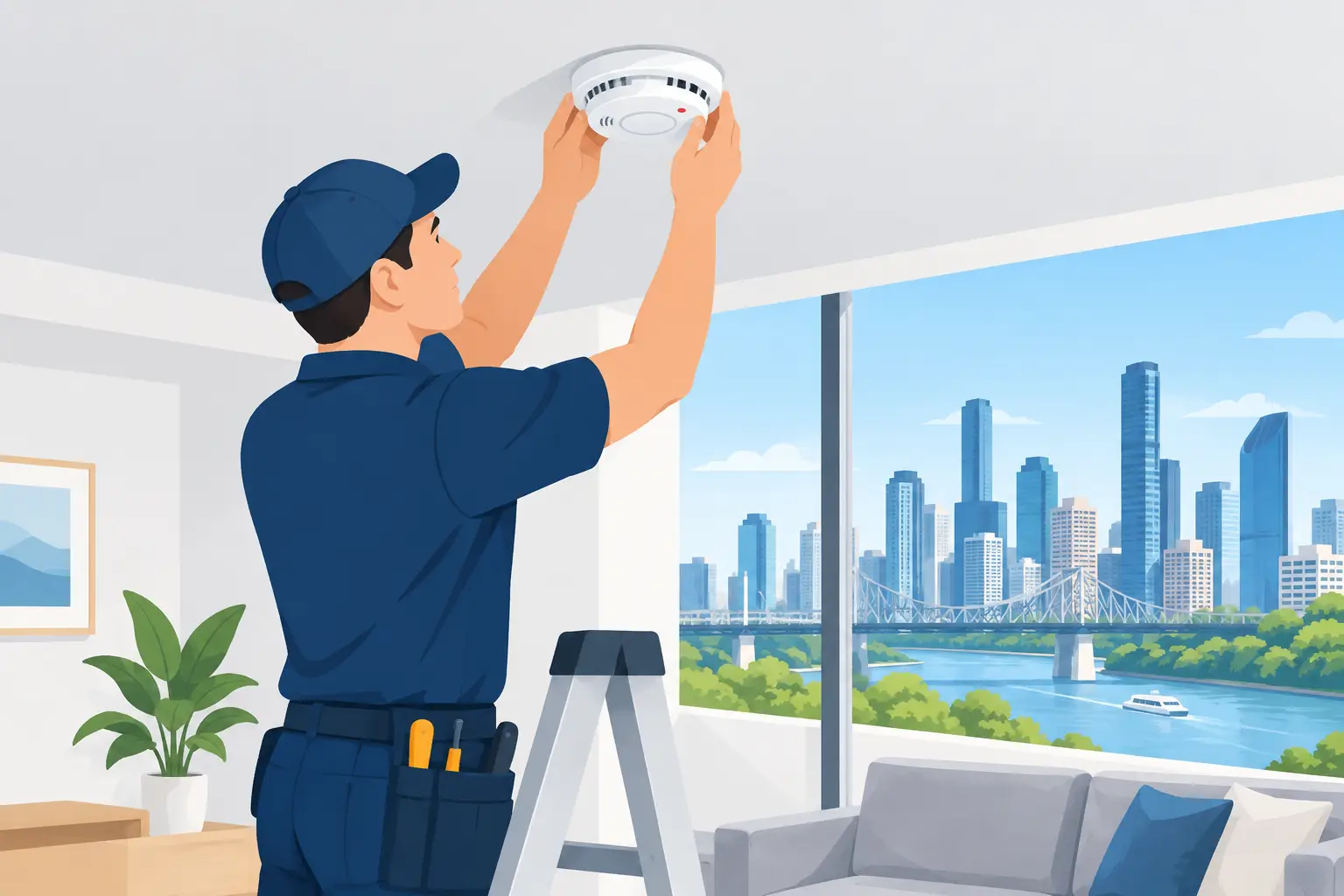
A property settlement is booked. A lease renewal is due. Or you have finally checked the alarms overhead and realised they are old, yellowed, disconnected or simply not the right type. You do not need a vague appointment window next month. You need a same week smoke alarm service that gets the job assessed, installed and compliant without shortcuts.
For Brisbane homeowners, landlords and sellers, smoke alarm work is not a minor DIY task. Queensland rules set clear requirements, and cheap alarms or rushed installations can leave a property exposed when it matters most. The right solution is a licensed electrician, compliant photoelectric alarms and a system designed to keep working in South East Queensland conditions.
When a Same Week Smoke Alarm Service Makes Sense
Smoke alarm urgency usually comes from one of two places: safety or compliance. Both are valid. If an alarm is chirping, has reached the end of its service life, has been painted over, has no visible test function or is not interconnected with the rest of the home, it needs attention. Waiting until a routine inspection can turn a straightforward upgrade into an avoidable problem.
The same applies when a property is being sold, purchased or prepared for a new tenancy. Buyers and agents may identify non-compliant alarms during the process. Landlords have obligations around compliant smoke alarms, and tenants deserve a system that will alert the whole household, not just one bedroom or hallway.
Fast service should not mean a rushed job. It means the work is prioritised, the property is properly checked and the installation is completed to suit the home. The layout of a high-set Queenslander is different from a compact unit in Wynnum. A large family home in Logan may need more alarm locations and more interconnection work than a smaller townhouse. The electrician should assess what is actually required rather than sell a one-size-fits-all pack.
What Queensland-Compliant Smoke Alarm Work Should Cover
Queensland smoke alarm laws have raised the standard for every home. In broad terms, compliant systems use photoelectric smoke alarms, are interconnected so one alarm triggers the others, and are installed in required bedroom, hallway and storey locations. Newer or substantially renovated homes may also require hardwired alarms with battery backup.
That detail matters because a single battery alarm from a hardware store may seem like a quick fix, but it may not meet the requirement for your property. It may also be poorly suited to humid conditions, poorly positioned, or unable to communicate with the rest of the alarms in the home.
A proper service starts with checking the existing setup: alarm type, age, locations, power supply, interconnection and visible condition. From there, the electrician can identify whether you need a replacement alarm, a complete compliance upgrade or a hardwired system with battery backup.
For many existing homes, quality 10-year lithium battery alarms can provide a practical compliant path where hardwiring is not required or is not feasible. For other properties, hardwired interconnected alarms are the right answer. There is no benefit in paying for work that your home does not need, but there is real risk in accepting an option that does not satisfy the rules.
Photoelectric and interconnected is the safety standard
Photoelectric alarms are designed to detect smouldering fires, giving families earlier warning in a common residential fire scenario. Interconnection takes that warning further. When one alarm senses smoke, every linked alarm sounds.
That can be the difference between an alarm sounding at one end of the house and everyone waking up. In a home with closed bedroom doors, children asleep upstairs or family members at the far end of the property, one isolated alarm is not enough reassurance.
Hardwired where required, battery backup where needed
Hardwired smoke alarms draw power from the home’s electrical system and use a backup battery if mains power fails. They are a strong long-term option and are required in certain circumstances. Installation must be completed by a licensed electrician. There is no safe DIY workaround for electrical wiring, and there is no reason to risk damage, non-compliance or a failed system to save a small amount upfront.
Why Cheap Smoke Alarm Installs Can Cost More
The cheapest quote is often based on the cheapest alarm, minimal assessment and no meaningful warranty. That may look attractive until an alarm fails early, false-alarms repeatedly, does not interconnect correctly or turns out not to be compliant for the property.
Brisbane humidity is hard on low-grade electronics. A bargain alarm that lasts only a few years is not a bargain when you are paying again for products, labour and call-outs. Worse, an unreliable alarm can train people to ignore it, remove the battery or disable it altogether.
Quality products and correct installation cost more than a bare-minimum fix for a reason. They are selected for reliability, fitted in the right locations and tested as a system. A strong replacement warranty also matters. It shows the installer is prepared to stand behind the alarms and the work, rather than disappear once payment clears.
The Smoke Alarm Sparky provides Queensland-compliant installations by licensed electricians and backs eligible installations with a 10-year full replacement warranty. That is protection you can understand: if a covered alarm fails, you are not left starting again from scratch.
What Happens During the Appointment
A professional same week smoke alarm service should be straightforward. Before attending, the electrician will need basic details about your property, such as the number of bedrooms, storeys, existing alarms and the reason for the booking. Clear information makes the quote more accurate and helps avoid surprises on the day.
At the property, the existing alarms are inspected and the required locations are checked. The electrician then installs or upgrades the system, tests every alarm and confirms interconnection operation. If the work is for a sale, tenancy or compliance concern, ask what documentation is provided once the job is complete.
Most standard residential upgrades can be completed efficiently, but timing depends on access, property size, the condition of existing wiring and whether additional electrical work is needed. A same-week booking is about acting promptly. It is not a promise that every complex job can be completed without a proper site assessment.
Do Not Wait for the Next Chirp
A chirping alarm can be a flat battery, contamination, a fault or an end-of-life warning. Replacing the battery may stop the noise temporarily, but it does not prove the alarm is compliant, correctly located or reliable. If it is an older unit, especially one nearing or beyond its stated service life, replacement is usually the sensible call.
The same goes for homes with a mixture of alarm types installed over many years. One new alarm in the hallway does not automatically make the whole property compliant. Systems need to be considered together, including bedrooms, escape paths, storeys and interconnection.
If you are unsure, do not guess from a packet in the garage or advice from a neighbour. Arrange an assessment with a licensed specialist. You will know what needs doing, what does not, and what it will cost before the problem becomes more urgent.
A working smoke alarm system is not just another property task to tick off. It is the warning your family, tenant or buyer may rely on when seconds count. Book the service while you have time to choose the right solution, not after an inspection deadline or a midnight chirp forces the issue.