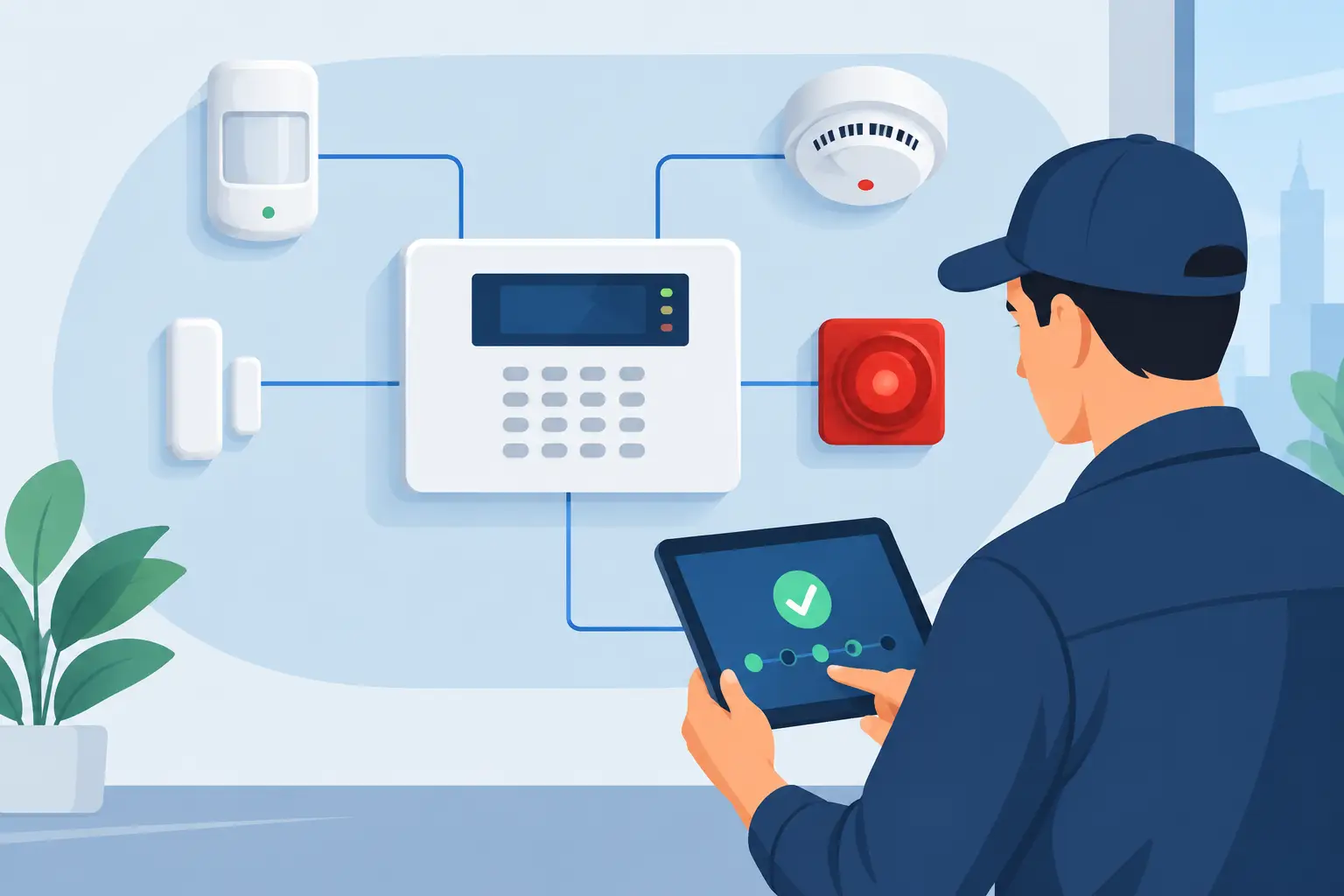
One alarm sounds in the hallway. The bedroom alarms stay silent. That is not a minor fault. It can mean a sleeping child, tenant or family member never receives the early warning that gives them time to get out.
When you test alarm interconnection, you are checking whether every required smoke alarm in the home communicates as one system. For Brisbane homes, this is a critical safety check, not a box-ticking exercise. Queensland’s smoke alarm rules require interconnected photoelectric alarms in prescribed locations, and a system only does its job if every alarm actually responds.
Why Interconnected Alarms Need Testing
A single smoke alarm can only detect smoke close to where it is installed. An interconnected system changes that. When one alarm detects smoke, every connected alarm sounds. That means a fire starting in a living area can trigger an alarm inside bedrooms, where the warning matters most overnight.
Interconnection can be hardwired, wireless, or part of a mixed system designed and installed correctly for the property. The method matters, but the outcome must be the same: activation of one alarm needs to activate the others.
Do not assume the system works because the alarms have power, their LED lights flash, or one unit chirps when you press its button. Those signs only tell you part of the story. Interconnection needs its own test.
Humidity, ageing batteries, loose wiring, failed wireless pairing and incompatible replacement alarms can all break communication between units. Brisbane’s warm, humid conditions are particularly unforgiving on cheap alarms and poor-quality installations. An alarm that looks fine on the ceiling can still leave part of the house unprotected.
How to Test Alarm Interconnection Safely
Choose a time when everyone in the home knows testing is happening. The alarms will be loud. Let nearby neighbours know if you live in a townhouse, unit or closely spaced housing, and keep children away from ladders and alarm locations.
Start by identifying every smoke alarm in the house. Include alarms in bedrooms, hallways, on each storey and in any other required locations. If you have recently renovated, extended the home or replaced an alarm, pay close attention. Changes to a property are a common point where an older system stops meeting the current standard.
Use the Test Button First
Press and hold the test button on one alarm until it sounds. With a working interconnected system, the other connected alarms should begin sounding shortly afterwards. Walk through the home and confirm every unit is audible.
Then repeat the test from a different alarm. This matters because a system can sometimes send a signal one way but fail when another unit initiates the alarm. Test an alarm near the bedrooms, then one in the living area or at the opposite end of the home.
Listen for more than noise. Every unit should sound clearly and consistently. A weak, delayed or intermittent alarm needs attention. So does an alarm that fails to activate at all.
The test button checks the alarm’s electronics, sounder and, depending on the model, the interconnection function. It does not fully prove that smoke will enter the sensing chamber and trigger the unit as intended.
Check With an Approved Smoke Alarm Tester
A proper smoke test is different from pushing the button. It uses an approved smoke alarm test aerosol to check whether the alarm detects smoke and sends the interconnection signal through the system.
Never use a naked flame, cigarette smoke, incense, aerosol deodorant or a smoky pan to test an alarm. These methods are unreliable, can contaminate the sensor, and may create a genuine fire risk. They can also leave residue that causes nuisance alarms later.
Follow the manufacturer’s instructions for the approved tester. Stand back, allow the initiating alarm to activate, and confirm the rest of the alarms sound. Ventilate the area once the test is complete and reset the alarms as directed by the manufacturer.
For most households, the practical approach is simple: press the test buttons regularly and arrange a professional inspection when there is any doubt about performance, age, placement or compliance.
What a Failed Interconnection Test Means
If one alarm sounds but another does not, treat the system as faulty until a licensed electrician has checked it. Do not wait for the next property inspection, lease renewal or sale contract. A silent bedroom alarm is a safety gap now.
The cause may be straightforward. A backup battery could be flat, a wireless alarm may have lost its pairing, or an alarm may be beyond its service life. Smoke alarms commonly have a 10-year replacement timeframe, but always check the date marked on the unit and the manufacturer’s guidance.
The fault may also be more serious. Hardwired alarms can have damaged or disconnected interconnect wiring. A previous owner, handyman or renovation contractor may have installed a non-compatible unit. Mixing alarm brands or models without confirming they are designed to interconnect is a common and expensive mistake.
Do not remove an alarm, disconnect wiring or attempt electrical repairs yourself. Hardwired smoke alarms are electrical work. In Queensland, electrical installation and repair work must be carried out by a licensed electrician.
Queensland Compliance Is More Than a Loud Alarm
For homes being sold, leased or having a lease renewed in Queensland, smoke alarm obligations are strict. Required alarms need to be photoelectric, compliant with the relevant Australian Standard, installed in prescribed locations and interconnected where required.
Owner-occupied homes also need compliant smoke alarms. The exact configuration can depend on the age, layout and storeys of the property, along with whether major building work has occurred. That is why generic advice from a hardware-store shelf is not enough.
A test result does not automatically prove full compliance either. An alarm can communicate perfectly while being installed in the wrong location, being too old, or using a product that is not suitable for the property. Conversely, a compliant layout can still fail in practice if one alarm has a dead backup battery or lost wireless connection.
This is where a specialist inspection earns its keep. The installer should check alarm type, age, placement, power source, battery backup and interconnection operation - not merely press one button and leave.
Common Problems We Find in Brisbane Homes
Older homes often have a mix of alarm types installed over many years. One may be hardwired, another battery-operated, and a third may be a different brand added during a renovation. They may all make noise individually, but that does not mean they operate as an interconnected system.
Cheap battery alarms are another problem. They can be tempting when a property needs a quick fix before an inspection, yet low-cost units may not suit humid conditions or provide the reliability expected over the long term. Replacing failed alarms repeatedly costs more than installing the right system once.
Wireless interconnection is useful where running new cable would be disruptive. But it must be set up correctly, paired properly and tested across the full house. Thick walls, large floorplans and extensions can affect performance, so the product and placement need to suit the property.
False alarms also deserve attention. Do not simply remove the battery because an alarm goes off near cooking fumes or steam. That creates a dangerous gap and may leave the property non-compliant. A licensed specialist can assess whether the location, alarm type or layout needs correction.
A Sensible Testing Routine
Test each smoke alarm and the interconnection function at least monthly using the test buttons. Keep a simple record on your phone, especially if you are a landlord or managing a property. Replace batteries where applicable according to the alarm manufacturer’s instructions, and replace the entire alarm at the end of its stated service life.
Arrange a professional check sooner if an alarm chirps repeatedly, fails to sound, triggers without an obvious cause, has visible damage, is more than 10 years old, or has been affected by water, paint, dust or renovation work. Also have the system checked before selling or leasing a property rather than discovering a fault at the last minute.
The Smoke Alarm Sparky installs Queensland-compliant systems designed for local homes, then tests the full interconnection so every required alarm speaks up together. That is the standard your household deserves.
The most useful test is the one that exposes a problem before smoke does. Press the button this month, listen in every room, and if even one alarm stays quiet, get it fixed properly.