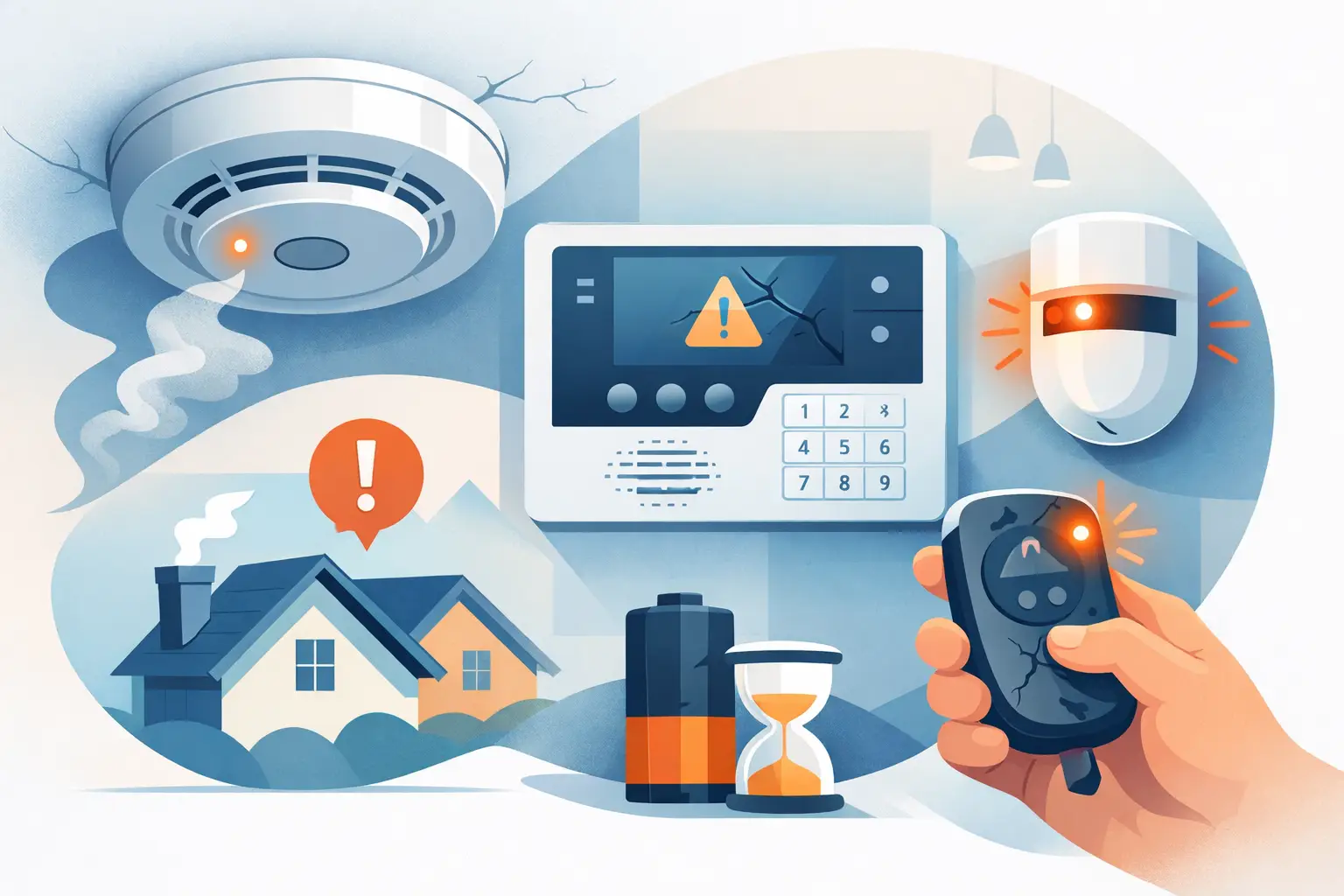
That single chirp from the hallway is easy to ignore. So is a yellowed alarm, a unit that goes off while you cook toast, or one that has been there since you bought the house. But these are often the top signs alarms need replacement - not minor annoyances to put off until later.
For Brisbane and South East Queensland homes, smoke alarms are not a fit-and-forget item. Heat, humidity, dust and age all affect performance. More importantly, Queensland smoke alarm rules set clear expectations for the type, placement and interconnection of alarms in homes being sold, leased or renewed. A cheap replacement or a new battery may stop the noise, but it may not make your home safer or compliant.
Top Signs Alarms Need Replacement
1. Your smoke alarm is 10 years old or older
This is the big one. Smoke alarms have a limited service life, even if they still make a sound when you press the test button. The sensing chamber inside the alarm degrades over time. Dust, moisture and normal ageing can make it less reliable at detecting smoke when seconds matter.
Check the manufacturing date on the back or side of the unit. If it is approaching 10 years old, replacement is the sensible move. If the date is missing, unreadable or you have no idea when it was installed, do not guess. Have the alarm assessed and replaced if necessary.
A test button only confirms the alarm can make noise. It does not prove the smoke sensor is still working properly. That distinction matters.
2. It chirps even after you replace the battery
A low-battery chirp is common, but a fresh battery does not fix every problem. If your alarm keeps chirping after the battery has been correctly replaced, the unit may be at end of life, contaminated with dust or affected by a fault.
Hardwired alarms with battery backup can also chirp when there is a mains power issue, a loose connection or a failing backup battery. Do not silence it by removing the battery or disconnecting the unit. That leaves your household without protection and can create a compliance problem.
A licensed electrician can identify whether the issue is the battery, the wiring, the interconnection or the alarm itself. That is faster and safer than replacing parts at random.
3. The alarm has yellowed, cracked or suffered water damage
Plastic housings do not stay pristine forever in Queensland conditions. A smoke alarm that has become heavily yellowed, warped, brittle or cracked has likely been exposed to heat and age. If there are signs of water staining, corrosion, insect activity or mould around the unit, treat it as a warning.
Bathrooms, laundries, kitchens and ceiling spaces can expose alarms to moisture and airborne contaminants. An alarm may still look mostly fine from below while its internal components are deteriorating.
Physical damage is not cosmetic when it affects a life-safety device. Replace the unit rather than hoping it will perform in an emergency.
4. It gives false alarms or goes off without a clear reason
Smoke alarms should react quickly to real smoke, not turn ordinary household activity into a weekly nuisance. Repeated false alarms from cooking steam, shower steam, insects or dust can mean the alarm is poorly located, dirty, unsuitable for the area or nearing the end of its service life.
There is a trade-off here. You should never remove an alarm simply because it is annoying. The right answer may be replacing it with a quality photoelectric alarm, relocating it within legal requirements, or reviewing the wider layout of the system. A licensed specialist can make that call without compromising coverage.
If people in the home have started ignoring alarms because they go off too often, act now. An alarm nobody takes seriously is not doing its job.
5. Your alarms are not photoelectric or interconnected
Some homes still have old ionisation alarms, standalone battery alarms or a mix of different units installed over the years. These setups can fall short of current Queensland requirements, especially for properties being sold, leased or entering a new tenancy agreement.
Queensland rules require photoelectric smoke alarms in prescribed locations. They must also be interconnected, so when one alarm detects smoke, every connected alarm sounds. In new homes and substantial renovations, alarms are generally required to be hardwired to mains power with battery backup.
Interconnection is critical in larger homes, multi-storey houses and homes where bedrooms are separated from living areas. A fire starting at the other end of the house is not much use to a sleeping family if only one distant alarm sounds.
6. Your home layout has changed
A renovation, garage conversion, new bedroom, enclosed patio or internal wall can change how smoke moves through your home. It can also change whether your existing alarm locations provide suitable warning to every sleeping area.
This is often missed after building work. Homeowners assume the old system remains adequate because the alarms have not expired. But compliance and safety depend on where alarms are installed, not simply how many are on the ceiling.
Before selling, leasing or renewing a tenancy, have the system checked against the current layout. It is far easier to correct gaps before an inspection, settlement deadline or tenant move-in date.
7. The test button fails, sounds weak or behaves inconsistently
Every smoke alarm should be tested regularly using the test button. If it does not sound, sounds faint, takes an unusually long time to activate, or only some interconnected alarms respond, there is a fault that needs attention.
Do not assume a flat battery is the only explanation. The alarm could be faulty, incorrectly wired, disconnected from the other units or at the end of its life. In an interconnected system, testing one alarm should trigger the rest. If it does not, your household may not receive the full-home warning the system is meant to provide.
8. You have cheap alarms with no clear warranty or installation record
The lowest upfront price is rarely the lowest cost over time. Bargain alarms can fail early in humid conditions, lack proper compatibility with other units, or leave you replacing devices again within a few years. DIY installation can create similar trouble when the wrong alarm type, location or wiring method is used.
For homeowners and property managers, keep records of installation dates, alarm types and any compliance work completed. If you cannot establish what is installed, when it was installed or whether it meets Queensland requirements, a professional inspection is worth arranging.
Replacement is not just about stopping the chirp
A compliant smoke alarm system needs the right products, correct positioning and reliable interconnection. Replacing one noisy unit may be enough in a newer home with a matching, compliant system. In an older Brisbane property, it may expose a larger issue: expired alarms throughout the house, outdated ionisation units, no interconnection or poor placement near bedrooms.
That is why a proper assessment beats a hardware-store guess. A licensed electrician can check the system as a whole, identify what needs replacing and install alarms suited to local conditions. The Smoke Alarm Sparky provides Queensland-compliant upgrades with quality products and a 10-year full replacement warranty, so you are not left paying twice for a short-lived fix.
If an alarm is chirping, yellowing, failing a test or approaching 10 years old, do not wait for a sale contract, tenancy deadline or real emergency to force the issue. Arrange a professional check, replace what is no longer reliable, and give everyone under your roof the warning time they deserve.