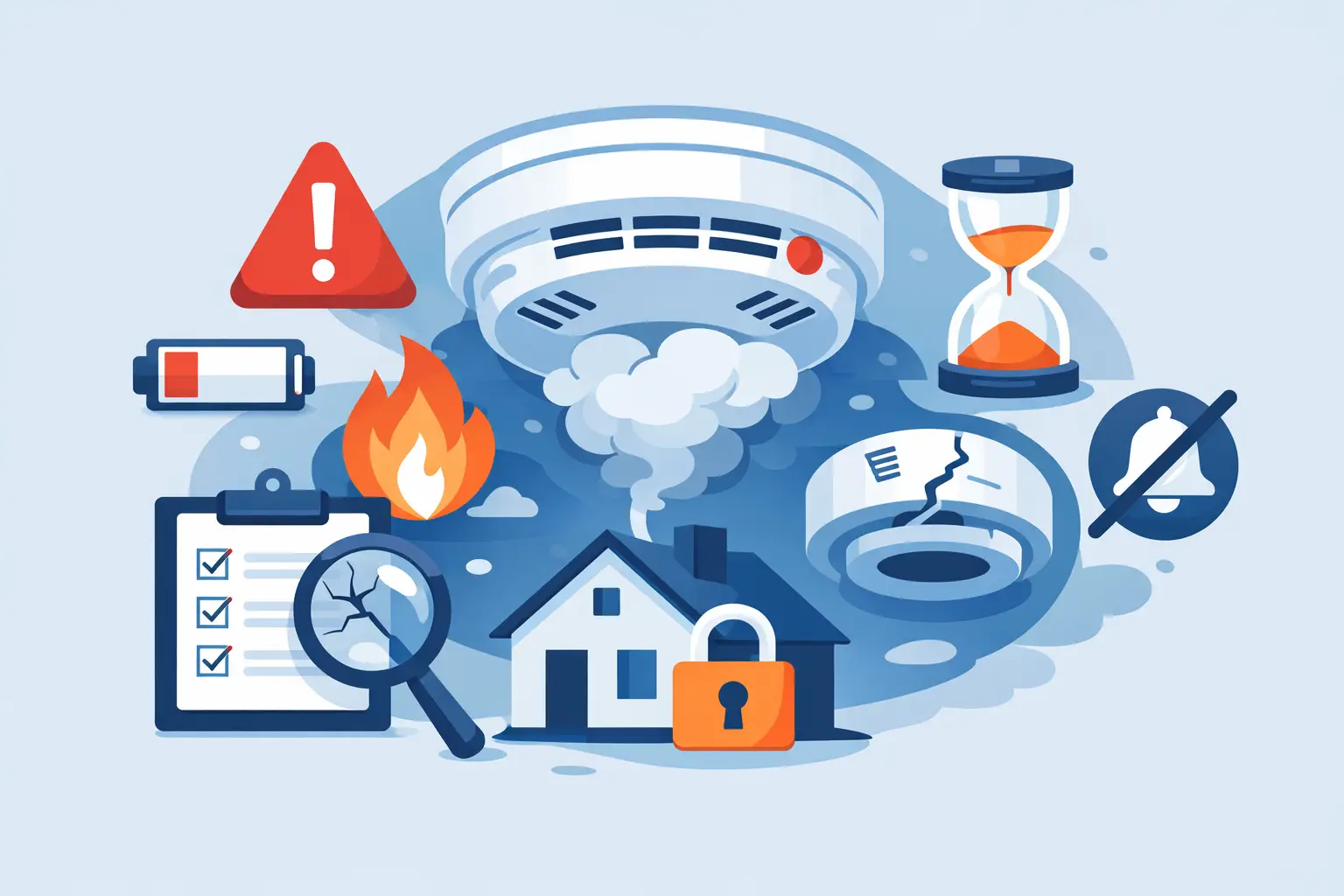
That smoke alarm on the ceiling may look fine from the floor. It may even chirp when you press the test button. But the warning signs of non compliant alarms are often hidden in the alarm’s age, location, wiring and connection to the rest of the home.
For Brisbane homeowners, landlords and sellers, this is not a minor maintenance job. A non-compliant smoke alarm setup can put your family at risk, delay a sale, create problems at a lease renewal and leave you paying twice when a cheap fix fails. Queensland’s rules are specific for good reason: early warning only works when the right alarms are installed in the right places.
Queensland compliance depends on your property situation
Queensland’s smoke alarm requirements changed significantly from 1 January 2022 for properties being sold, rented or entering a new lease or lease renewal. These homes need photoelectric smoke alarms that are interconnected, positioned correctly and powered by either mains electricity with battery backup or a non-removable 10-year battery where hardwiring is not practical.
For owner-occupied homes not being sold or leased, the full upgraded standard applies from 1 January 2027. That does not mean it is wise to wait. An old, isolated or poorly located alarm does not provide the level of protection modern interconnected photoelectric alarms can deliver.
Compliance is not one box to tick. Alarm type, age, placement, power source and interconnection all matter. Here are the problems we find most often in South East Queensland homes.
7 warning signs of non compliant alarms
1. Your alarms are ionisation models
If your smoke alarms are ionisation alarms, they are a clear red flag. Queensland’s upgraded requirements call for photoelectric alarms. Photoelectric technology is better suited to detecting the slow, smouldering fires that can fill a home with toxic smoke while people are asleep.
Do not assume an alarm is compliant because it has a brand name you recognise or was installed years ago. Check the label. It should identify the alarm as photoelectric and show that it meets the applicable Australian Standard. If you cannot read the label, or have no idea what type is fitted, it is time for a proper inspection.
2. The alarms do not all sound together
A smoke alarm in the garage or kitchen area is no help if a person sleeping behind a closed bedroom door cannot hear it in time. In a compliant upgraded system, when one alarm detects smoke, every interconnected alarm should activate.
Many older homes have separate standalone alarms. Pressing the test button on one unit and hearing only that unit sound is a warning sign that the system is not interconnected. This is particularly common in homes that have had a renovation, extension or piecemeal alarm replacements over the years.
Wireless interconnection can be a practical option in some existing homes. Hardwired interconnection may suit others. The right solution depends on the property, access to ceiling spaces, existing wiring and the alarm system already installed. What does not change is the need for every required alarm to communicate with the others.
3. There is no alarm in every required area
One alarm in the hallway is not automatically enough. Queensland’s upgraded requirements cover every storey, every bedroom and hallways that connect bedrooms to the rest of the dwelling. Where there is no hallway, alarms must be installed between bedrooms and the rest of that storey.
The layout matters. A split-level home, converted garage, separate sleeping wing or upstairs parents’ retreat can all change what is required. So can a recent renovation that created an additional bedroom.
Placement also matters within the room. An alarm installed too close to a ceiling fan, air-conditioning vent, bathroom door or cooking area may be prone to nuisance alarms or may not detect smoke as effectively. Moving an alarm to stop it going off during cooking can create a different, more serious problem if it ends up outside the required protection zone.
4. The alarm is more than 10 years old
Smoke alarms have a limited service life. If the manufacture date is more than 10 years ago, replacement is required. This applies even if the alarm still beeps when tested.
The sensing chamber degrades over time. Dust, insects, humidity and ordinary wear can affect how reliably it responds to smoke. Brisbane’s humid conditions are hard on low-quality alarms, especially units fitted in hot roof-adjacent hallways or poorly ventilated areas.
Look for the date of manufacture on the back or side of the unit, not the installation date written on a sticker. If the date is missing, faded or impossible to verify, treat the alarm as due for replacement rather than gambling on it.
5. It relies on a removable battery only
A common non-compliance issue is an alarm powered solely by a standard removable 9V or AA battery. These batteries get removed when they chirp, forgotten after a holiday or simply go flat at the wrong time.
For properties subject to Queensland’s upgraded rules, alarms need to be hardwired with a battery backup, or use a non-removable 10-year battery where hardwiring is not practical. The exact installation method should be assessed by a licensed electrician, particularly if your home has existing hardwired alarms or you need new interconnected units.
A 10-year alarm is not the same as an old alarm with a fresh battery. The battery arrangement and the alarm itself must be designed for the required service life.
6. You have mixed alarm brands, ages or technologies
A ceiling full of different alarms is often a sign of a patchwork system. One may be photoelectric, another ionisation. One may be hardwired, another battery-operated. Some may be within date while others are well past it.
Mixed systems are not always automatically unlawful, but they need careful checking. Interconnection compatibility is a major issue. Alarms from different brands or product ranges may not communicate with one another, even where they look similar. Replacing a single failed unit with the cheapest option from a hardware store can break an otherwise working interconnected system.
A matched, quality alarm system installed as a complete solution is usually the safer long-term choice. It avoids uncertainty over compatibility and reduces the chance of repeat call-outs when another ageing unit fails.
7. The alarm chirps, false alarms often or has been disabled
A chirping alarm is not just annoying. It is telling you something needs attention. The cause could be a low battery, contamination, an end-of-life warning, poor installation or a fault in the unit. Silencing it by removing the battery or disabling it is never a solution.
Frequent nuisance alarms deserve investigation too. Steam, cooking fumes, insects and humidity can all contribute, but repeated false alarms often point to poor location or an unsuitable product. People who stop trusting their alarms are more likely to ignore a real emergency.
If an alarm has been painted over, taped up, covered with a bag or left hanging loose from its base, assume the setup needs urgent attention. A smoke alarm must be ready to work at the exact moment nobody has time to troubleshoot it.
Why cheap replacements can cost more
A low upfront price is tempting when you are preparing a property for sale or trying to meet a lease renewal deadline. The trouble starts when the product is not suitable for Queensland conditions, is not compatible with your system or does not meet the required specification.
You may end up paying for another installation, delaying your compliance paperwork or replacing alarms again within a short period. More importantly, you are relying on an unknown device to wake your household during a fire.
Licensed installation matters because it covers more than mounting an alarm on the ceiling. A qualified electrician can assess the dwelling layout, identify required locations, confirm appropriate power options, test interconnection and ensure the system is installed properly. For hardwired work, this is not a DIY job.
What to do if you spot a problem
Start by checking every alarm in the home. Note its manufacture date, whether it is photoelectric, whether it is hardwired or has a sealed 10-year battery, and whether all alarms activate together during testing. Also look at where the alarms are positioned, especially after renovations or room conversions.
If you are selling, renting, renewing a lease or unsure whether your setup meets the Queensland standard, do not wait until settlement or a tenant move-in date. Arrange an assessment by a licensed smoke alarm specialist. The Smoke Alarm Sparky installs compliant photoelectric, interconnected systems designed for Brisbane homes and backs qualifying installations with a 10-year full replacement warranty.
Your smoke alarms should not be a question mark over your home, sale or family’s safety. Fix the warning signs before they become the reason an emergency has a worse outcome.