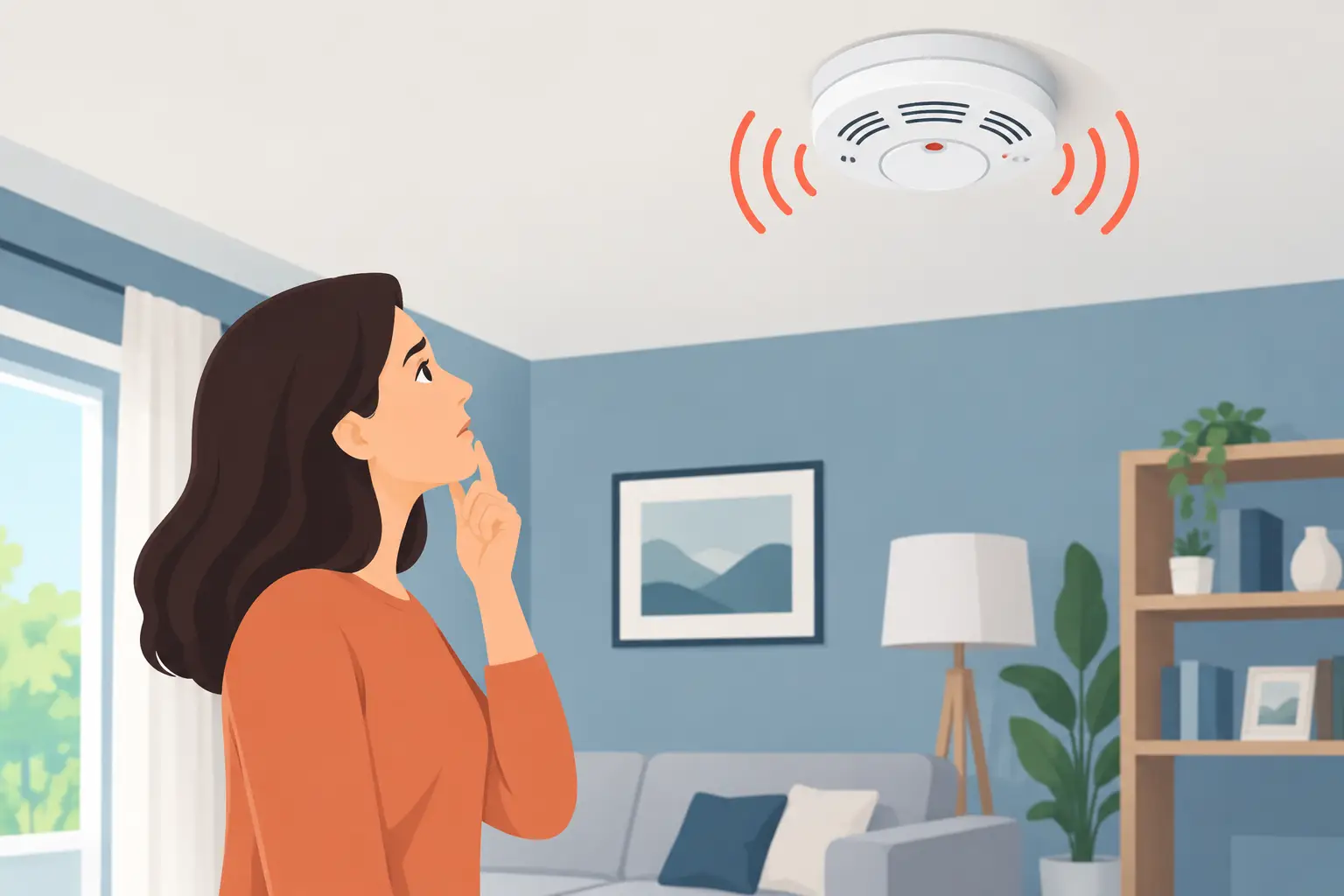
That sharp, single chirp every 30 to 60 seconds is not background noise to put up with. It is your smoke alarm telling you something needs attention. If you are asking what triggers smoke alarm chirping, the answer is usually a low battery, an ageing alarm, contamination, humidity, or a fault in the electrical connection. The cause matters because silencing the chirp without fixing it can leave your home unprotected.
A chirp is different from a full alarm. A full, repeating alarm pattern may mean smoke, heat or fire conditions are being detected and must be treated seriously. A chirp is generally a maintenance or end-of-life warning. Either way, do not remove the alarm and forget about it. Queensland homes need working, compliant smoke alarms in the right locations - especially when selling, leasing or renewing a tenancy.
What Triggers Smoke Alarm Chirping Most Often?
A low or failing backup battery
This is the most common reason. Even hardwired smoke alarms have a battery backup, and that battery will eventually run low. The alarm chirps to warn you that it may not work during a power outage.
A common trap is assuming a hardwired alarm cannot have a battery problem. It can. Mains power keeps the unit powered under normal conditions, but the backup battery is there for the moment you need it most - when the electricity is off. If the unit uses a replaceable battery, fit the correct type specified by the manufacturer. Do not force in a cheap substitute just because it fits.
For alarms with sealed 10-year lithium batteries, a persistent low-battery chirp often means the entire unit has reached the end of its serviceable life or has developed a fault. The battery is not designed to be replaced.
The alarm has reached its expiry date
Smoke alarms do not last forever. Most have a service life of 10 years from the date of manufacture, not from the day you moved in or bought the property. After that point, the sensing chamber may no longer respond reliably to smoke, even if the test button still makes noise.
Look on the side or back of the alarm for the manufacture date or replacement date. If it is 10 years old, replacement is the sensible and safe answer. Resetting it may stop the chirp temporarily, but it does not restore an expired sensor.
This is particularly relevant in older Brisbane homes where alarms have been painted around, installed during a renovation years ago, or simply left in place because they appear to work. A unit can look fine and still be overdue for replacement.
Dust, insects or moisture inside the sensing chamber
South East Queensland humidity is hard on low-quality smoke alarms. Moist air, condensation, dust and tiny insects can enter the sensing chamber and interfere with the unit. The result may be intermittent chirping, nuisance alarms or an ongoing fault warning.
Alarms near bathrooms, laundries, kitchens, open windows or ceiling fans can be more exposed. That does not mean you should relocate an alarm without advice. Smoke alarm placement is regulated and needs to provide real protection, not just fewer false alerts.
Start by gently vacuuming around the alarm vents using a soft brush attachment. Do not spray cleaners, insecticide, air freshener or water into the unit. If the chirping returns after cleaning and resetting, the alarm may be contaminated internally or unsuitable for the environment. Replacement is often the reliable fix.
A loose connection or power supply problem
For hardwired alarms, chirping can indicate that mains power has been interrupted. Check whether a circuit breaker has tripped and whether other lights or appliances on that circuit are affected. If the breaker is on but the alarm still indicates a power fault, do not start pulling wiring apart.
Hardwired smoke alarms are part of your home’s electrical system. A loose active, neutral or interconnection wire can cause a fault, but diagnosis and repair should be handled by a licensed electrician. This is not a DIY job, and a damaged connection may affect every interconnected alarm in the home.
An interconnection fault
Interconnected smoke alarms are designed so that when one alarm detects smoke, all alarms sound. That is a major safety benefit in a larger home, behind closed bedroom doors, or across multiple levels. But it also means one failing alarm can affect the system.
A chirp may come from the alarm with the fault, not necessarily the one closest to where you hear the sound. Check each unit for indicator lights, fault messages or a different chirp pattern. If one alarm is old while the others are newer, replacing only that unit may not always be the best outcome. Compatibility between interconnected models matters.
The alarm needs a reset after a battery change or power event
Sometimes an alarm retains a fault condition after a flat battery, brief blackout or battery replacement. Once the correct battery is fitted and the cover is properly closed, hold the test button for the period stated in the manufacturer’s instructions. This can discharge residual power and reset the unit.
If it resumes chirping within a day or two, do not keep resetting it. Repeated chirping is a warning, not a nuisance feature to override.
How to Find the Chirping Alarm
It sounds simple until it is 2 am and the sound echoes through the hallway. Chirps bounce off hard ceilings and walls, so the loudest location is not always the source.
Start in the bedrooms and hallway, then check every smoke alarm one at a time. Stand directly beneath each unit for at least a minute. Look for a flashing red, green or amber light, but remember that light colours vary by model. If there are multiple alarms, ask another person to listen from a different room while you check.
Do not ignore a chirp because it seems to stop when you approach. Most alarms chirp at intervals. It will return.
What Not to Do When Your Smoke Alarm Chirps
Removing the battery, disconnecting a hardwired alarm or taking the unit down and leaving it on a bench may stop the noise. It also removes a critical layer of protection while you sleep. For landlords and property managers, it can create a compliance problem as well.
Avoid taping over the alarm, disabling an interconnected system, or fitting random battery types. Also avoid shifting an alarm away from a kitchen or bathroom simply because it has become annoying. The correct solution depends on the alarm type, its location, its age and whether the installation meets Queensland requirements.
A quality photoelectric alarm, correctly positioned and suited to local conditions, should not demand constant attention. If yours does, repeated battery changes are often false economy.
When Chirping Means It Is Time to Replace the Alarm
Replace the alarm rather than troubleshoot further if it is 10 years old, has a sealed battery warning, continues chirping after cleaning and resetting, shows physical damage, has been exposed to water, or has an unknown manufacture date. The same applies if it is an old ionisation model or does not meet current Queensland smoke alarm requirements.
For properties being sold, leased or renewed, this is not the time for a patch-up. Queensland’s smoke alarm laws set clear requirements around photoelectric technology, interconnection and placement. An alarm that chirps today can become a delay, a failed check or a costly last-minute repair tomorrow.
A licensed specialist can inspect the full system, identify whether the problem is one alarm or the wiring, and replace outdated units with compliant photoelectric alarms designed for long-term reliability. The Smoke Alarm Sparky focuses on getting Brisbane and South East Queensland homes protected properly, with no guesswork around compliance.
The safest response to a chirping smoke alarm is straightforward: identify the cause promptly, keep the alarm operational, and replace anything expired or unreliable. A quiet home is good. A home that is properly protected while your family sleeps is better.