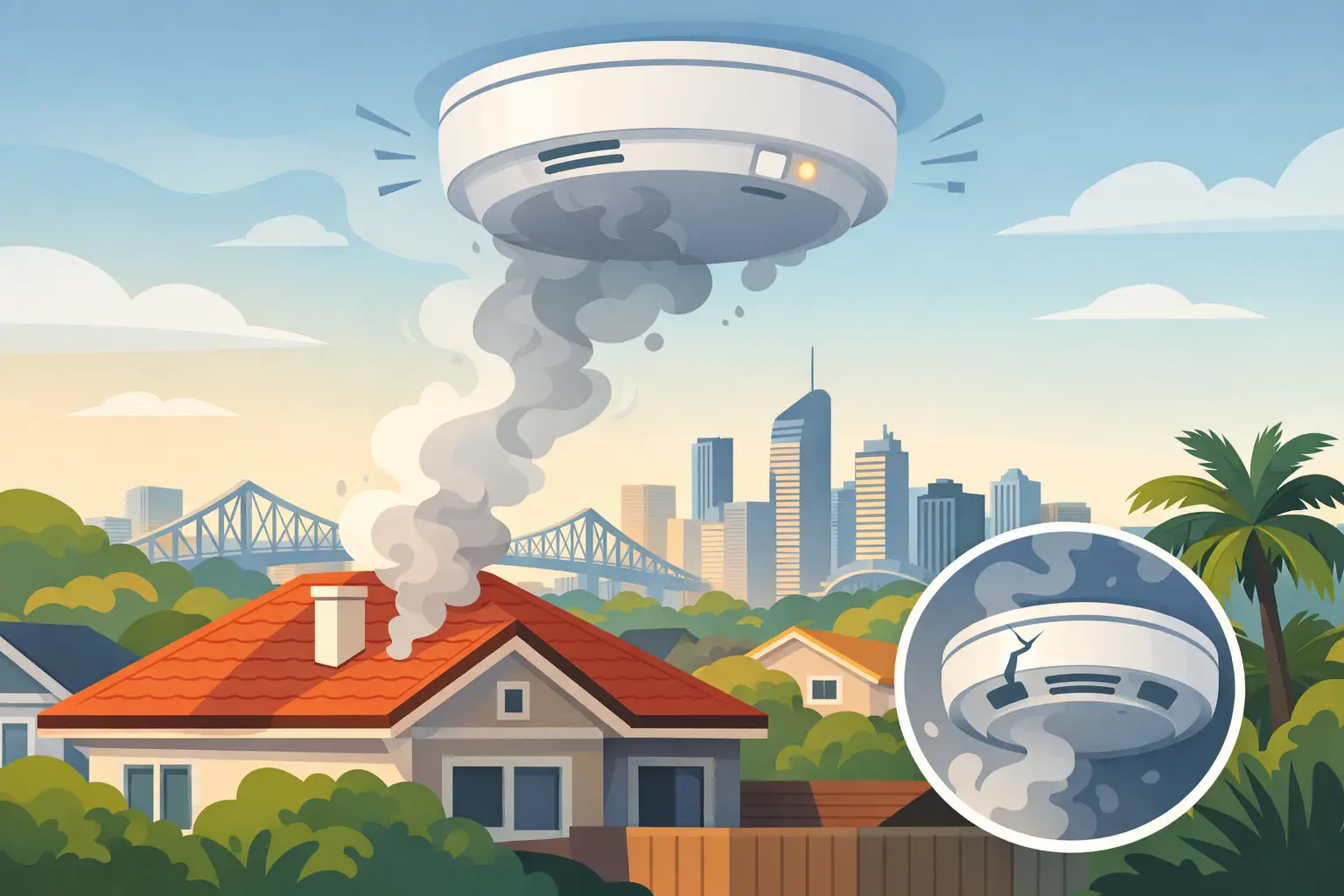
A $15 smoke alarm can look like a smart saving until it fails to sound at 2am. That is why cheap smoke alarms fail is not just a question about price. For Brisbane homeowners, landlords and sellers, it is a question of whether the alarm will detect smoke early, wake people across the home and meet Queensland’s strict smoke alarm rules when it counts.
The problem is rarely one dramatic fault. It is usually a chain of smaller compromises: low-grade sensors, flimsy battery contacts, poor resistance to moisture, incorrect placement or a standalone alarm where an interconnected system is required. The alarm may chirp, flash and pass a button test, yet still be the weak link in your home’s fire protection.
Why cheap smoke alarms fail in Brisbane homes
Brisbane’s heat and humidity are hard on electrical equipment. Smoke alarms are not tucked away in a dry cupboard. They sit on ceilings year after year, often near bathrooms, kitchens, laundries, roof spaces and open living areas where steam, dust, insects and airborne grease can interfere with performance.
A cheaper alarm may be built to meet a minimum standard when it is new, but the real test is how it performs after years in a humid Queensland home. Lower-cost units can have less reliable sensor chambers, basic sealing and components that age faster. Moisture and contamination may cause nuisance alarms, intermittent faults or reduced sensitivity.
Nuisance alarms create another serious risk: people remove the battery, silence the unit permanently or ignore it because they assume it is “playing up again”. An alarm that is regularly false-triggering stops being trusted. That is not a minor annoyance. It is how a safety device gets switched off before a real fire.
The test button does not test everything
Pressing the test button is still essential. It confirms the alarm has power and the sounder can operate. But it does not prove the sensing chamber will respond correctly to smoke, nor does it prove every interconnected alarm in the house will activate as required.
This is why a smoke alarm can appear fine during a quick inspection but still be nearing the end of its serviceable life. If the manufacture date is more than 10 years ago, replacement is generally due, even if the unit still beeps when tested. Ageing components do not become reliable again because the test button works.
A cheap alarm can cost more than a quality installation
The sticker price is only one part of the cost. A low-cost alarm that fails early can mean another trip to the hardware store, another ladder climb, another fitting charge and another round of uncertainty about compliance. If it is incorrectly installed or unsuitable for the property layout, you may need to replace the whole setup anyway.
For landlords and sellers, the stakes are higher. Queensland smoke alarm requirements apply when a property is sold, leased or a lease is renewed. Since 1 January 2022, these properties must meet the current standard for photoelectric, interconnected smoke alarms in the required locations. By 1 January 2027, the requirements extend to all domestic dwellings in Queensland.
The exact setup depends on the home. Bedrooms, hallways, storeys, existing wiring and access all matter. A single battery alarm in the hallway might sound acceptable in a small older home, but it may not deliver the coverage or interconnection the property requires. Compliance is about the complete system, not simply having a white plastic device on the ceiling.
A proper installation considers where a fire is most likely to start, where occupants sleep and how quickly an alarm must be heard. If a fire begins at one end of the home, every required alarm needs to activate so a person asleep behind a closed bedroom door has the best possible warning.
The common compromises behind low-cost alarms
Not every affordable smoke alarm is unsafe, and not every premium-priced alarm is automatically right for your home. The issue is buying on price alone without checking product quality, age, installation method and compliance. Four shortcuts cause most of the trouble.
- Inferior sensors and electronics: Cheaper units can be more prone to early sensor degradation, unstable operation and inconsistent performance in hot, humid conditions.
- Disposable battery dependence: A battery alarm is only useful while its battery is fitted, charged and connected correctly. Flat batteries, loose terminals and battery removal are common points of failure.
- No effective interconnection: Standalone alarms may warn only the room or hallway where smoke reaches them. Interconnected alarms are designed to alert the whole household together.
- Poor placement and DIY fitting: An alarm installed too close to steam, cooking fumes, air-conditioning outlets or ceiling corners may nuisance alarm, be ignored or fail to detect smoke as early as it should.
The phrase “10-year battery” also deserves a closer look. A 10-year lithium battery is not always the same thing as a 10-year reliable smoke alarm. The battery may be designed to last, while the sensor itself still has a defined service life and can be affected by age or contamination. Read the manufacture date and replacement date, not just the packaging claim.
Photoelectric alarms are built for the fire risk that matters
Queensland’s requirements focus on photoelectric smoke alarms for good reason. Photoelectric technology is designed to detect visible smoke from smouldering fires, which can develop while people are asleep. Upholstered furniture, bedding, electrical faults and overloaded appliances can produce dangerous smoke before open flames are obvious.
Ionisation alarms were once common, but they are not the preferred option for Queensland homes. Replacing an outdated ionisation unit with another cheap alarm without checking the technology, location and interconnection can leave you with a system that is still non-compliant.
A quality photoelectric alarm, correctly installed and interconnected, gives a clearer safety advantage than a collection of mismatched units fitted over different years. It also removes the confusion that comes with trying to maintain several alarm types, battery schedules and expiry dates across one property.
Hardwired alarms with battery backup offer stronger protection
Where hardwiring is practical, a hardwired smoke alarm with battery backup avoids the main weakness of battery-only units: someone forgetting the battery, removing it after a nuisance alarm or fitting the wrong replacement.
The backup battery still matters. During a power outage, the alarm must continue operating. But with mains power supplying the unit day to day, the system is less dependent on household habits. That is particularly valuable in rental properties, busy family homes and properties being prepared for sale.
Hardwired installation is electrical work and should be carried out by a licensed electrician. It is not a job to patch together with an extension lead, a ceiling cavity guess or a quick DIY fix. The right electrician will assess the existing system, select compliant alarm locations and ensure interconnection works throughout the home.
What to check before relying on your alarms
Start by looking at every alarm in the property, not just the one in the hallway. Check the manufacture date, the alarm type, whether it is photoelectric and whether all required units activate together when tested. If any alarm is over 10 years old, damaged, yellowed, regularly chirping or giving false alarms, do not treat it as reliable protection.
Then consider the property’s compliance position. Have bedrooms been added? Has a garage been converted? Is there a new living area on another level? Renovations and layout changes can affect where alarms are required. The same applies when selling, starting a tenancy or renewing a lease.
Do not wait for a real estate deadline, a building inspection or a late-night chirp to force the issue. A compliant alarm system is easier to organise before it becomes urgent, and it should give you confidence rather than another item on the maintenance list.
For Brisbane and South East Queensland homes, The Smoke Alarm Sparky installs Queensland-compliant photoelectric, interconnected and hardwired alarm systems selected for long-term reliability in local conditions. The aim is straightforward: get the right alarms in the right locations, installed properly, with a system you can rely on.
A smoke alarm is one of the few devices in your home that may need to work perfectly when nobody is awake to notice danger. That is not the place to gamble on the cheapest option.