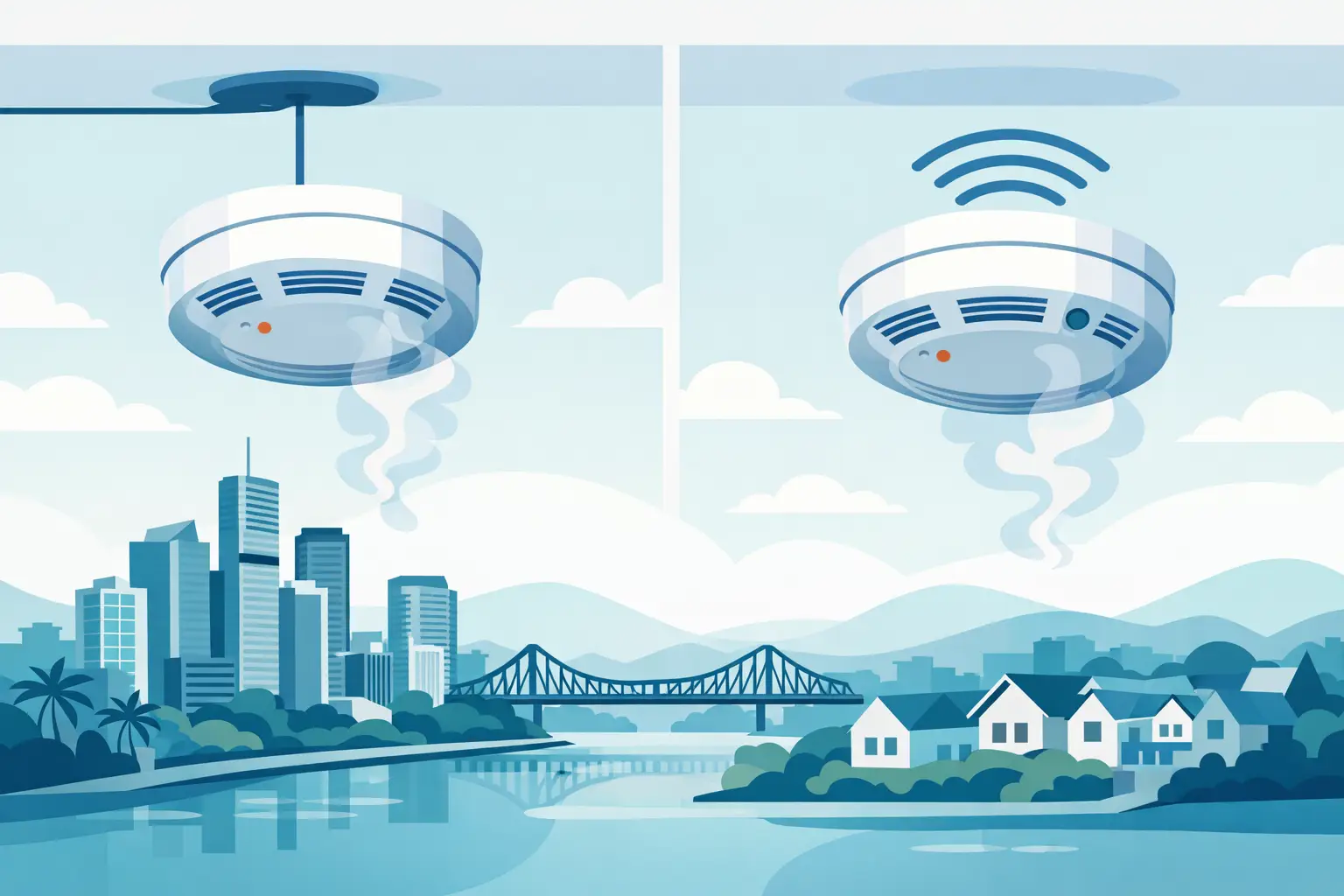
If you are comparing wired or wireless smoke alarms, the wrong choice can cost you more than money. It can leave your home non-compliant, create headaches at sale or lease time, or fail when your family needs warning fast. In Brisbane and across South East Queensland, that decision is not just about convenience. It is about legal compliance, humidity, reliability, and making sure the alarms actually work together when there is smoke.
A lot of homeowners assume wireless means modern and wired means old-school. That is too simplistic. Both can be compliant. Both can protect a household well. But they suit different properties, budgets, and upgrade situations. The key is getting the system right for the home, not grabbing the cheapest box off a hardware shelf and hoping for the best.
Wired or wireless smoke alarms - what is the real difference?
A wired smoke alarm system is physically connected to your home's electrical wiring. In most compliant modern setups, those alarms also have battery backup, so they still operate during a power outage. A wireless smoke alarm system, on the other hand, uses radio frequency to interconnect alarms without running communication wiring between them. Some wireless models are battery powered, while others may still be hardwired for power and use wireless interconnection.
This is where people get confused. Wired and wireless are not always opposites. You can have hardwired alarms that communicate wirelessly. You can have battery-powered alarms that are wireless and interconnected. What matters most under Queensland rules is that the alarms are photoelectric, interconnected, correctly located, and compliant for the property type and situation.
If you are replacing one old alarm in a hallway, you are asking the wrong question. The real question is whether the whole property needs a proper compliance upgrade.
Queensland compliance changes the conversation
In Queensland, smoke alarm laws are not vague. Homes being sold, leased, or where a lease is renewed must meet the current requirements. By 1 January 2027, all owner-occupied homes must also comply. That means alarms must be photoelectric, interconnected, and installed in the required locations, including each bedroom, hallways connecting bedrooms, and on each storey.
So when someone asks whether wired or wireless smoke alarms are better, the honest answer is this: better for what? If you need to bring an older Brisbane home up to standard quickly and properly, the best option is the one that delivers full compliance and long-term reliability without cutting corners.
That rules out a lot of cheap DIY options straight away. In our climate, bargain alarms often do not last. Brisbane humidity is hard on low-grade products, and false alarms or premature failure are not minor annoyances. They are warning signs that you bought the wrong system.
When wired smoke alarms make more sense
Hardwired smoke alarms are often the strongest long-term choice where the home layout allows for practical installation. If you are renovating, building, or doing a major compliance upgrade, hardwiring can be the cleanest and most dependable solution. Power comes from the home, battery backup covers outages, and the system is less reliant on owners remembering battery maintenance.
For many family homes, that peace of mind matters. A professionally installed hardwired and interconnected system is built to stay in place and do its job year after year. It also tends to suit homeowners who want the most permanent setup possible and do not want to think about replacing battery-only units throughout the house.
That said, hardwiring is not automatically the best fit for every property. In established homes, especially brick homes, split-level layouts, or places with awkward roof access, running cables can become more invasive and more expensive. If the installation turns into patching ceilings and chasing walls, the cost-benefit equation can shift quickly.
When wireless smoke alarms are the smarter option
Wireless interconnected smoke alarms solve a very real problem in older homes. They allow alarms to communicate with each other without the need to run interconnect wiring through ceilings and walls. For many Brisbane homes, that can mean faster installation, less disruption, and a more cost-effective path to compliance.
That is especially useful in homes where cabling would be difficult, messy, or simply not worth the labour involved. Queensland compliance still requires interconnection. Wireless technology can achieve that properly when the right products are selected and installed in the right locations.
This does not mean every wireless setup is equal. Product quality matters. Signal reliability matters. Battery life matters. In humid South East Queensland conditions, cheap units can become an expensive mistake. If a wireless alarm drops connection, chirps constantly, or fails early, you have not saved money. You have delayed the job and doubled the frustration.
The trade-off most people miss
The real comparison is not wired versus wireless as if one is always superior. It is permanent power versus installation flexibility.
Wired systems usually offer stronger long-term convenience because the alarms draw power from the home. Wireless systems usually offer stronger installation efficiency because they reduce cabling work. For one property, hardwired may be the obvious winner. For the next, wireless interconnection may be the smarter, cleaner, and more practical result.
That is why cookie-cutter quoting is a bad sign. If an installer recommends one system for every home without checking access, layout, age of the property, and compliance requirements, they are selling stock, not solving the problem.
Wired or wireless smoke alarms for landlords and property sales
If you are a landlord, seller, or buyer, reliability and compliance should outweigh everything else. This is not the place to shave corners. A non-compliant alarm layout can delay a sale, create issues at settlement, expose landlords during lease renewals, or leave a tenant in a home that is not properly protected.
Wireless systems are often attractive in these situations because they can be installed quickly with less disruption, particularly in occupied properties. Hardwired systems may still be preferable where the property is already set up for them or where a more permanent upgrade makes sense. Either way, the priority is having the entire property assessed properly so the solution matches the legal requirement.
One compliant alarm in the wrong spot does not fix a non-compliant house. Neither does a bundle of online alarms installed without a proper plan.
Why professional installation matters more than the technology
Most smoke alarm problems are not caused by the idea of wired or wireless. They are caused by poor product choice, poor placement, or poor installation. An alarm too close to a bathroom, kitchen, ceiling fan, or air-conditioning vent can nuisance alarm. An alarm placed outside the required zones can leave bedrooms without effective warning. A non-interconnected setup can fail the legal standard even if every individual alarm still works.
That is why licensed installation matters. You are not just paying for fitting. You are paying for the property to be assessed against Queensland requirements, for the correct alarm type to be selected, for the interconnection to work properly, and for the finished job to hold up in local conditions.
This is exactly where a specialist service makes a difference. The Smoke Alarm Sparky focuses on compliant residential smoke alarm upgrades for Brisbane and surrounding suburbs, using products suited to Queensland conditions rather than chasing the cheapest install possible.
So which should you choose?
Choose hardwired alarms when your home suits cabling, you want a more permanent power source, and the installation can be done efficiently. Choose wireless interconnection when your home makes cabling difficult, you want less disruption, or you need a practical compliance upgrade in an existing property.
If you are still unsure, that is normal. Most homeowners are not expected to know which system fits their ceiling access, switchboard setup, layout, and compliance obligations. What you do need to know is this: the cheapest option is rarely the cheapest once false alarms, early failure, reinstallation, or non-compliance enter the picture.
A proper smoke alarm system should do three things without compromise. It should meet Queensland law. It should suit the home. And it should still be dependable in a few years, not just on installation day.
That is the standard worth paying for. Your closing thought is simple: if the alarms in your home are old, isolated, or questionable, do not wait for sale time, lease renewal, or a middle-of-the-night scare to find out they were the wrong choice.