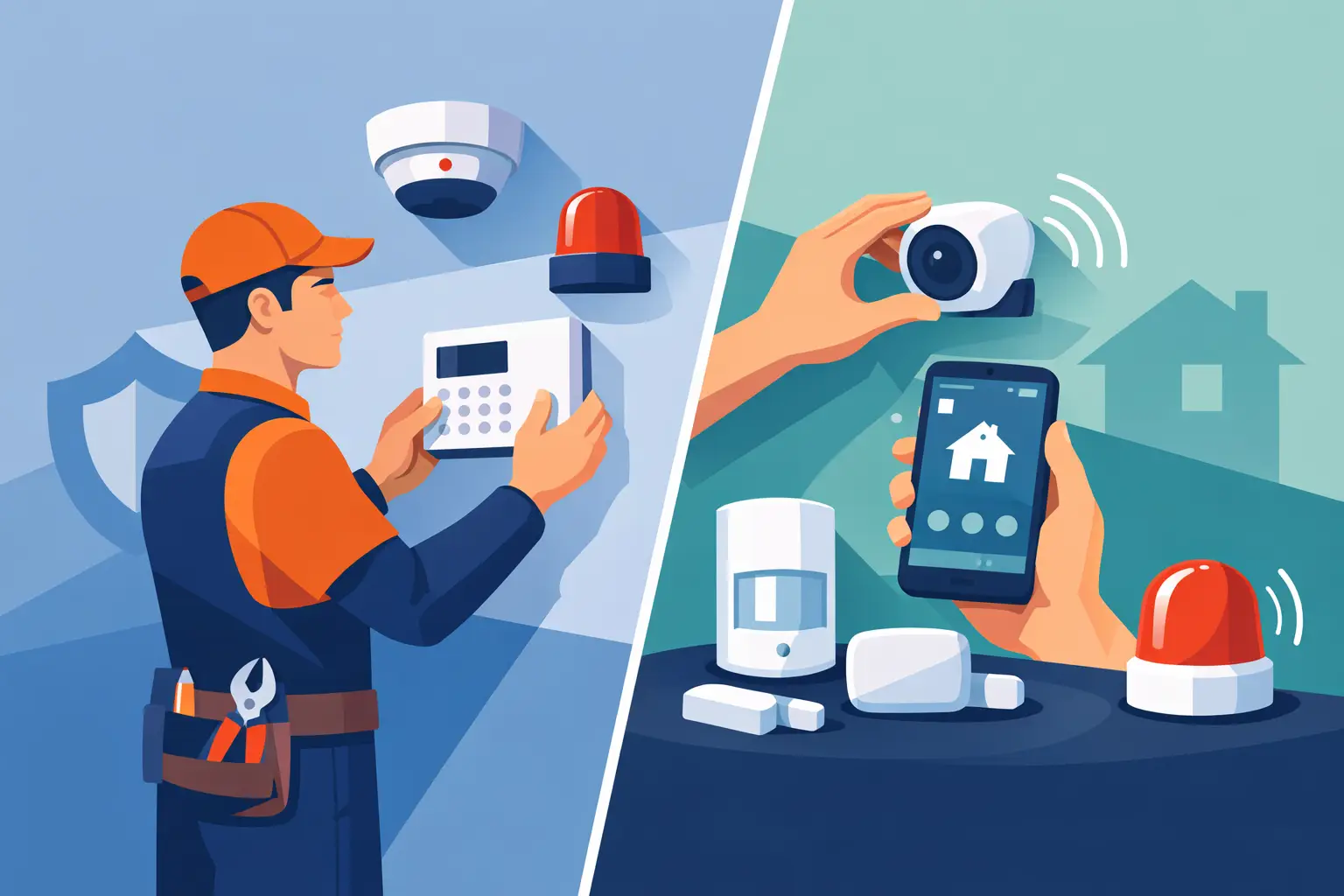
A $30 alarm from the hardware store can feel like a quick win – right up until a property sale stalls, a lease renewal fails, or the alarm chirps its way through a humid Brisbane summer and stops doing its job. When people compare electrician installed vs DIY alarms, they are usually weighing up cost. Fair enough. But the real question is whether you want a smoke alarm system that is simply cheap today, or one that is safe, compliant, and still working when you need it most.
For homes across Brisbane and South East Queensland, that difference matters more than most people realise. Smoke alarms are not just another weekend job. They sit right at the intersection of family safety, Queensland law, and electrical compliance. Get it wrong, and the consequences can be expensive at best and devastating at worst.
Electrician installed vs DIY alarms – what is the real difference?
On the surface, both options seem to solve the same problem. You buy alarms, put them in the house, and expect them to sound in an emergency. That is where the similarity ends.
A DIY setup usually means buying battery-operated alarms off the shelf and fitting them yourself. Sometimes that is legal in limited situations. Sometimes it is not enough for the property type, sale status, or lease requirements involved. And often the product quality is the weak point. Plenty of cheaper alarms are simply not built for long-term reliability in Queensland conditions.
An electrician-installed system is different because the job starts with compliance and ends with certainty. A licensed electrician checks what the law actually requires for your property, chooses the correct alarm type, places each alarm where it should be, and installs the system so it works as intended. That includes hardwiring where required, battery backup where needed, and interconnection so alarms communicate properly across the home.
That last point matters. Smoke does not politely stay in one room. If a fire starts at the far end of the house, one isolated alarm is not much help if the bedrooms cannot hear it.
Why DIY alarms often fall short in Queensland homes
The problem with DIY is not that homeowners are careless. It is that smoke alarm rules are more specific than most people expect, and the product aisle at a hardware store does not explain the full picture.
Queensland has strict smoke alarm requirements for homes being sold, leased, or substantially renovated. Those homes generally need photoelectric alarms that comply with the right standards, are interconnected, and are installed in the correct locations. If you are relying on a few standalone battery units because they were easy to grab on a Saturday morning, you may not be compliant at all.
Then there is placement. A smoke alarm can be a perfectly good product and still do a poor job if it is in the wrong spot. Too close to a kitchen, and nuisance alarms become a headache. Too close to fans, air-conditioning vents, or dead-air corners, and performance can suffer. Too far from bedrooms, and precious warning time is lost.
Humidity is another issue people underestimate. Brisbane homes deal with heat, moisture, and long summers. Cheap alarms often do not cope well. They false alarm, degrade early, or fail sooner than expected. That bargain price stops looking clever when you are replacing units again in a year or two.
Compliance is not a guess
This is where electrician installed vs DIY alarms becomes less about preference and more about risk management.
If you are a landlord, seller, buyer, or homeowner planning ahead, you need more than a smoke alarm. You need the right smoke alarm setup for your legal obligations. Queensland compliance is not just about owning alarms. It is about type, location, interconnection, power source, and installation standard.
A licensed electrician knows how those pieces fit together. They know when hardwired alarms are required, when battery-only options may suit, and how to make sure the final setup aligns with current rules. That takes the guesswork off your plate.
DIY leaves that burden on you. If you misread the requirement, choose the wrong product, or install too few alarms, you wear the consequence. That can mean failed compliance checks, delays during a sale, disputes during tenancy changes, or the cost of ripping it all out and starting again.
Saving money the first time is not much of a saving if you pay twice.
Cost matters – but so does the cost of getting it wrong
Let us be direct. DIY alarms usually look cheaper upfront. That is the main reason people consider them.
But upfront cost is only one part of the story. You also need to factor in product lifespan, replacement frequency, false alarms, missed compliance, and the risk of poor installation. Once you include those, the gap narrows quickly.
An electrician-installed system costs more because you are paying for proper products, licensed labour, compliant installation, and accountability. That accountability matters. If something is wrong, you know who installed it and what standard it was installed to. If a cheap DIY alarm fails, there is no installer standing behind the job.
For many Brisbane homeowners, landlords and sellers, the smarter question is not, “What is the cheapest option today?” It is, “What gets this done properly, with the least risk and the least chance of repeat costs?”
That is usually the licensed option.
Electrician installed vs DIY alarms for landlords and property sales
If your property is being leased or sold, the margin for error gets even smaller.
A non-compliant alarm setup can create delays, extra expense, and needless stress right when timing matters. Buyers ask questions. Conveyancers ask questions. Property managers ask questions. And if your alarms are not up to standard, the issue does not fix itself.
This is why many property owners choose a specialist instead of trying to patch things together room by room. A proper installation means the alarms are assessed as a system, not as a handful of separate devices. You know what has been installed, where it has been installed, and whether it meets the requirements for the property.
That certainty is worth a lot when a contract is on the line or a new tenancy is about to begin.
Safety is the part people only appreciate after a scare
Most smoke alarm decisions are made while everything is calm. Bright showroom lights. Product packaging. Price tags. Maybe a quick look at online reviews.
Real fire conditions are not calm. They are dark, fast, disorienting, and loud. The value of an interconnected, correctly located, reliable alarm system becomes obvious in the worst possible moment.
That is why a safety-first approach matters. A licensed electrician is not just putting plastic circles on a ceiling. They are building an early warning system for the people sleeping under that roof.
And that is exactly why poor-quality DIY setups are such a gamble. If an alarm is unreliable, badly positioned, not interconnected, or not compliant, it is not just a minor household issue. It is a failure in the one system designed to buy your family time to get out.
When does DIY make sense?
There are limited cases where a DIY alarm replacement may be suitable, particularly if you are swapping like for like in a non-hardwired situation and the property requirements are straightforward. But that is where many people get caught out. They assume their property is straightforward when it is not.
If your home is older, your current setup is inconsistent, your alarms are hardwired, or the property is being sold or leased, DIY becomes much harder to justify. The more important compliance and reliability are, the less sense it makes to treat smoke alarms as a basic do-it-yourself task.
That is especially true in South East Queensland, where climate, legislation, and property turnover all raise the stakes.
The smarter choice for Brisbane homes
For most homeowners, landlords and sellers, electrician installed vs DIY alarms is not really a close contest. One option is built around guesswork, shelf-stock quality, and the hope that you have interpreted the rules correctly. The other is built around licensed expertise, compliant installation, and long-term reliability.
That does not mean every electrician-installed system is the same. It pays to use a specialist who understands Queensland smoke alarm rules, uses quality alarms that suit local conditions, and stands behind the work. That is the difference between a box-ticking job and a proper safety upgrade.
The Smoke Alarm Sparky works in that exact space because general advice is not enough when compliance, property deadlines and family safety are on the line.
If you are unsure whether your current alarms are compliant, do not wait for a sale, a lease renewal, or a late-night false alarm to force the issue. The right time to sort smoke alarms is before they become a problem.