If your home still has old ionisation alarms on the ceiling, this is not a small technical detail. In the photoelectric smoke alarm vs ionisation debate, the difference can affect how quickly a fire is detected, whether your property meets Queensland requirements, and whether your family gets the warning time they need.
Too many Brisbane homeowners assume a smoke alarm is a smoke alarm. It is not. Some older alarms were common for years, but common does not mean best, and it certainly does not mean compliant now. If you are selling, leasing, renewing a tenancy, buying, or simply trying to protect your household properly, the alarm type matters.
Photoelectric smoke alarm vs ionisation: what is the difference?
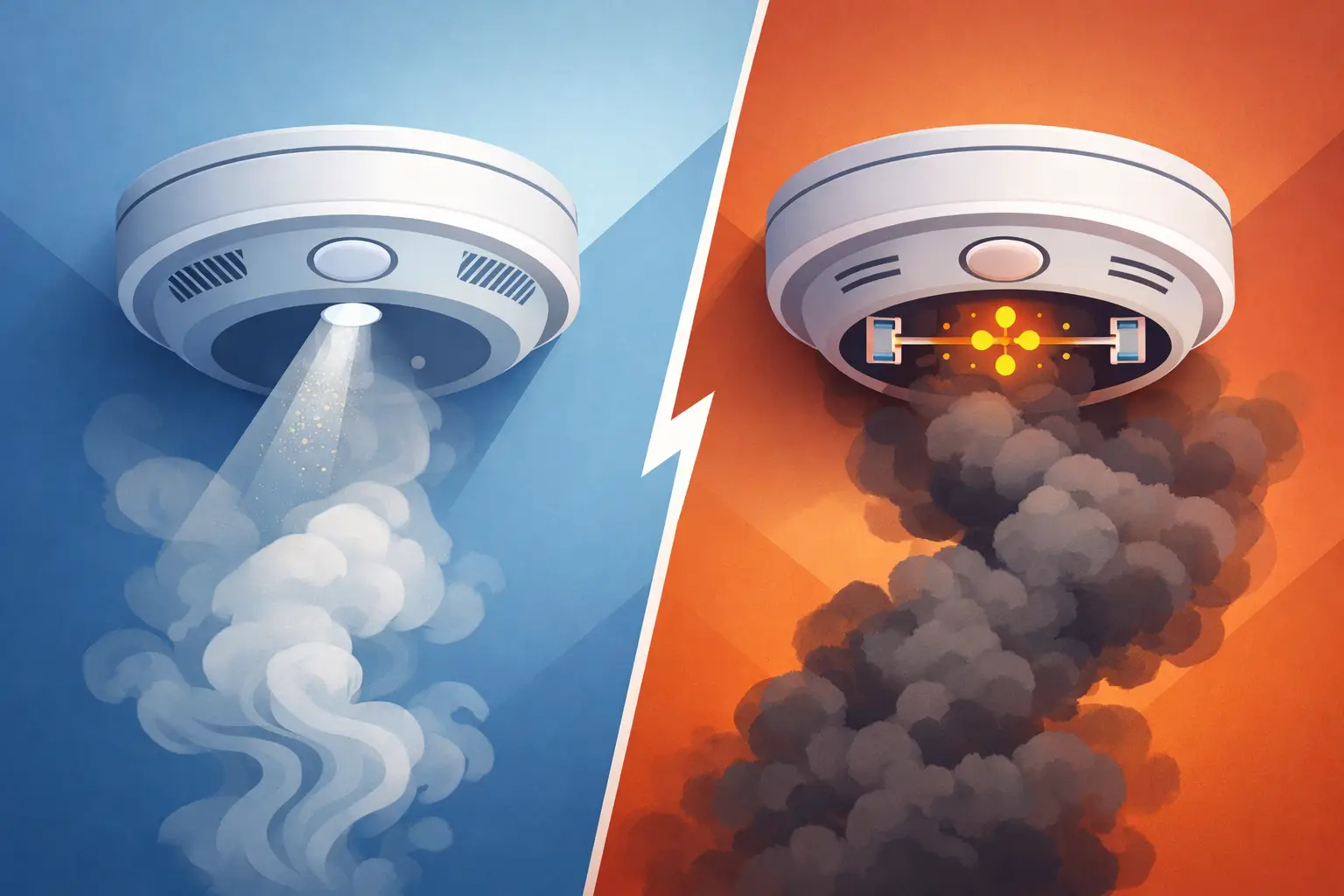
The short version is simple. Photoelectric alarms are designed to detect visible smoke particles, especially from slow, smouldering fires. Ionisation alarms are generally more sensitive to tiny particles from fast-flaming fires.
That sounds balanced on paper, but real homes are not neat laboratory tests. A lot of deadly house fires start with smouldering upholstery, bedding, wiring faults, overheated appliances, or combustible materials that produce smoke before open flame fully develops. In those situations, earlier smoke detection matters.
Photoelectric alarms use a light beam inside the unit. When smoke enters the chamber and scatters the light, the alarm triggers. Ionisation alarms use a small amount of radioactive material to ionise air in a chamber, and the alarm sounds when that electrical current is disrupted by combustion particles.
For most homeowners, the technical explanation is less important than the practical outcome. You want an alarm that is reliable in the kinds of fires that actually happen in bedrooms, hallways, living areas and near kitchens. You also want an alarm setup that complies with Queensland law, not one that leaves you exposed.
Why photoelectric alarms are the standard in Queensland
Queensland has moved well past the era of treating any smoke alarm as good enough. For domestic dwellings, the required standard is photoelectric smoke alarms that comply with the relevant Australian Standard, are no more than 10 years old, and are interconnected where required.
That means if you are relying on older ionisation alarms, there is a very real chance your setup is outdated, non-compliant, or both. This catches people out all the time during property sales, lease renewals and compliance checks.
The reason is straightforward. The law has shifted towards alarm types that provide better protection in residential settings. That is not box-ticking. It reflects the fact that warning time saves lives, especially at night when people are asleep, doors are shut, and smoke can build before anyone notices a thing.
If you own an investment property, this is even more pressing. A cheap alarm from a hardware store or an old mismatched system can cost less upfront, but that saving disappears quickly if the property fails compliance expectations or needs replacing again in a short time because the units cannot handle local conditions.
Which alarm is better for real household fires?
For most homes, photoelectric is the better choice. That is why Queensland requires it.
The key issue is not whether ionisation alarms can detect fire. They can. The issue is whether they are the best option for a residential property where many dangerous fires begin as slow, smoky events. In those cases, photoelectric alarms are widely recognised as the safer fit.
They also tend to be less prone to nuisance alarms than ionisation units, particularly around cooking fumes. That matters because false alarms create bad habits. People remove batteries, disable alarms, or ignore repeated beeping. Once that starts, the whole system becomes less reliable when it is actually needed.
A smoke alarm should do two things well. It should warn early, and it should stay in place working properly. Photoelectric alarms are better aligned with both goals in most homes.
The compliance issue homeowners cannot ignore
In South East Queensland, smoke alarm compliance is not optional if certain property events are happening. Selling a home, signing a new lease, or renewing an existing lease can trigger legal requirements. Even where a sale is not involved, many homeowners are upgrading now to avoid getting caught later with a rushed, stressful replacement job.
Compliance is not just about the alarm type. Placement matters. Interconnection matters. Power source matters. Age matters. A brand-new photoelectric alarm installed in the wrong spot can still leave you short of the mark.
This is where DIY choices often go wrong. People replace one old alarm with one new alarm and assume the job is done. It usually is not. Queensland rules are specific about where alarms must be installed and how they must work together. If one alarm detects smoke, the others should sound too. That is what gives households enough warning to wake up and act fast.
Why cheap options often fail in Brisbane conditions
Humidity is hard on smoke alarms. Brisbane homes deal with heat, moisture, dust and everyday wear that can shorten the life of inferior products. This is one reason cheap alarms and bargain installations so often become false economy.
A low-cost unit may look fine on day one. A year or two later, it starts chirping, faulting, yellowing, or failing prematurely. Then you are paying again, and still not certain the property is properly protected.
That is why quality matters. Alarm systems designed for local conditions, installed by a licensed electrician, are simply more dependable over the long term. You are not just paying for a plastic device on the ceiling. You are paying for compliance, placement, interconnection, testing, and confidence that the system will still be doing its job years from now.
Should ionisation alarms be replaced?
In many cases, yes.
If you have ionisation alarms in an older property, especially alarms that are nearing or beyond 10 years old, replacement is usually the sensible move. If the property is being sold or leased, replacement may be necessary to meet current Queensland requirements. If you are owner-occupying and have no immediate transaction planned, upgrading is still the safer decision.
There is no practical upside in clinging to old technology when the legal and safety direction is clear. The longer people wait, the more likely they are to face a rushed job before settlement, before a tenancy starts, or after discovering their current alarms are already out of date.
What a proper upgrade should include
A proper upgrade is not about swapping heads and hoping for the best. It should start with checking the age of every alarm, the current locations, whether the alarms are hardwired or battery powered, and whether the property layout requires additional units for compliance.
From there, the goal is straightforward – install photoelectric alarms that meet Queensland requirements, place them correctly, and interconnect them so the whole system works as one. In many homes, hardwired alarms with battery backup are the strongest long-term option. In others, compliant 10-year lithium battery alarms may suit the property better. It depends on the home, access, wiring, and what the law requires for that dwelling.
That is why a one-size-fits-all quote from a handyman or discount installer can be risky. Proper advice should be based on the property itself, not guesswork.
The safer choice is also the smarter one
The photoelectric smoke alarm vs ionisation question really comes down to this: do you want to meet modern safety expectations and Queensland law, or do you want to hold onto outdated alarms and hope nothing goes wrong?
For Brisbane homeowners, landlords and sellers, the answer should be obvious. Photoelectric alarms are the current standard for a reason. They are better suited to residential fire risk, they support compliance, and they help avoid the common problems that come with older ionisation units.
If you are unsure what is on your ceiling right now, that uncertainty is your sign to get it checked. The Smoke Alarm Sparky deals with this every day across Brisbane and surrounding suburbs – homes with old ionisation alarms, patchwork replacements, non-interconnected units, and installs that never should have passed as adequate in the first place.
You do not need a lecture or a hard sell. You need clear advice, compliant products, and the job done properly the first time. When the alarm sounds at 2 am, nobody cares what was cheapest. They care that it worked early enough to get everyone out.