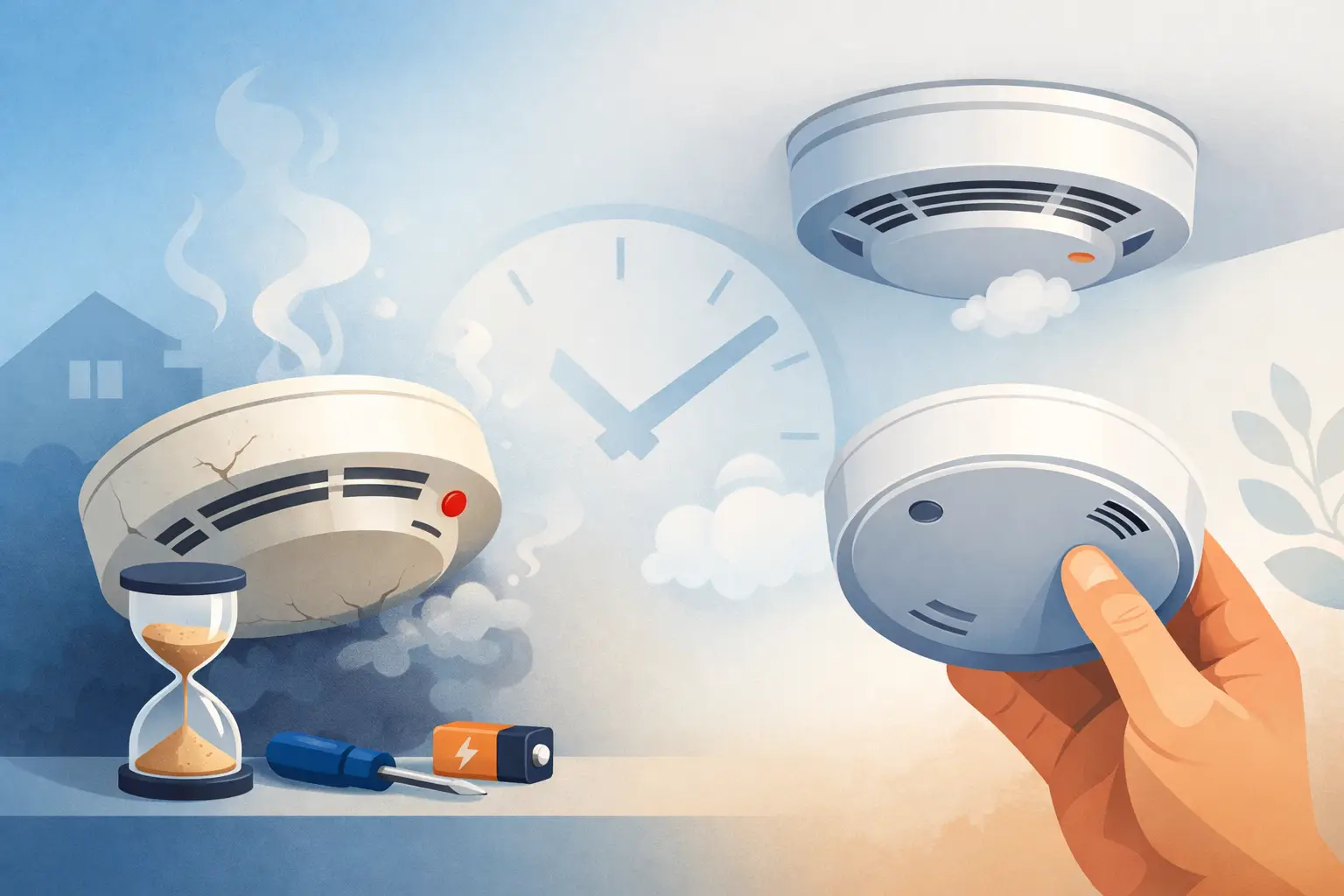
That chirping alarm in the hallway is annoying. An expired smoke alarm is dangerous. If you need to replace expired smoke alarms, don’t treat it like a small weekend job that can wait. In Brisbane and across South East Queensland, old alarms don’t just become unreliable over time. They can also leave your home non-compliant, your family less protected, and your property sale or lease renewal at risk.
Most people assume a smoke alarm is fine if it still makes noise when you press the test button. That’s the trap. Smoke alarms have a service life. Once they age out, the sensor inside can lose accuracy, dust and humidity can affect performance, and the unit may not respond the way you need it to in a real fire. A test beep is not proof of full protection.
Why expired smoke alarms are a real problem
Smoke alarms are not fit-and-forget devices. Every alarm has a manufacturing date, and most domestic smoke alarms need replacement after 10 years. That applies even if they appear to be working. The sensor technology degrades. In Queensland conditions, that problem can show up sooner in low-quality units exposed to heat, moisture and dust.
This matters for two reasons. First, there is the obvious one – life safety. Early warning saves lives, especially at night when people are asleep. Second, there is legal compliance. Queensland smoke alarm laws are strict, and they are not optional. If your alarms are outdated, the wrong type, incorrectly located, or not interconnected where required, your property may not meet current standards.
Cheap alarms from the hardware store can look like a quick fix. Sometimes they are. Often they create a second problem. The wrong alarm, installed in the wrong spot, with the wrong power source, can leave you paying twice – once now and again when you have to fix it properly.
How to tell when to replace expired smoke alarms
Start with the date, not the sound. Remove the alarm and check the label on the back or side. You’re looking for the manufacture date. If it is 10 years old or more, it should be replaced. Not tested more often. Replaced.
You should also act sooner if the alarm is giving repeated false alarms, chirping even after battery changes, yellowed with age, damaged, loose on the ceiling, or inconsistent during testing. These are all warning signs that the unit is no longer dependable.
There is another issue many Brisbane homeowners miss. Some alarms are not technically expired by age, but they are effectively outdated because they are ionisation alarms, not photoelectric, or because they are standalone where an interconnected system is required. In practical terms, they still need replacement if you want a compliant setup.
Queensland rules have changed the standard
This is where many property owners get caught out. Smoke alarm compliance in Queensland is no longer just about having an alarm somewhere in the house. The required standard is much higher.
For many homes, compliant smoke alarms must be photoelectric, Australian Standard approved, no more than 10 years old, and interconnected so that if one sounds, they all sound. They must also be installed in the correct locations, including each bedroom, hallways connecting bedrooms, and on each storey. If there is no hallway, alarms must be positioned between the bedroom and other parts of the storey.
That has major implications for anyone selling, leasing, renewing a lease, or simply trying to protect their household properly. Replacing one expired alarm with another basic unit may not solve the actual problem. It depends on the property, the existing wiring, and whether the whole system meets current Queensland requirements.
Not all replacements are equal
This is where cutting corners becomes expensive. You can replace an expired smoke alarm with a low-cost unit and still end up with a poor result. In South East Queensland, humidity matters. Lower-grade alarms can become nuisance-prone, fail early, or struggle in local conditions.
Better replacement options include quality photoelectric alarms, hardwired alarms with battery backup, and compliant interconnected systems. In some homes, 10-year lithium battery alarms are suitable. In others, hardwired installation is the better long-term choice. It depends on the building layout, accessibility, and whether you want the strongest reliability with minimal maintenance.
There is no single answer that fits every house. A small owner-occupied unit has different needs from a two-storey family home. A landlord facing a lease renewal has a different priority from a seller needing compliance before settlement. What stays the same is this – the replacement needs to be compliant, correctly installed, and built to last.
DIY can cost more than you think
Plenty of homeowners are capable with basic maintenance. Smoke alarm replacement is where confidence can become a liability. If the job involves hardwired alarms, electrical work must be done properly by a licensed electrician. If it involves compliance, placement and interconnection matter just as much as the device itself.
The risk with DIY is not only getting it wrong. It is thinking you got it right when you didn’t. The alarm may look neat on the ceiling and still fail the legal standard. That is a serious problem if there is a fire, a tenancy issue, or a sale inspection.
A specialist will check the age of each alarm, identify non-compliant units, assess positioning, and recommend the right upgrade path for the property. That saves guesswork. It also saves repeat callouts and replacement costs six months later.
The smart way to replace expired smoke alarms
The best replacement process is fast and methodical. First, identify every alarm in the home and check its age, type and location. Second, work out whether you only have expired units or whether the entire setup is behind the current Queensland standard. Third, replace with compliant photoelectric alarms that suit the property and local conditions.
For many Brisbane homes, the right answer is not a one-for-one swap. It is a proper compliance upgrade. That can mean adding alarms in bedrooms, interconnecting the system, or replacing old hardwired units with newer, more reliable models. Yes, it costs more than a supermarket battery alarm. It also solves the problem properly the first time.
That is exactly why many homeowners, landlords and sellers use a specialist service like The Smoke Alarm Sparky. You get licensed installation, the right products for Queensland conditions, and certainty that the job has been done to the required standard. No confusion. No patch jobs. No hoping the cheap option holds up.
What property owners in Brisbane should do next
If you haven’t checked your smoke alarms in years, assume nothing. The home you bought may have older alarms than you realise. The rental you manage may have units that passed a basic check but are already out of date. The house you want to sell may need more than a battery change to avoid delays.
Act before the alarm starts chirping at 2 am. Act before a buyer asks compliance questions. Act before a lease renewal puts you on the clock. Replacing expired smoke alarms is one of those jobs that feels easy to postpone until it suddenly becomes urgent.
And if your alarms are near or past 10 years old, don’t just replace what is obviously faulty. Check the whole system. One expired alarm often means the rest are the same age, the same quality, and headed for the same failure point.
A compliant smoke alarm setup does two jobs at once. It protects the people inside the home, and it protects you from the cost and stress of getting caught out later. That is the result worth paying for.
If you are unsure whether your alarms are expired, compliant, or suitable for Queensland conditions, treat that uncertainty as your cue to act. When fire safety is on the ceiling, guessing is not a plan.