One missing alarm in the wrong spot can turn a compliant-looking home into a dangerous one. If you are asking where should smoke alarms be installed, the short answer is this: not just where it seems convenient, and not just where an old alarm already sits. In Queensland, placement matters for both family safety and legal compliance, and getting it wrong can cost you more than a failed inspection.
For Brisbane and South East Queensland homes, smoke alarm placement is not a guess. It is governed by rules, and those rules exist because smoke does not wait politely in one room. It moves fast, often at night, and early warning only works when alarms are in the right locations and connected properly.
Where should smoke alarms be installed in a house?
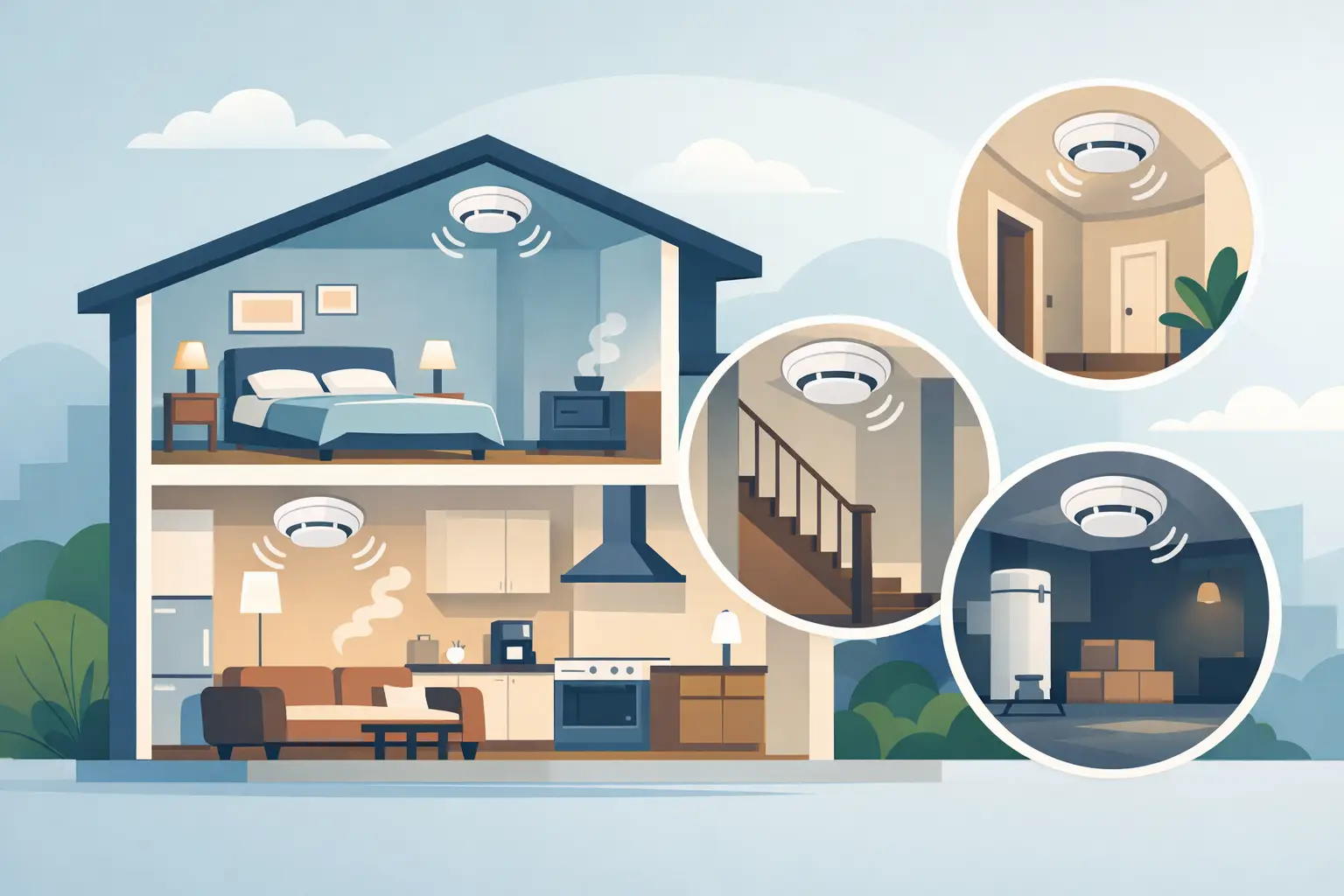
In Queensland homes, smoke alarms need to be installed in every bedroom, in hallways that connect bedrooms to the rest of the dwelling, and on every storey. If there is no hallway between bedrooms and other parts of the home, the alarm must go in a part of the storey that connects those areas. For most households, that means the sleeping areas are the priority, not just the main living room.
This is where many older homes fall short. A single alarm in the hallway or one near the kitchen was common years ago. It is no longer enough. If your house still relies on one or two ageing units, there is a good chance it is non-compliant, especially if you are selling, leasing, renewing a lease, or buying a property that should already meet current Queensland requirements.
The reason is simple. Fires that start in bedrooms, loungerooms, charging areas, or hallways can fill a home with smoke long before someone wakes up. Alarms inside bedrooms and along exit paths buy time. That time is what saves lives.
The key rule: protect the path of escape
The best way to think about where smoke alarms should be installed is this: protect people while they are sleeping, and protect the route they need to escape. That is why bedrooms matter. That is why hallways matter. That is why every level of the home matters, even if one floor only has a study or storage area.
Interconnection matters too. When one alarm detects smoke, all alarms should sound. In a larger home, or one with bedrooms at opposite ends, that shared warning is critical. A cheap stand-alone alarm might make noise in one room while the rest of the house stays silent. That is not a risk worth taking.
For Queensland properties that require compliance, alarms must also be photoelectric, hardwired to the mains power or powered by a non-removable 10-year battery where permitted, and interconnected. This is not just a product issue. Placement and system design go together.
Bedrooms
Each bedroom should have its own smoke alarm. This is one of the biggest changes that catches property owners out. People often assume the hallway alarm covers the bedrooms. It does not. Closed doors slow smoke movement, and an alarm outside the room may not activate early enough.
For families with children, older parents, or heavy sleepers, this is especially important. The alarm needs to wake the person in the room where the risk is happening, not just someone down the hall.
Hallways outside bedrooms
If bedrooms open onto a hallway, an alarm should be installed in that hallway. This covers the path people use to get out and creates a second layer of warning beyond the bedroom alarms.
In practical terms, this means a standard three-bedroom home often needs more than owners expect. One in each bedroom, one in the hallway, and potentially additional coverage depending on the floor plan and number of storeys.
Every storey of the dwelling
Each level of the house needs alarm coverage. That includes upper and lower levels, even if one level is not used for sleeping. Smoke rises, but fire can start anywhere. A downstairs garage conversion, rumpus room, or office area can become the source of a serious fire without much warning.
Homes with split levels or unusual layouts need extra care. The law gives the framework, but the actual placement depends on the design of the dwelling. This is where a licensed specialist earns their keep. Good installation is not just about fitting alarms. It is about reading the layout properly.
Where smoke alarms should not be installed
Wrong placement can cause nuisance alarms, poor performance, or both. That is why installing them yourself based on guesswork often creates new problems.
Smoke alarms generally should not go too close to kitchens, bathrooms, ceiling fans, air-conditioning vents, or windows where steam, airflow, or cooking fumes can interfere with detection. Put one too close to the bathroom and shower steam may set it off. Put one near a supply vent and smoke may be blown away before the alarm detects it.
That does not mean those nearby areas do not need protection. It means the alarm needs to be positioned correctly within the room or corridor so it works as intended. There is a difference between coverage and poor placement, and too many budget installs ignore that.
On ceilings, placement also matters. Dead air spaces near wall corners and peaked roof points can delay smoke reaching the alarm. In homes with raked ceilings, high voids, or awkward architectural features, standard rules of thumb are not enough.
Why Queensland homes need more than a cheap alarm from the hardware store
Brisbane humidity is hard on low-grade smoke alarms. Cheap units often fail early, false alarm more often, or simply do not last. That becomes expensive fast when you are replacing alarms every few years, dealing with chirping at 2 am, or finding out during a sale or lease renewal that the setup is not compliant anyway.
This is one reason specialist installation matters. A compliant smoke alarm system is not just a box-ticking exercise. It should be built for local conditions, installed by a licensed electrician, and designed to last. That means quality photoelectric alarms, proper interconnection, clean placement, and paperwork that supports the work done.
If you are a landlord or preparing a property for sale, the risk is even sharper. Non-compliance can delay transactions, create disputes, and expose you to liability you do not want. Saving a few dollars upfront is not much of a win if the system is wrong.
It depends on the layout, not just the room count
Two homes with four bedrooms may need different alarm layouts. A compact lowset brick home is not the same as a large two-storey house with a media room, internal stairs, and a bedroom tucked behind a retreat area. The legal principles stay the same, but the installation plan changes.
Open-plan homes can also be misleading. People assume one centrally located alarm covers a large area. It might cover some of it, but not necessarily the sleeping zones properly. Likewise, homes with extensions often have old alarms in the original section and nothing adequate in the newer part of the house.
This is why a proper assessment matters. There is no smart shortcut around the layout. The right number and location of alarms should be based on how the dwelling is actually built and used.
Common mistakes homeowners make
The most common mistake is assuming existing alarms are fine because they still beep when tested. A working alarm is not automatically a compliant alarm. It might be in the wrong spot, the wrong type, too old, non-interconnected, or no longer suitable under Queensland rules.
Another mistake is replacing one failed unit with whatever is cheapest, without checking whether the entire system needs upgrading. That patchwork approach often leaves homes with mixed alarm types, poor coverage, and no proper interconnection.
Then there is the classic false economy – installing alarms only in obvious spots and skipping bedrooms because it feels excessive. It is not excessive. It is the standard, and there is a reason for it.
When to get a professional involved
If you are unsure where smoke alarms should be installed in your property, that uncertainty is your answer. Get it checked properly. This is especially true if your home was built years ago, has been renovated, is being sold, is entering a new lease, or still has alarms that are yellowed, chirping, or battery-only in random locations.
A licensed specialist can assess the layout, identify what is missing, and install a system that actually meets Queensland requirements. Done properly, you get clear coverage, reliable alarms, legal confidence, and one less thing hanging over your head. That is exactly why many local owners turn to specialists like The Smoke Alarm Sparky instead of gambling on a DIY fix.
Your smoke alarms should be where they can warn you early, wake everyone fast, and give your household the best chance to get out. If there is any doubt about whether your setup does that, it is worth fixing now – before the test is real.