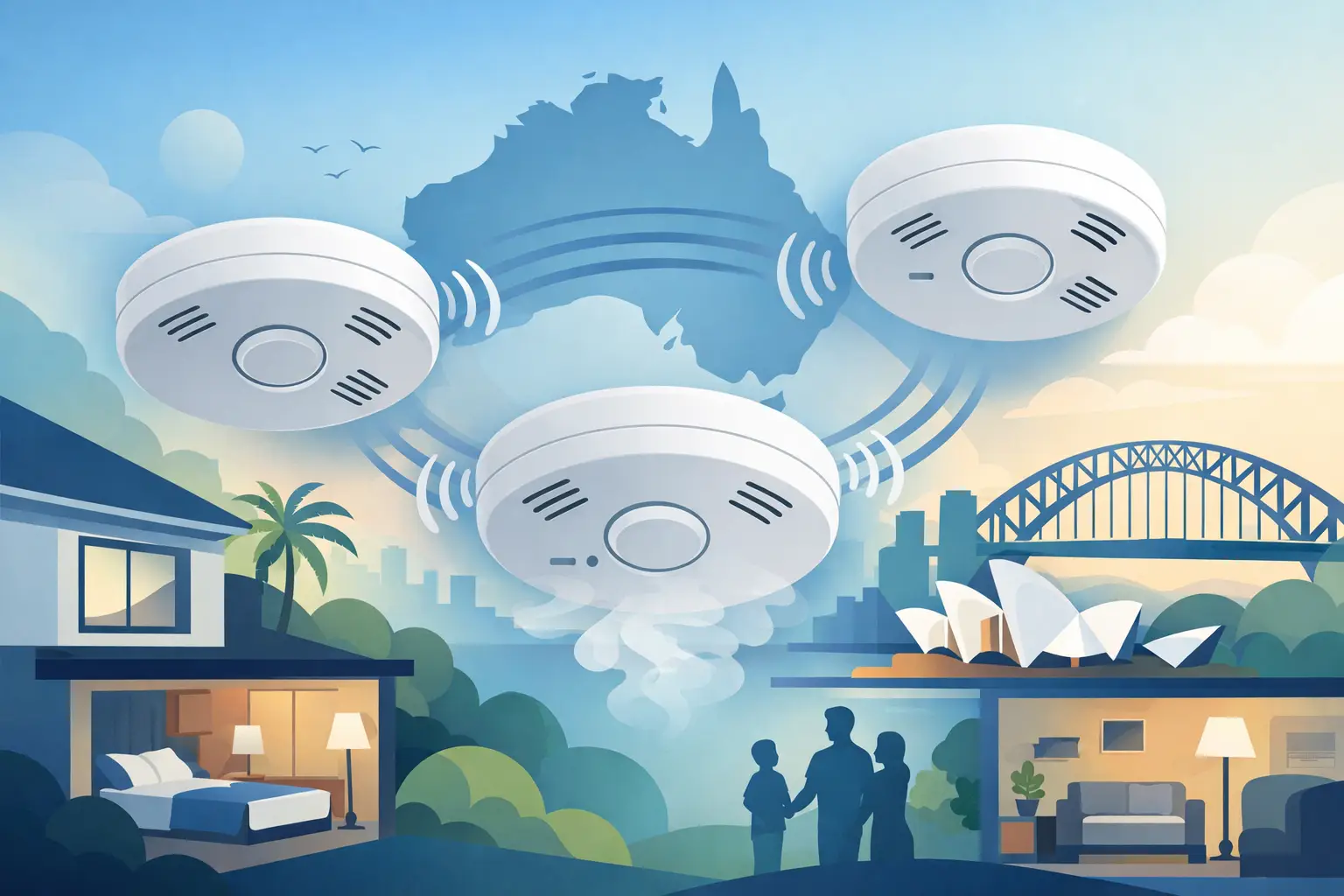
A smoke alarm going off in one bedroom while the rest of the house stays quiet is not good enough anymore. For many homes, wireless interconnected smoke alarms that Australian buyers are now searching for are the practical answer to a bigger problem – getting every alarm to sound together, without tearing the house apart for new cabling.
If you are a homeowner, landlord, buyer or seller in Brisbane or South East Queensland, this matters for more than convenience. It affects legal compliance, family safety and whether your alarm system will actually do its job at 2 am. Cheap alarms from the hardware store might look similar on the shelf, but they are not all built for Queensland rules or Queensland conditions.
Why wireless interconnected smoke alarms matter
The point of interconnection is simple. If smoke is detected in one part of the home, every alarm sounds. That gives sleeping occupants more time to wake up and get out, especially if the fire starts far from bedrooms.
That extra warning time is not a minor feature. It is often the difference between a close call and a disaster. In larger homes, double-storey homes, or properties with bedrooms spread away from living areas, a standalone alarm can leave people dangerously exposed.
Wireless interconnection solves a common installation problem. Hardwired interconnected systems are excellent, but in an existing home, running new cables through ceilings and walls can be messy, time-consuming and expensive. A wireless system can allow compliant interconnection with far less disruption, provided the alarms themselves are suitable, correctly located and professionally installed.
Wireless interconnected smoke alarm rules in Australia make this more urgent
In Queensland, the rules around smoke alarms became much stricter, and many older homes are still behind. If you are selling, leasing, renewing a lease, or preparing for future owner-occupier requirements, you cannot assume your current setup passes.
The key issue is not just having alarms. It is having the right alarms, in the right places, with the right interconnection. For many homes, that means photoelectric smoke alarms that are interconnected and installed in every bedroom, in hallways connecting bedrooms, and on each storey. Depending on the layout, additional alarms may also be required between bedroom areas and the rest of the house.
This is where people get caught out. They buy one or two extra units, stick them on the ceiling, and think the job is done. It often is not. Non-compliant placement, incompatible products, and alarms that are not truly interconnected can leave a property exposed.
Are wireless alarms compliant in Queensland?
Sometimes yes, sometimes no – it depends on the product and the property.
Wireless interconnection can be a compliant solution when the alarms meet Queensland requirements and are installed properly. The alarm still needs to be the correct type, usually photoelectric, and if it is a domestic dwelling smoke alarm system under the rules, it must satisfy the relevant standards. Interconnection is the outcome that matters, not whether the signal between alarms travels by cable or wireless communication.
What trips people up is assuming any battery alarm with a wireless feature is automatically compliant. That is not a safe assumption. Some products are marketed well but fall short on reliability, longevity, certification or suitability for the home they are being installed in. In Brisbane humidity, that problem only gets worse.
Why cheap wireless smoke alarms often fail in real homes
On paper, bargain alarms can seem like a money-saver. In the ceiling of a hot, humid Queensland house, they often become a false economy.
Low-cost alarms are more likely to suffer from nuisance alarms, battery issues, sensor deterioration and poor long-term reliability. They may not hold interconnection properly. They may need replacement sooner than expected. They may also leave you with a patchwork setup that becomes harder and dearer to fix later.
That matters when you are relying on them to wake your family, protect tenants, or satisfy compliance during a sale or lease renewal. Saving a few hundred dollars upfront is not much comfort if the alarms fail early, stop communicating, or need to be replaced again in a couple of years.
Queensland conditions are hard on cheap electronics. Humidity, dust, ceiling heat and general wear all put smoke alarms to the test. Better products cost more because they are designed to last longer and perform more reliably in the conditions we actually live in.
Wireless vs hardwired interconnected alarms
This is where a lot of homeowners need straight advice, not a sales pitch.
Hardwired interconnected alarms with battery backup are a strong long-term option and are often preferred where practical. They offer stable power and can be ideal during major renovations, new builds, or homes where cabling access is straightforward.
Wireless interconnected alarms can be the smarter choice in existing homes where running wires would mean unnecessary damage, higher labour costs or delays. They can deliver the same life-saving benefit of whole-home warning without turning the installation into a building project.
The right option depends on the home. Roof access, wall construction, storeys, existing alarm locations and budget all matter. What does not change is this: the system needs to be compliant, reliable and suited to the property. If someone is pushing a one-size-fits-all answer, be careful.
What a proper smoke alarm upgrade should include
A compliant upgrade is more than swapping old units for new ones. The home should be assessed room by room. Bedroom locations, hallways, living areas, storeys and travel paths all need to be considered.
A licensed electrician or smoke alarm specialist should identify where alarms are legally required, where additional coverage is strongly recommended, and whether wireless interconnection or hardwiring is the better fit. Product quality matters too. So does correct spacing away from corners, air-conditioning vents and other locations that can affect performance.
You also want clarity on warranty, replacement terms and proof of compliance. If an installer cannot clearly explain what standard the alarms meet, where they are placing them and why, that is a warning sign.
Who should be acting now
If you own an older Brisbane home with mixed alarm types, isolated battery alarms, or alarms more than 10 years old, it is time to check the system properly. If you are selling or leasing, waiting until the contract stage is risky. Last-minute compliance work is always more stressful and often more expensive.
Landlords and property managers should be especially careful. Tenancy deadlines do not leave much room for guesswork. Buyers should also pay attention, because a home can look tidy at inspection and still have a non-compliant alarm setup above the ceiling line.
Families should not wait for a property transaction to take this seriously. The legal side matters, but the safety side matters more. Smoke spreads fast. Night-time fires are unforgiving. Interconnected alarms are designed to buy time when seconds count.
Choosing the right installer for wireless interconnected smoke alarms Australia homes need
The installer matters almost as much as the alarms themselves. A licensed specialist should know Queensland legislation, understand where wireless systems are suitable, and use products with a proven track record in local conditions.
You should also expect plain answers. What type of alarms are being installed? Are they photoelectric? Are they interconnected across the whole home? Is the layout compliant? What warranty applies if a unit fails? If the quote is suspiciously cheap, what corners are being cut?
This is not the job for guesswork or DIY confidence. Smoke alarm compliance has become too specific, and the consequences of getting it wrong are too serious. A proper installation should leave you with confidence, not questions.
For homeowners across Brisbane and nearby suburbs, The Smoke Alarm Sparky focuses on exactly this kind of work – compliant smoke alarm upgrades done properly, with products built for local conditions and warranties that actually mean something.
If your current alarms are old, disconnected, or unreliable, do not wait for the next inspection, storm season or near miss to force the issue. The best time to fix a smoke alarm system is before you need it to save a life.